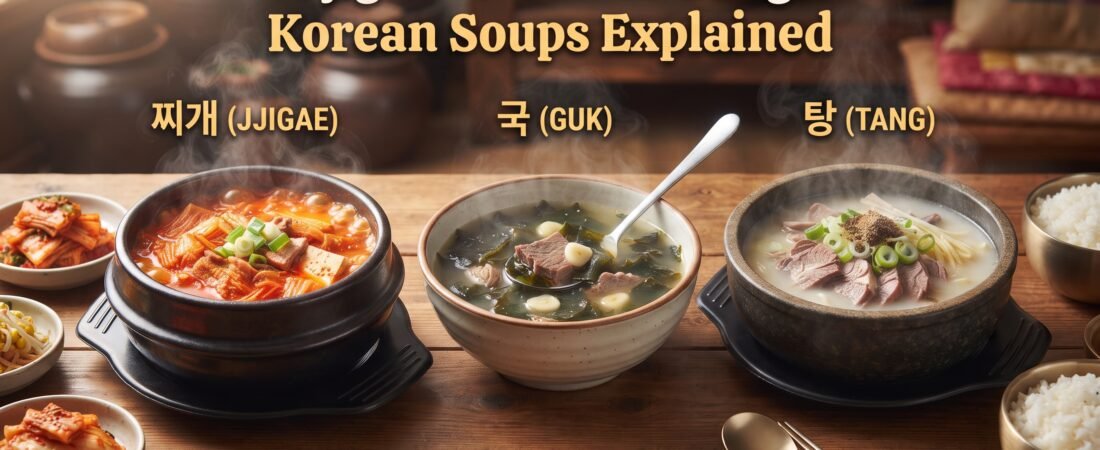
Korean meals often include a comforting bowl of soup or stew, but you may have noticed that Korean dishes use several different words for these dishes: jjigae (찌개), guk (국) and tang (탕).
For anyone new to Korean food, the difference can be confusing. All three can contain vegetables, tofu, meat, seafood or other ingredients, and there is no single English translation that perfectly explains each Korean term.
The easiest way to understand them is to look at how the dish is prepared, how much broth it contains and how it is traditionally served. Once you know the basic differences, a Korean menu becomes much easier to navigate.
🌟 Key Takeaways
- Guk (국) is generally a lighter soup with a relatively generous amount of broth and is commonly served as part of an everyday Korean meal.
- Jjigae (찌개) is usually thicker, more concentrated and more generously filled with ingredients than guk.
- Tang (탕) traditionally refers to a range of Korean soups or broths, often associated with longer cooking or substantial ingredients, although the boundaries between the terms are not always strict.
- Korean soup names reflect culinary tradition and style, rather than a rigid set of rules about ingredients or consistency.
What Is Guk (국)?
Guk is the everyday Korean word for soup. It is commonly served alongside rice and other side dishes as part of a Korean meal.
Guk generally has more broth relative to its solid ingredients than jjigae. The broth may be made from vegetables, dried seafood, meat, seaweed or other ingredients, depending on the dish.
Some familiar examples include:
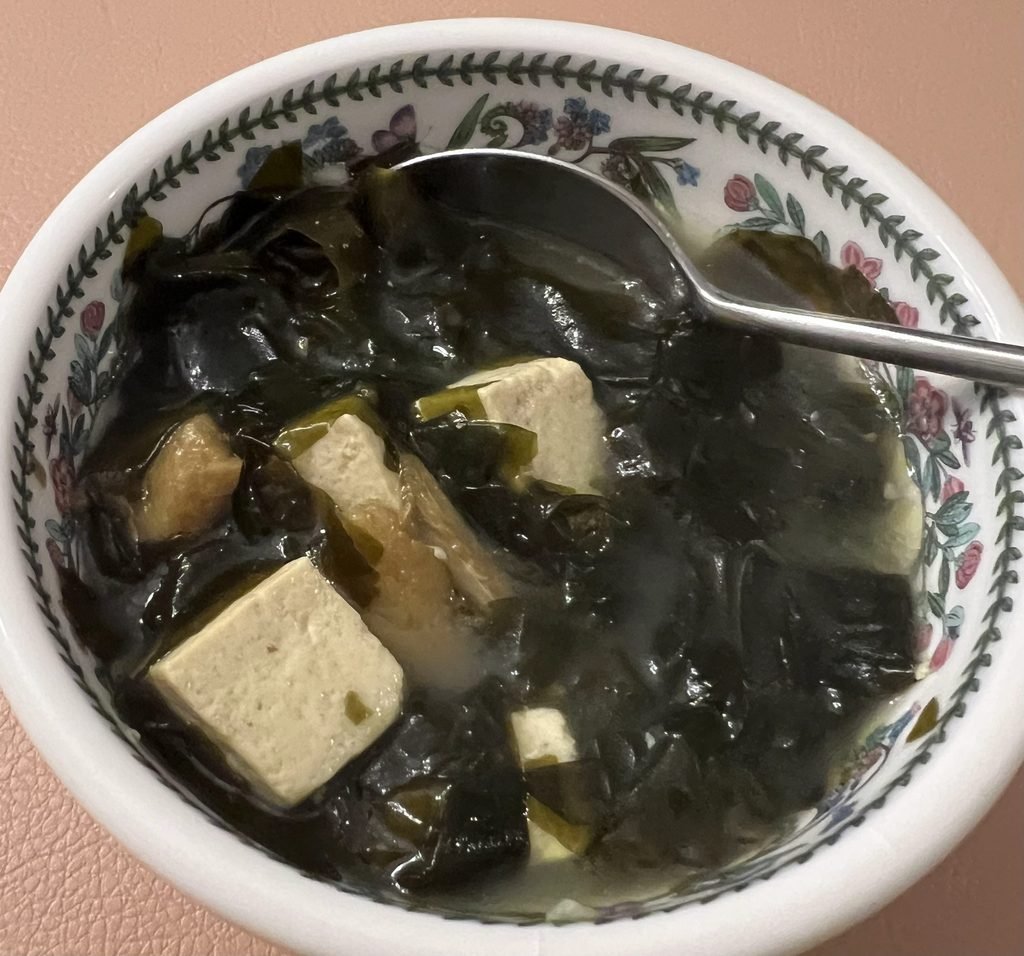
- Miyeok-guk (미역국) — seaweed soup
- Doenjang-guk (된장국) — soybean paste soup
- Kongnamul-guk (콩나물국) — soybean sprout soup
- Sigeumchi-guk (시금치국) — spinach soup
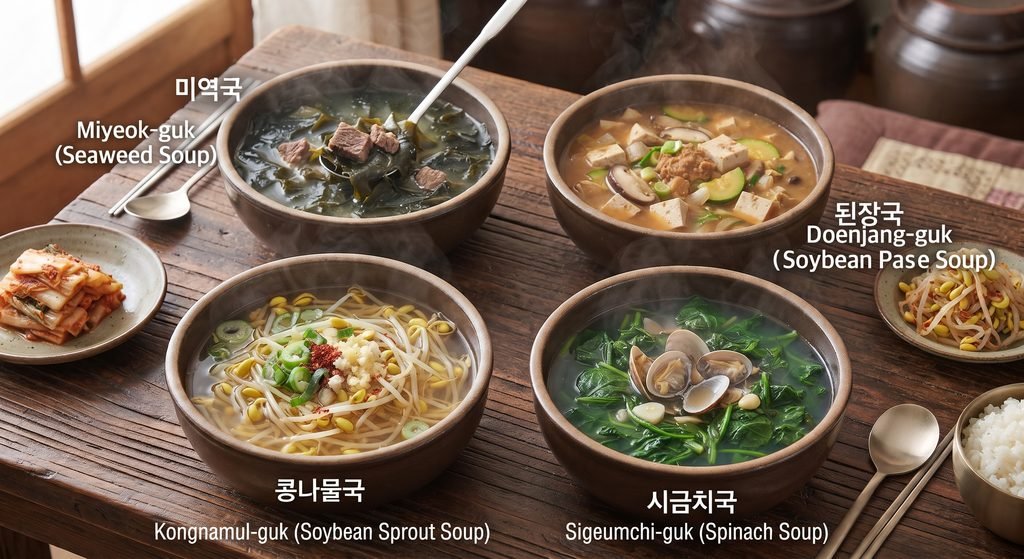
Miyeok-guk is a particularly good example of how guk fits into everyday Korean cooking. It is well known for its association with birthdays and postpartum food traditions, but many Korean households also enjoy it simply as an everyday soup.
The flavour of guk can range from delicate and clean to savoury and deeply seasoned. It does not necessarily mean a bland or watery soup.
What Is Jjigae (찌개)?
Jjigae is usually more substantial than guk. It tends to contain a higher proportion of ingredients and a smaller amount of concentrated broth.
Jjigae is often served bubbling hot in a small pot and eaten with rice.
Some of the best-known examples include:
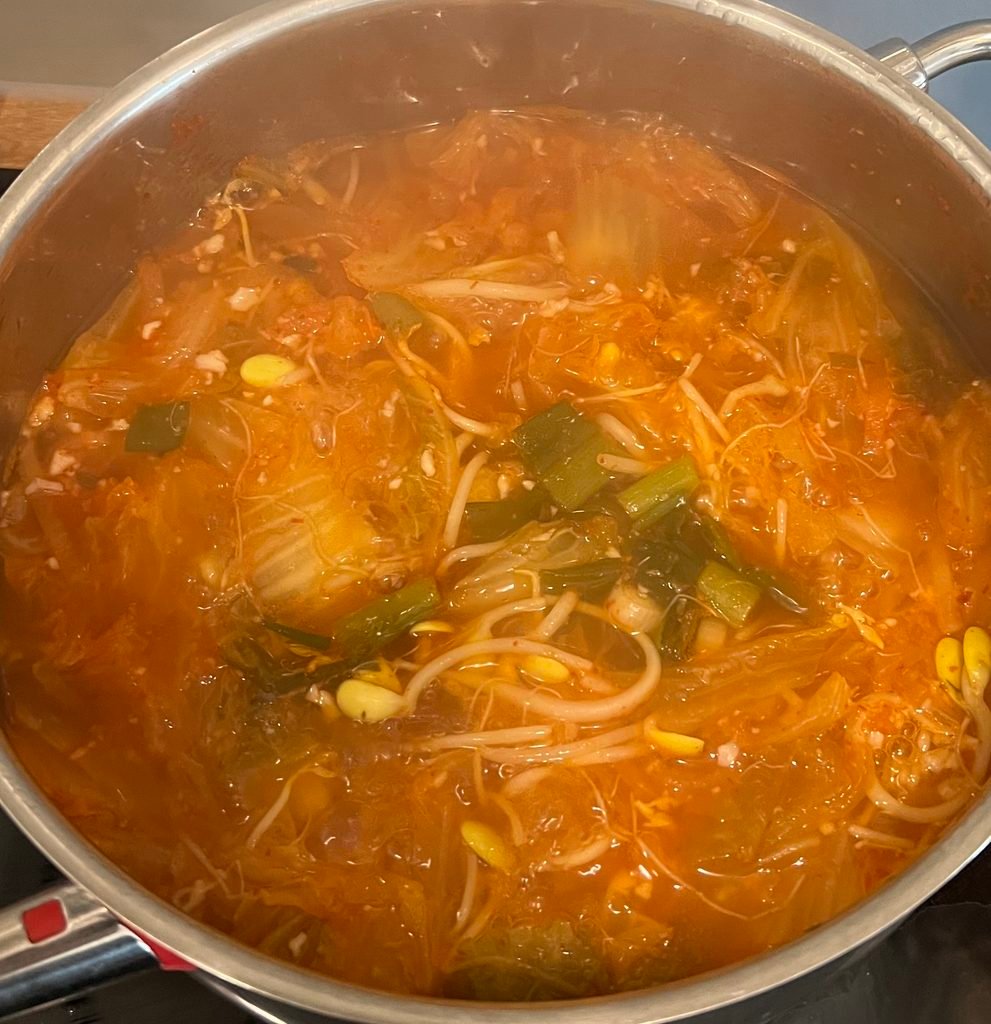
- Kimchi jjigae (김치찌개) — kimchi stew
- Doenjang jjigae (된장찌개) — fermented soybean paste stew
- Sundubu jjigae (순두부찌개) — soft tofu stew
- Budae jjigae (부대찌개) — army stew
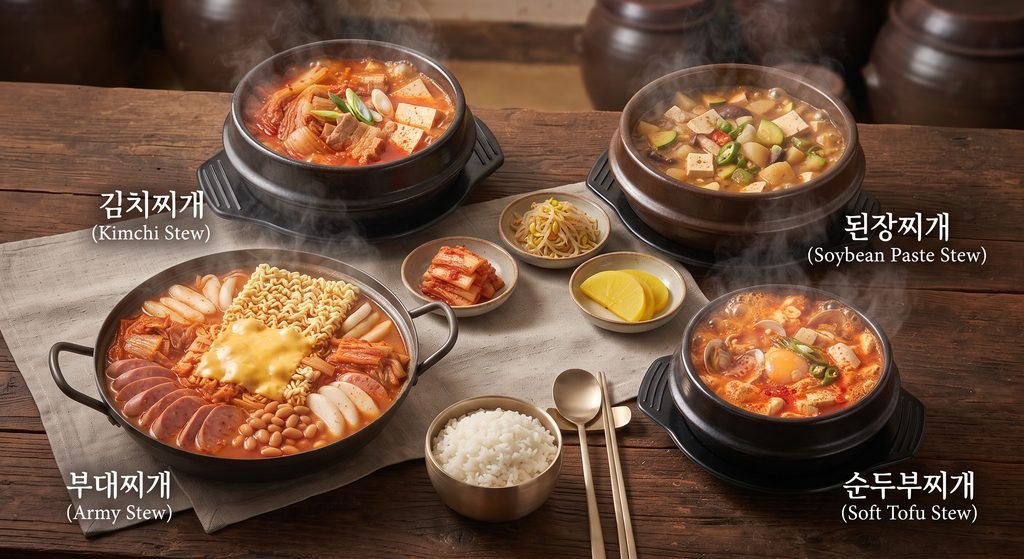
Kimchi jjigae is a particularly practical example of Korean home cooking. Well-fermented kimchi provides acidity and depth, while tofu, onion, mushrooms and other ingredients make the dish satisfying enough to serve with rice.
Doenjang jjigae has a different character. Doenjang provides a deeply savoury fermented flavour, while vegetables and tofu add texture and substance.
In general, think of jjigae as a more concentrated, ingredient-rich dish designed to be eaten as part of the meal rather than simply as a bowl of broth.
What Is Tang (탕)?
Tang is another Korean term used for soups and broths. The word is often associated with dishes that involve substantial ingredients and, traditionally, longer cooking or simmering.
Examples include:
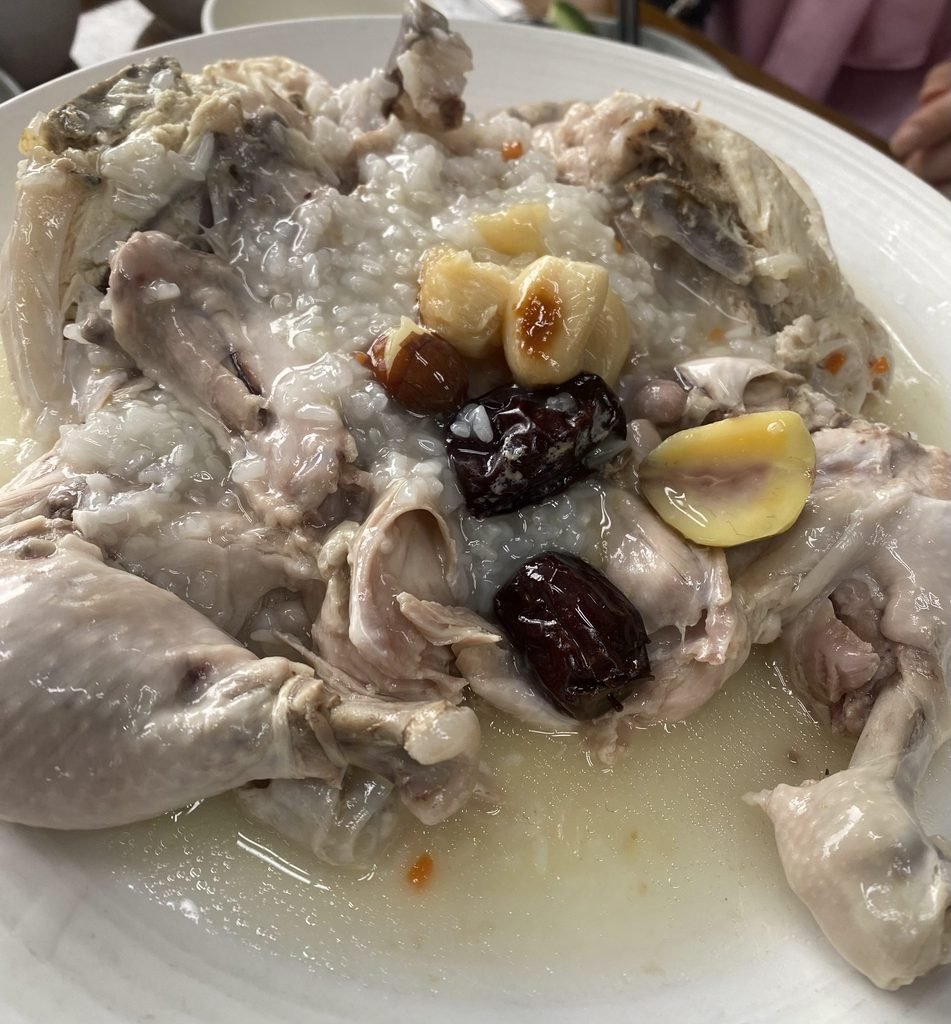
- Samgyetang (삼계탕) — ginseng chicken soup
- Galbitang (갈비탕) — beef short rib soup
- Seolleongtang (설렁탕) — ox-bone soup
- Maeuntang (매운탕) — spicy fish soup
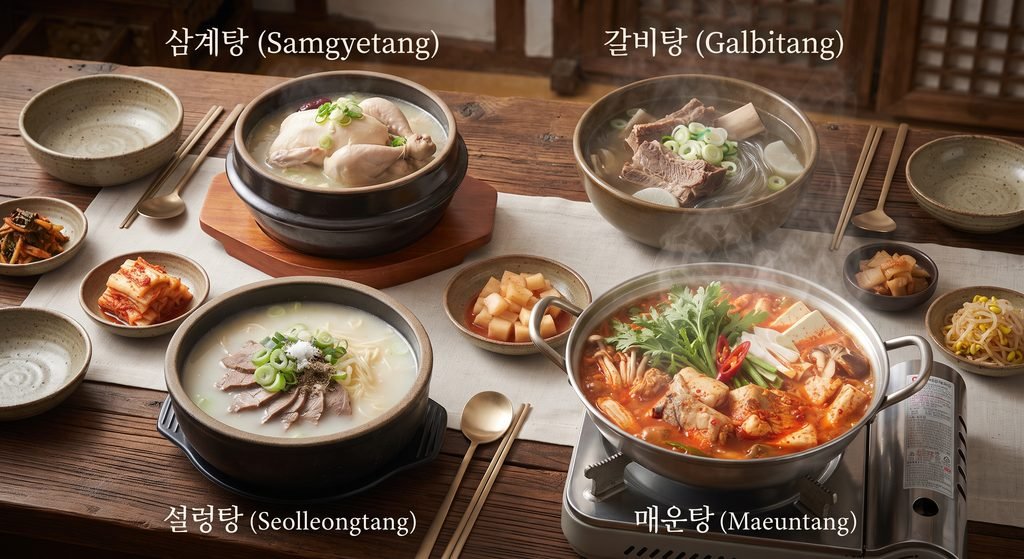
Tang dishes can vary considerably. Some have a clear, delicate broth, while others are richer or more intensely flavoured.
This is one reason it is better not to treat guk, jjigae and tang as three completely separate categories. Korean food terminology developed through culinary tradition, and the boundaries between dishes can overlap.
The word tang can also carry a sense of a substantial soup or broth in which the ingredients themselves are an important part of the dish.
Jjigae vs Guk vs Tang: What Is the Difference?
A simple way to remember the distinction is to think about the overall balance of broth and ingredients.
| Guk | Jjigae | Tang | |
| General character | Lighter soup | Thicker, more concentrated stew | Substantial soup or broth |
| Broth | Usually more plentiful | Usually less broth, more ingredients | Varies considerably |
| Ingredients | Often relatively simple | Usually generous and filling | Often substantial main ingredients |
| Everyday example | Miyeok-guk | Kimchi jjigae | Galbitang |
| Typical cooking style | Often straightforward | Often simmered together | Often simmered or cooked to develop the broth |
These are general tendencies rather than strict rules. Korean soup terminology does not work like a precise classification system.
For example, two dishes may have a similar amount of broth but use different names because of their ingredients, preparation method or culinary tradition.
Why Does Korean Food Have So Many Types of Soup?
Soup is deeply integrated into Korean meal culture.
A traditional Korean meal is often built around rice, soup or stew and several banchan (side dishes). The soup provides warmth, moisture and another layer of flavour alongside the other dishes.
This also explains why Korean soups do not always function like Western soups.
A bowl of Korean soup may not necessarily be intended as a complete meal by itself. Instead, it can be part of a larger table where rice, vegetables, fermented foods and protein-rich dishes are eaten together.
This style of eating gives even a simple soup an important role.
Three Examples That Make the Difference Easy to Understand
1. Miyeok-guk: A classic guk
Miyeok-guk is made with miyeok (seaweed) and a savoury broth. Depending on the recipe, it may include beef, seafood, tofu or dried mushrooms.
The relatively light broth and generous amount of liquid make it a good example of guk.
It is traditionally associated with birthdays and postpartum meals in Korea, but there is no reason to save miyeok-guk for special occasions. It is also a comforting everyday soup.
2. Kimchi jjigae: A classic jjigae
Kimchi jjigae has a much more concentrated character.
Well-fermented kimchi, tofu and vegetables simmer together to create a bold, slightly sour and savoury broth. The finished dish is usually served bubbling hot with rice.
This is one of the easiest Korean dishes to make at home because the kimchi itself contributes so much flavour.
3. Samgyetang: A classic tang
Samgyetang is a whole young chicken traditionally stuffed with glutinous rice, garlic, jujube and Korean medicinal ingredients such as ginseng.
It is simmered until the chicken is tender and the broth becomes deeply savoury.
Samgyetang is often associated with summer health traditions in Korea, particularly the three hottest days known as sambok. It is also enjoyed more broadly as a nourishing and comforting meal.
This is a good example of how tang often places greater emphasis on a substantial central ingredient and a developed broth.
💡 K-Well’s Cooking Tip
You do not need to memorise every Korean soup category before cooking Korean food.
Instead, start by thinking about the kind of meal you want.
For a light everyday soup, try miyeok-guk, doenjang-guk or kongnamul-guk.
For something heartier and more intensely flavoured, make kimchi jjigae or doenjang jjigae.
When you want a substantial soup centred around meat, chicken or seafood, look for dishes described as tang.
And remember that Korean recipes can vary from one household to another. The same dish may have slightly different amounts of broth, vegetables or seasoning depending on the cook.
How Korean Soup Is Usually Enjoyed
Korean soup is often best appreciated as part of the whole meal rather than judged on its own.
A simple table might include:
- A bowl of rice
- One soup or stew
- Kimchi
- Two or three vegetable side dishes
- A protein such as tofu, egg, fish or meat
At home, however, there is no need to recreate a full Korean table every day. A simple bowl of guk, jjigae or tang can be the centre of a satisfying meal when prepared with plenty of vegetables and a source of protein, then served with rice. It is an easy, practical way to bring vegetables, protein and carbohydrates together without preparing several side dishes.
This is one of the things I love about Korean home cooking: a single pot of soup or stew, served with rice, can provide a practical way to bring vegetables, protein and carbohydrates together in one simple meal.
FAQ
Q1. Is jjigae a soup or a stew?
Jjigae is often translated as “stew” because it generally contains less broth and more solid ingredients than guk. However, there is no perfect English equivalent. It is best understood as a Korean dish category with a concentrated broth and generous ingredients.
Q2. Which Korean soup is best for beginners?
Miyeok-guk and doenjang-guk are good starting points if you prefer lighter soups. If you enjoy stronger flavours, kimchi jjigae and doenjang jjigae are approachable and practical Korean home-cooking dishes.
Q3. Do Korean people eat soup with every meal?
Soup or stew is traditionally an important part of many Korean meals, but it is not necessary to serve one at every meal. Modern Korean households also adapt meals to their schedules and preferences.
🌿 K-Well’s Everyday Kitchen Notes
Jjigae, guk and tang are not simply three different words for the same thing. They reflect different traditions of Korean soup and stew, although their boundaries can overlap.
Guk tends to be lighter and broth-focused, jjigae is usually more concentrated and ingredient-rich, while tang often refers to substantial soups or broths that highlight their main ingredients and cooking process. Once you understand these general differences, Korean menus become much easier to explore.
For me, the beauty of Korean soup is its practicality. A few vegetables, tofu and doenjang can become a simple everyday guk. Well-fermented kimchi can turn into a deeply satisfying jjigae. And when you want a more substantial meal, traditional tang can take centre stage.
On chilly days when I crave something warm and comforting, I often turn to doenjang-guk or miyeok-guk. When I fancy a spicier dish with a thicker, richer flavour and less broth, kimchi jjigae is a favourite. And when I want something especially nourishing and hearty, I go for samgyetang, Korea’s traditional ginseng chicken soup.
Each has its own character, yet all three styles offer a comforting way to warm both body and mind on a cold day.
You do not need to follow every traditional rule to enjoy Korean soup. Start with the ingredients you have, choose the style that suits your mood and bring a little Korean home cooking into your everyday meals. Next time you crave a warm bowl of soup, why not give guk, jjigae or tang a try?
Read Next
- Easy Korean Tofu Soup with Tesco Ingredients
- Healthy Tesco Bibimbap Bowl: Easy Korean-Inspired UK Recipe
- What Is Japgokbap? Why Korean Multi-Grain Rice Beats White Rice
References
- Korean Food Promotion Institute (KFPI). Hansik: Korean Food Culture. https://www.hansik.or.kr/
- Korean Cultural Centre UK. Korean Food Culture. https://uk.korean-culture.org/
- Ministry of Agriculture, Food and Rural Affairs (MAFRA). Korean Food Culture. https://www.mafra.go.kr/
- National Institute of Korean Language. Standard Korean Language Dictionary. https://stdict.korean.go.kr/