
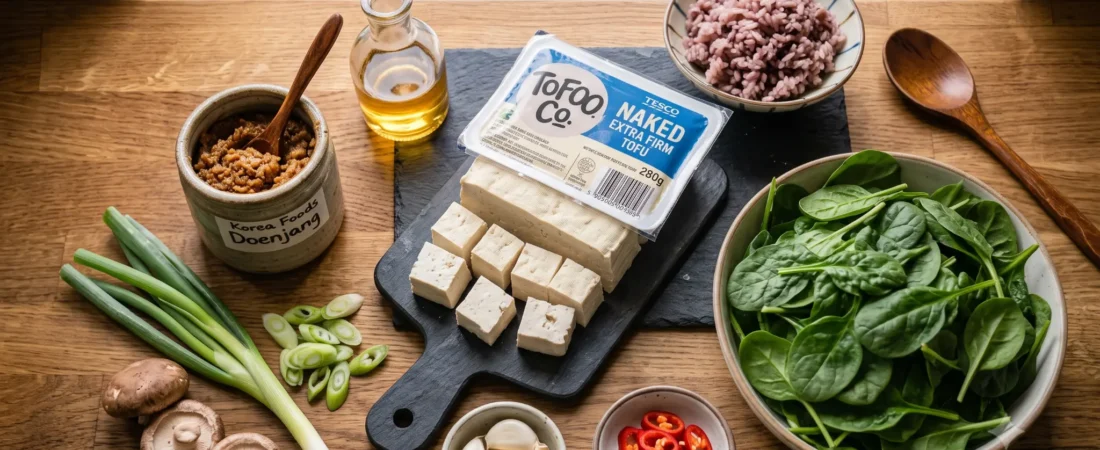
Make a comforting Korean tofu soup with everyday Tesco vegetables, mushrooms and traditional doenjang. This simple, vegetable-rich soup comes together in about 25 minutes, making it a practical choice for a nourishing weeknight meal.
🌟 Key Takeaways
- Simple Everyday Ingredients: Use plain tofu, spinach, mushrooms and courgette to make a Korean-inspired soup with ingredients available at UK supermarkets.
- Traditional Korean Flavour: Doenjang, a fermented soybean paste, gives the broth its distinctive savoury depth without the need for complicated seasonings.
- Easy to Customise: Adjust the vegetables, tofu and optional rice to suit your appetite, available ingredients and everyday cooking preferences.
A Korean Comfort Bowl for Busy Weeknights
When the weather turns grey and you want something warm without spending too much time in the kitchen, a simple bowl of Korean soup can be just what you need.
Inspired by doenjang guk (된장국), this Korean tofu soup combines soft tofu, mushrooms, courgette and spinach in a light, savoury broth. It takes approximately 25 minutes to prepare and cook, using familiar vegetables alongside one essential Korean pantry ingredient: doenjang.
Unlike the thicker, more concentrated doenjang jjigae (된장찌개), this version has a lighter broth and plenty of vegetables. It is an adaptable everyday recipe rather than a strictly traditional preparation, allowing you to enjoy familiar Korean flavours with ingredients from a regular UK supermarket shop.
Serve it on its own for a light meal or alongside a bowl of warm rice for a more substantial dinner.
Why Doenjang and Tofu Work So Well Together
The Earthy Flavour of Doenjang
Doenjang is a traditional Korean fermented soybean paste with a deep, savoury flavour. It is an essential seasoning in many Korean soups and stews, including doenjang guk and doenjang jjigae.
Its rich, earthy taste complements mild ingredients such as tofu, mushrooms and courgette. A small amount can transform a simple vegetable broth into a distinctly Korean-style soup.
Because doenjang varies in saltiness and intensity between brands, start with a modest amount and adjust after tasting. This also allows the natural flavours of the vegetables to come through.
For more about Korean fermented seasonings, see 3 Essential Korean Fermented Foods: Kimchi, Doenjang and Gochujang.
Choosing Tofu for Korean Soup
Plain firm or medium-firm tofu works well in this recipe because it holds its shape during simmering while absorbing some of the savoury broth.
If you prefer a softer texture, try medium tofu or silken tofu. Silken tofu is particularly suitable for a delicate, sundubu-inspired variation, although it needs to be handled gently to prevent it from breaking apart.
Choose unflavoured tofu so that the doenjang remains the main seasoning. Pre-marinated varieties can change the flavour of the broth and may contain additional salt or sugar.
Tesco Shopping List
| Ingredient | Amount |
| Plain firm tofu | 280–300g |
| Baby spinach | 100–150g |
| Chestnut mushrooms | 150g |
| Courgette | 1 small |
| Spring onions | 2 |
| Garlic | 2 cloves (Optional) |
| Korean doenjang | 1–1½ tbsp |
| Dried shiitake mushrooms or dashima | Optional |
| Gochugaru | Optional, to taste |
| Toasted sesame oil | Optional, ½ tsp |
Tesco’s fresh vegetables and plain tofu can make the shopping straightforward. Doenjang, dried shiitake mushrooms and gochugaru are more readily found in Korean or other East Asian grocery shops. Product ranges vary by store and delivery area.
If you have a Sainsbury’s nearby, you can also explore my guide to Best Tofu Brands at Sainsbury’s for Doenjang Jjigae, which covers suitable tofu options for Korean soups and stews.
Easy Korean Tofu and Spinach Soup
Serves: 2 generous portions
Preparation time: 10 minutes
Cooking time: 15–18 minutes
Ingredients
- 750ml water
- 3 dried shiitake mushrooms or one small piece of dashima (optional)
- 1–1½ tablespoons Korean doenjang
- 150g chestnut mushrooms, sliced
- 1 small courgette, cut into half-moons
- 280–300g firm tofu, cut into bite-sized cubes
- 2 garlic cloves, finely minced (optional)
- 100–150g baby spinach
- 2 spring onions, thinly sliced
- ½ teaspoon gochugaru or 1 finger chillies (optional)
- ½ teaspoon toasted sesame oil (optional)
Step 1: Make a Simple Mushroom Broth
Pour the water into a medium saucepan and add the dried shiitake mushrooms. Bring to a gentle simmer and cook for 8–10 minutes to develop a light mushroom broth.
Remove the mushrooms, slice them and return them to the saucepan.
If using dashima instead, remove it just before the water reaches a full boil. If you do not have either ingredient, plain water works perfectly well. The doenjang, garlic and fresh mushrooms provide plenty of flavour.
Step 2: Add the Doenjang
Place one tablespoon of doenjang in a small bowl or ladle. Add a little warm broth and stir until the paste dissolves. Pour it back into the saucepan and stir gently.
Dissolving the paste separately helps distribute it evenly throughout the broth. Start with a smaller amount if your doenjang is particularly salty or concentrated.
Let the broth simmer briefly before tasting. You can always add a little more, but it is difficult to correct an overly salty soup.
Step 3: Cook the Mushrooms and Courgette
Add the sliced chestnut mushrooms and courgette. Simmer gently for 4–5 minutes, until the mushrooms have softened and the courgette is tender but still holds its shape.
Avoid overcooking the vegetables. Keeping a little texture makes the finished soup more enjoyable.
Step 4: Add the Tofu and Garlic
Gently add the tofu cubes and minced garlic. Simmer for another 4–5 minutes, allowing the tofu to warm through and absorb some of the broth’s flavour.
Stir carefully rather than vigorously. This helps keep the tofu cubes intact and gives the soup a more appealing texture.
Step 5: Finish with Spinach and Spring Onions
Add the baby spinach and stir gently for 30–60 seconds, just until the leaves wilt.
Finish with the sliced spring onions and optional gochugaru or finger chillies. Taste the broth once more before adding any extra seasoning, as the doenjang may already provide enough salt.
For a subtle nutty aroma, remove the saucepan from the heat and stir in ½ teaspoon of toasted sesame oil just before serving.
Serve immediately while warm.
How to Enjoy This Soup as a Complete Meal
This soup is flexible enough to serve as either a light lunch or a more substantial dinner.
Serve with Rice
A small bowl of warm brown rice, multigrain rice or basmati rice makes a natural accompaniment. Adjust the amount to your appetite and activity level.
Keeping the rice separate allows you to enjoy the broth without making it overly thick and helps preserve the soup’s light texture.
Add More Protein
For a more substantial bowl, try adding:
- A poached or lightly boiled egg
- Shelled edamame
- Cooked prawns
- Shredded cooked chicken
Alternatively, increase the amount of tofu to make the soup more filling without changing its basic flavour.
Use Seasonal Vegetables
One of the pleasures of making Korean soup at home is how easily you can adapt it to what is already in your fridge.
Try replacing or supplementing the spinach and courgette with:
- Pak choi for a tender, leafy texture
- Cabbage for a little sweetness
- Bean sprouts for freshness and crunch
- Broccoli for extra vegetable variety
- Frozen edamame for a convenient addition
Add firmer vegetables earlier and delicate leafy greens towards the end so that each ingredient retains its preferred texture.
Helpful Tips for Making Korean Tofu Soup
Start with less doenjang. Different brands have different levels of saltiness. Add a little at a time and taste the broth before adjusting the seasoning.
Keep the heat gentle. A steady simmer is enough to warm the tofu and cook the vegetables. Vigorous boiling can break delicate tofu into small pieces.
Add spinach at the end. A short cooking time helps preserve its fresh colour and prevents the leaves from becoming overly soft.
Prepare only what you need. This soup is quick to make and is particularly enjoyable freshly cooked, when the vegetables and tofu retain their texture.
FAQ
Q1. Can I make Korean tofu soup without dried shiitake mushrooms?
Yes. Plain water works well as the base. Fresh chestnut mushrooms, garlic and doenjang provide plenty of savoury flavour. Dried shiitake or dashima simply adds another layer of depth.
Q2. Can I use miso instead of doenjang?
Yes, although the finished soup will have a different flavour. Miso is generally milder and can be sweeter, depending on the variety. Start with a similar amount and adjust to taste. If you use miso, describe the result as a Korean-inspired tofu soup rather than traditional doenjang guk.
Q3. How can I make the soup spicier?
Add ½–1 teaspoon of gochugaru, adjusting the quantity to your preference. For a more pronounced chilli flavour, add a little more towards the end of cooking. Pure gochugaru is a convenient way to add warmth without using a prepared chilli sauce.
Q4. Can I prepare this soup in advance?
You can prepare the vegetables and slice the tofu ahead of time, keeping them refrigerated until needed. For the best texture, cook the soup shortly before serving. If you have leftovers, refrigerate them promptly in a covered container and reheat thoroughly, avoiding repeated reheating.
🌿 K-Well’s Everyday Kitchen Notes
Whenever I crave a warm, comforting soup, I often make a simple Korean doenjang soup with a clear broth. I usually start with a light broth made with dried kelp (dashima) and dried shiitake mushrooms, then add one or two tablespoons of doenjang, along with potatoes, onions and tofu. To give it a little heat, I like to add gochugaru, sliced spring onions and fresh chilli.
What I particularly enjoy about this soup is its simplicity. The savoury depth of doenjang, the natural sweetness of the onion and the soft texture of the potatoes and tofu come together beautifully. You can easily adjust the ingredients and spice level to suit your taste.
I especially enjoy serving this warm soup alongside bibimbap. The light, savoury broth complements the colourful vegetables, rice and seasoned ingredients, creating a more balanced and satisfying meal.
For me, this is one of the easiest ways to enjoy doenjang in everyday cooking. It is a comforting, flexible dish that makes the most of a few simple ingredients without requiring complicated preparation.
Read Next
- Healthy Tesco Bibimbap Bowl: Easy Korean-Inspired UK Recipe
- 15-Minute Gochujang Tofu Rice Bowl
- 3 Essential Korean Fermented Foods: Kimchi, Doenjang and Gochujang
References
- Harvard T.H. Chan School of Public Health. Straight Talk About Soy. https://nutritionsource.hsph.harvard.edu/soy/
- National Health Service (NHS). The Eatwell Guide. https://www.nhs.uk/live-well/eat-well/food-guidelines-and-food-labels/the-eatwell-guide/