
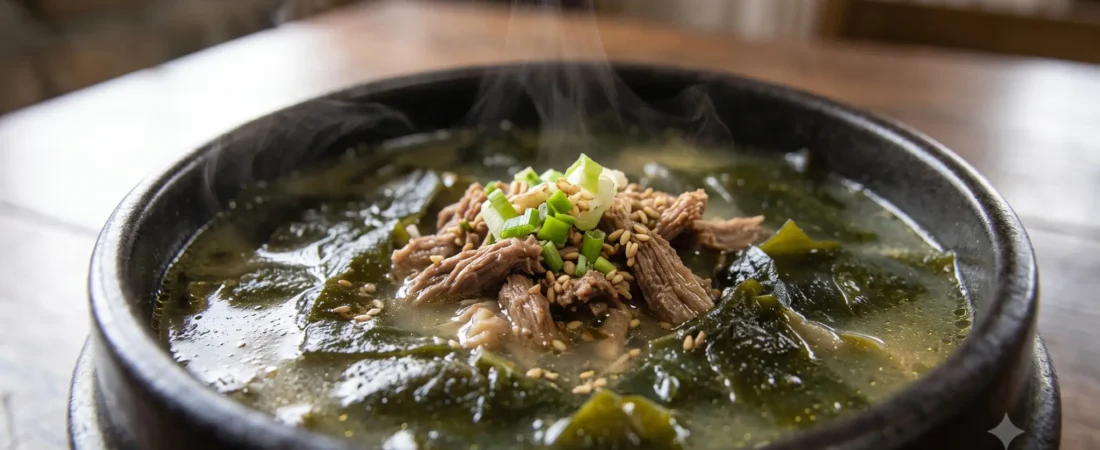
Discover Korean seaweed soup (miyeok-guk), its birthday and postpartum traditions, plus an easy everyday recipe with simple UK ingredients.
Key Takeaways
- Korean Food Tradition: Miyeok-guk is traditionally served after childbirth and eaten on birthdays, but it is also a familiar everyday soup in Korea.
- Simple and Adaptable: The mild seaweed broth can be prepared with beef, tofu, mussels or white fish and served with rice for a comforting meal.
- Mindful Portions: Miyeok provides iodine, but levels vary between seaweed products, so moderate portions are sensible, particularly during pregnancy or breastfeeding.
What Is Miyeok-guk?
Korean seaweed soup, known as miyeok-guk (미역국), is a mild, savoury soup made with tender seaweed and a delicately seasoned broth. It is traditionally served after childbirth and on birthdays in Korea, but it is also enjoyed throughout the year as a comforting home-cooked meal. The classic version combines dried miyeok with beef, garlic, sesame oil and Korean soup soy sauce. You can also prepare it with tofu, mussels or white fish, making it an adaptable introduction to Korean soup.
Miyeok is a type of brown seaweed often labelled as sea mustard or wakame outside Korea. Guk simply means soup.
To make miyeok-guk, dried seaweed is soaked, rinsed and simmered in a broth seasoned with garlic, sesame oil and soy sauce. Unlike many well-known Korean soups and stews, it contains no gochujang or gochugaru. Its flavour is mild, clean and savoury rather than spicy.
Miyeok is different from gim, the thin roasted seaweed commonly served with rice or eaten as a snack. Gim does not develop the same soft texture and should not be used as a substitute in this soup. If you are unsure which type to buy, read this Korean Seaweed UK Shopping Guide to learn more about Korean seaweed varieties.
Why Do Koreans Eat Seaweed Soup on Their Birthday?
Miyeok-guk is Korea’s best-known birthday soup. Many Koreans eat it for breakfast on their birthday, although it can be served at any time of day.
The custom is connected to the tradition of serving miyeok-guk to mothers after childbirth. Eating the same soup on a birthday acknowledges the mother who gave birth to the person being celebrated. A simple bowl of soup therefore carries a deeper meaning of gratitude, care and family connection.
For Koreans living abroad, preparing miyeok-guk can also be a familiar way to continue a meaningful birthday tradition using ingredients that are easy to keep in the cupboard.
Miyeok-guk After Childbirth
In Korea, miyeok-guk has long been valued as a comforting postpartum meal. Its warm broth contributes to fluid intake, while the soft seaweed is easy to pair with rice and simple side dishes when energy and appetite may vary after childbirth.
The soup can also be adapted to provide important nutrients. Beef, tofu, fish or shellfish add protein, which the body needs for normal tissue maintenance and repair. A beef-based miyeok-guk can contribute iron, while miyeok provides iodine to support normal thyroid function.
Served with rice and a vegetable or protein-rich side dish, miyeok-guk becomes a practical and satisfying postpartum meal. It is also deeply connected with Korean family care: preparing a pot for a new mother offers nourishment, warmth and support during a demanding period.
Enjoyed in moderate portions alongside a variety of proteins, vegetables and grains, miyeok-guk can be a warm and nourishing part of a balanced postpartum diet.
An Everyday Korean Soup
Miyeok-guk is not reserved only for birthdays or the postpartum period. It is also a familiar everyday soup in Korean homes.
The light broth pairs naturally with rice, tofu, eggs and vegetable side dishes. It is especially useful when you want a warm Korean meal without chilli heat. The flavour often becomes richer after the soup has rested, making it practical to prepare in advance and reheat for another meal.
Easy Korean Seaweed Soup Recipe
Serves: 4
Preparation: 15 minutes
Cooking: 30 minutes
Ingredients
- 10g dried Korean miyeok or wakame
- 150g lean beef, thinly sliced
- 2 teaspoons toasted sesame oil
- 2 garlic cloves, minced
- 1–2 teaspoons Korean soup soy sauce
- 1 litre water or unsalted beef stock
- Salt, to taste
Ingredient Substitutions
For a meat-free version, replace the beef with firm tofu and use vegetable stock. Add the tofu during the final 10 minutes so that it holds its shape.
Mussels or pieces of white fish also work well. If Korean soup soy sauce is unavailable, use a smaller amount of regular light soy sauce and adjust it after tasting. Tamari can be used for a gluten-free version, provided all other ingredient labels are also checked.
K-Well’s Seasoning Tip: Add a small amount of soy sauce for savoury depth, then season with salt to taste for a cleaner, more delicate flavour. Plain water works well, as the miyeok, garlic and sesame oil create a naturally flavourful broth without commercial stock.
New to Korean cooking? 7 Essential Korean Pantry Staples for Beginners in the UK explains how soy sauce, toasted sesame oil and other everyday Korean seasonings are used.
How to Make Miyeok-guk
1. Soak the Seaweed
Place the dried miyeok in a large bowl and cover it generously with cold water. Soak for 10–15 minutes or follow the instructions on the packet.
Once expanded, drain and rinse the seaweed. Gently squeeze out the excess water and cut any long pieces into bite-sized lengths.
2. Sauté the Beef
Warm the sesame oil in a medium saucepan over medium heat. Add the beef and cook for two to three minutes, stirring until the outside is lightly browned.
Add the garlic and cook for about 30 seconds, taking care not to burn it.
3. Add the Seaweed
Add the soaked seaweed and soup soy sauce. Stir everything together for approximately two minutes so that the seaweed absorbs the savoury seasoning.
4. Simmer the Soup
Pour in the water or stock and bring the soup to a boil. Reduce the heat and simmer gently for 25–30 minutes, or until the seaweed is tender and the broth has developed a rounded flavour.
Taste before adding salt because the soy sauce may already provide enough seasoning. Serve warm with cooked rice.
K-Well’s Tip: Miyeok-guk is traditionally mild, so add the soy sauce gradually. For a balanced everyday meal, serve it with rice, a protein-rich side such as tofu or egg, and a simple vegetable side dish.
Buying Miyeok in the UK
Look for products labelled:
- Dried miyeok
- Korean sea mustard
- Dried wakame
- Wakame seaweed
Korean supermarkets and East Asian grocery shops generally carry bags of dried seaweed intended for soup. Wakame may also be available in the world-food section of larger UK supermarkets, although availability varies by location.
If you are shopping in London, 5 Healthy Foods to Buy at Oseyo guide includes tips for finding dried miyeok and other Korean ingredients.
Choose plain dried seaweed and check the preparation instructions because soaking time and expansion can vary between products.
Store unused dried miyeok in a sealed container away from heat and moisture. Refrigerate leftover soup in a covered container for up to two days and reheat it thoroughly before serving.
FAQ
Q1. Is Miyeok the Same as Gim?
No. Miyeok is a thicker brown seaweed that becomes soft when simmered. Gim is a thin seaweed usually roasted and served with rice or eaten as a snack.
Q2. Can I Make Miyeok-guk Without Beef?
Yes. Firm tofu, mussels and white fish all work well. For a plant-based version, use tofu and add a little extra garlic for flavour. Plain water is enough, as the miyeok, sesame oil, garlic and soy sauce develop their own savoury depth while simmering, so vegetable stock is optional.
Q3. Is Miyeok-guk Only Eaten on Birthdays?
No. It is strongly associated with Korean birthdays and postpartum food traditions, but it is also commonly enjoyed as an everyday home-cooked soup.
K-Well’s Final Thoughts
Miyeok-guk connects two meaningful Korean traditions: caring for mothers after childbirth and expressing gratitude on birthdays. At the same time, its mild broth and flexible ingredients make it practical for an ordinary weekday meal.
Whether you prepare it for a birthday or simply enjoy it with rice on a cool evening, miyeok-guk is an approachable way to experience Korean food culture at home.
Read Next
- Korean Seaweed UK Shopping Guide: Where to Buy Gim (Nori)
- 7 Essential Korean Pantry Staples for Beginners in the UK
- 5 Healthy Foods to Buy at Oseyo London: K-Wellness Guide
References
- British Dietetic Association (BDA). Iodine.
https://www.bda.uk.com/resource/iodine.html - National Library of Medicine. Seaweed—Drugs and Lactation Database (LactMed).
https://www.ncbi.nlm.nih.gov/books/NBK501850/ - UK Committee on Toxicity of Chemicals in Food, Consumer Products and the Environment (COT). Statement on the Potential Effects That Excess Iodine Intake May Have During Preconception, Pregnancy and Lactation.
https://www.gov.uk/government/publications/iodine/statement-on-the-potential-effects-that-excess-iodine-intake-may-have-during-preconception-pregnancy-and-lactation