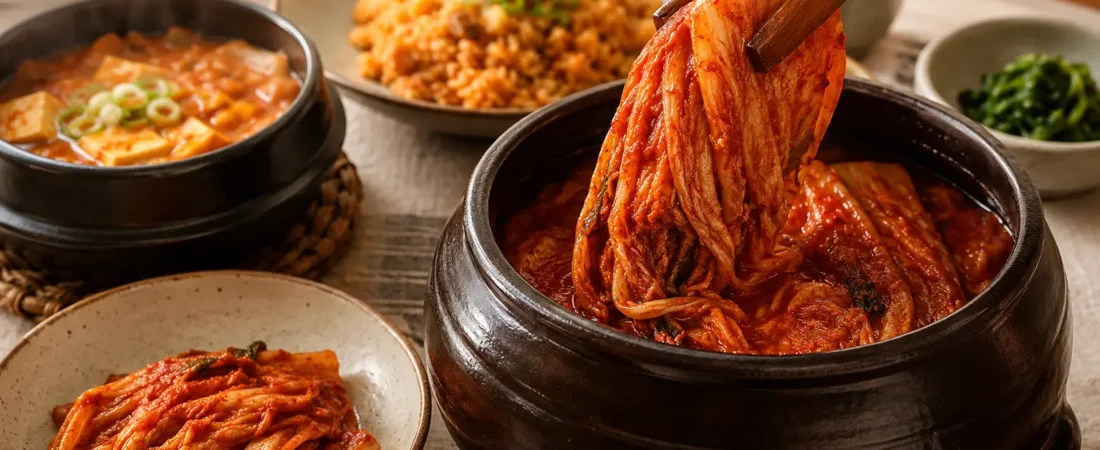
Freshly made kimchi is crisp, bright and lively. As it ferments, however, it develops a sharper acidity, softer texture and deeper savoury aroma. In Korean cooking, that change is not viewed simply as kimchi becoming “too old”. It marks the beginning of a different set of culinary possibilities.
A well-ripened batch can season an entire pot of kimchi-jjigae, give fried rice its distinctive tang or become the centrepiece of a slow-braised kimchi-jjim. This is why many Korean households keep mature kimchi specifically for cooking.
The Korean word most closely associated with long-aged kimchi is mukeunji (묵은지). Understanding how it differs from ordinary ripe kimchi makes it much easier to choose the right jar and use it well.
If you are new to Korean fermentation, 3 Essential Korean Fermented Foods: Kimchi, Doenjang and Gochujang explains how these three staples differ in ingredients, flavour and everyday use.
🌟 Key Takeaways
- Aged kimchi is a cooking ingredient in its own right: Its acidity and mature savoury flavour can season rice, stews and braised dishes without a complicated sauce.
- Sour kimchi and mukeunji are related but not identical: Sin-kimchi means sour, well-ripened kimchi, while mukeunji usually refers to kimchi aged for a much longer period under controlled conditions.
- Cooking changes the experience: Heat softens the cabbage further and lets its acidity blend with rice, tofu, tuna, pork or other ingredients.
What Is Aged Kimchi?
Kimchi begins changing as soon as fermentation develops. Lactic acid bacteria use sugars naturally present in the vegetables and seasonings, producing organic acids and other metabolites. Over time, the pH falls, acidity rises and the flavour moves from fresh and lightly seasoned towards tangy, complex and deeply fermented.
Korean cooks commonly describe noticeably sour, well-ripened kimchi as sin-kimchi (신김치). The word sin means sour. This is the everyday kimchi often chosen for quick dishes such as kimchi fried rice, kimchi pancakes and simple stews.
Mukeunji (묵은지) goes a step further. The term generally refers to kimjang-style cabbage kimchi that has been aged for a prolonged period, often through several seasons. Research has examined mukeunji aged for 12 and 24 months, showing that the dominant lactic acid bacteria continue to change during long storage.
There is no single household rule that turns kimchi into mukeunji on a particular day. The recipe, salt level, storage temperature and fermentation conditions all affect the result. More importantly, properly aged mukeunji is intentionally stored for depth and balance; it is not simply a forgotten jar that has deteriorated.
How Fermentation Changes the Flavour
The flavour of mature kimchi cannot be explained by sourness alone. During fermentation, organic acids accumulate and aroma compounds shift. Studies of kimchi fermentation have identified changes in acids, alcohols and sulphur-containing compounds, all of which help shape its evolving aroma and taste.
At the same time, the cabbage gradually loses some of its raw crunch. A young kimchi snaps when bitten, while well-ripened kimchi bends more easily and absorbs broth or cooking juices readily.
These changes make aged kimchi particularly useful in cooked dishes:
- Acidity adds definition to fatty or mild ingredients.
- Fermented savouriness seasons the whole dish, including rice, broth or tofu.
- Softer leaves absorb flavour and become tender during simmering or braising.
- A mature aroma stands up to heat better than the delicate freshness of newly made kimchi.
The result is not necessarily hotter or saltier. Age mainly changes the balance of acidity, aroma and texture, while the original recipe determines much of the chilli heat and salt level.
Why Koreans Prefer Aged Kimchi for Cooking
1. It Creates a Fuller Broth
In kimchi-jjigae (김치찌개), the kimchi needs enough character to flavour the cooking liquid. Fresh kimchi can make a pleasant soup, but it often tastes lighter and more cabbage-forward.
Well-ripened kimchi releases acidity and seasoning into the broth as it simmers. The leaves soften, the sharp notes become integrated and the liquid develops the familiar deep-red, savoury character associated with a satisfying kimchi stew.
2. Its Acidity Balances Rich Ingredients
Aged kimchi is often paired with pork, tinned tuna, tofu or oily fish. Its acidity cuts through richness, while the protein or fat makes the fermented tang feel rounder.
This balance explains combinations such as pork and kimchi stew, mackerel braised with kimchi, and stir-fried kimchi with tuna. The kimchi does more than sit beside the main ingredient: it becomes part of the seasoning structure of the dish.
3. Heat Softens Sharp Flavours
Very sour kimchi can taste intense when eaten cold. Cooking distributes that acidity through the other ingredients and changes how it is perceived.
Sautéing the kimchi in a small amount of oil gives it a softer, more rounded character. Simmering it in broth spreads the flavour through the pot, while slow braising makes the cabbage silky and tender.
4. It Reduces the Need for a Complicated Sauce
Aged kimchi already brings chilli, garlic, acidity, salt and fermented savouriness. A cook may still add gochugaru, garlic, spring onion or a little soy sauce, but the kimchi provides the main flavour base.
This makes it especially valuable for quick meals. Stir-fried with tuna and served over multigrain rice, for example, it can become the central topping for a balanced one-bowl meal without requiring a separate sauce.
5. It Reflects a Practical Korean Approach to Food
Kimchi was developed as a way to preserve vegetables, and Korean cooking makes use of it across different stages of fermentation. Fresh geotjeori (겉절이) is appreciated for its crisp, vivid flavour; ripe kimchi is eaten at the table; deeply matured kimchi moves naturally into stews, braises and fried dishes.
Each stage has a purpose. Cooking with aged kimchi is therefore not merely a way to avoid waste. It is a deliberate use of the flavour that fermentation has created.
Five Classic Ways to Cook with Aged Kimchi
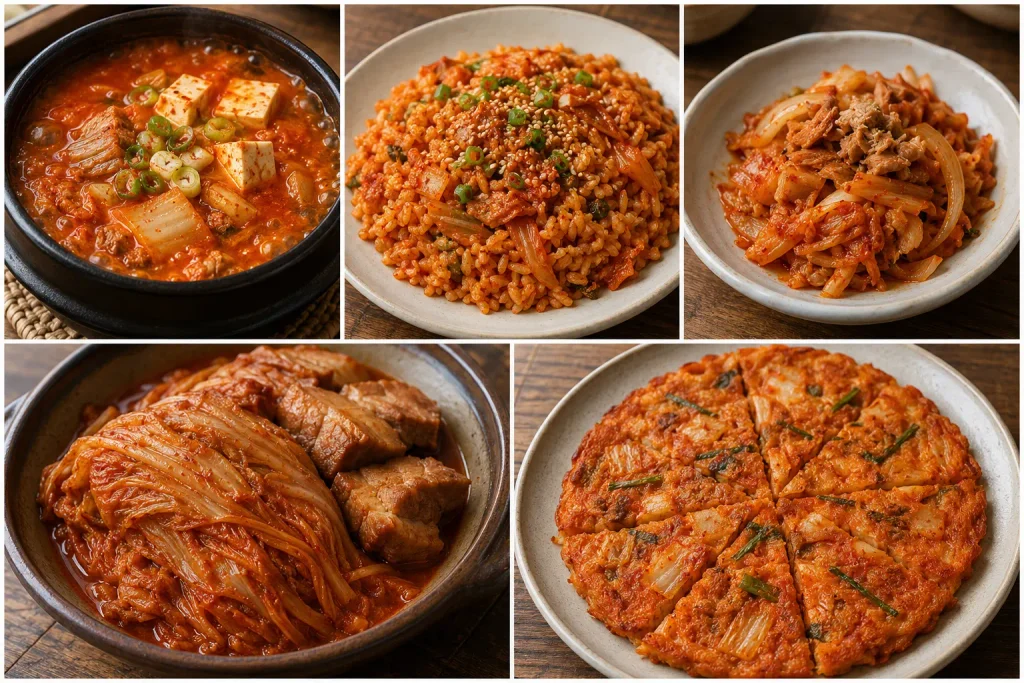
Kimchi-Jjigae: Kimchi Stew
This is the classic destination for sour kimchi. The kimchi is simmered with ingredients such as pork, tuna or tofu until the broth becomes rich and cohesive.
Begin with less additional seasoning than you think you need. Kimchi and its juice vary considerably in salt and acidity, so taste the broth after it has simmered before adding soy sauce or salt.
Put this idea into practice with Lower-Sodium Kimchi Jjigae: A Healthy Korean Stew Recipe, which uses ripe kimchi as the main seasoning base.
Kimchi-Bokkeumbap: Kimchi Fried Rice
Chopped aged kimchi gives fried rice a clear tang that fresh kimchi may lack. Fry the kimchi briefly before adding the rice so excess moisture evaporates and the flavour becomes concentrated.
Use cold, safely stored rice for the best separate texture. Add tuna, egg, tofu or edamame to turn it into a more complete meal.
Kimchi-Bokkeum: Stir-Fried Kimchi
Kimchi can be sautéed on its own or with onion, pork or tuna. The technique is simple: cook the kimchi first, then add an already-cooked protein such as tinned tuna near the end so it does not dry out.
For an easy one-bowl meal using this method, try the Kimchi Tuna Multigrain Rice Bowl, which pairs the warm stir-fried topping with chewy rice and crisp vegetables.
A small amount of toasted sesame oil added after cooking gives a fragrant finish. If you want more heat, add a little gochugaru while the kimchi cooks.
Kimchi-Jjim: Braised Aged Kimchi
For kimchi-jjim (김치찜), large sections of aged cabbage kimchi are slowly braised, often with pork. Long cooking turns the leaves exceptionally tender and allows the meat and kimchi to exchange flavour.
Unlike a quick stew, this dish celebrates the structure of whole kimchi leaves. The finished cabbage can be cut at the table or wrapped around a bite of rice and meat.
Kimchi-Jeon: Kimchi Pancake
The acidity of ripe kimchi gives kimchi-jeon a more pronounced flavour. Chopping and draining excessively wet kimchi helps control the batter, while a measured amount of kimchi juice can add colour and seasoning.
Cook the pancake thinly enough for crisp edges and serve it immediately. Fresh spring onion can provide contrast to the deeper fermented flavour.
For measured ingredients and cooking steps, try Crispy Oil-Free Kimchi Jeon: Easy Korean Pancake Recipe.
Sour Kimchi or Mukeunji: Which Should You Use?
You do not need true long-aged mukeunji for every cooked kimchi dish. For fried rice, pancakes and a quick stir-fry, an ordinary jar that has become pleasantly sour is usually ideal.
Choose mukeunji when the cabbage itself is meant to be a major feature, particularly in long-simmered stews, braised dishes or wraps made with whole leaves. Its softer texture and mature flavour are especially suited to slow cooking.
| Type of kimchi | Typical character | Best uses |
| Fresh or lightly fermented | Crisp, bright and cabbage-forward | Serving cold, wraps and fresh toppings |
| Ripe or sour kimchi (sin-kimchi) | Tangy, aromatic and still fairly structured | Fried rice, pancakes, quick stews and stir-fries |
| Long-aged kimchi (mukeunji) | Deeply fermented, soft and complex | Braises, long-simmered stews and whole-leaf dishes |
Choosing Aged Kimchi in the UK
Korean supermarkets are the most likely place to find products labelled mukeunji, aged kimchi or old kimchi. In a general UK supermarket, you may find only standard cabbage kimchi, but a jar can still work well for cooking once it becomes fully ripe.
Look for these details:
- Cabbage kimchi: Whole-leaf or chopped baechu kimchi (배추김치) is the most versatile choice.
- Refrigerated or shelf-stable: Refrigerated, unpasteurised kimchi generally continues to develop in the fridge. Pasteurised shelf-stable products may not mature in the same way, so check the label.
- Ingredients and allergens: Traditional versions may contain fish sauce, salted shrimp or other seafood. Choose a vegan product when required.
- Storage directions: Keep the product at the temperature stated by the manufacturer and follow its use-by instructions.
For more help building a practical Korean cupboard, see 7 Essential Korean Pantry Staples for Beginners in the UK.
How to Let Kimchi Ripen at Home
If your kimchi tastes too fresh for cooking, the simplest approach is patience. Keep it refrigerated in its original container, press the cabbage beneath the liquid where practical and allow its flavour to develop gradually.
Fermentation speed differs between products, so judge by aroma, acidity and texture rather than relying on a fixed number of days. Open the container carefully because fermentation can produce gas, and use clean utensils every time.
A clean sour aroma, increased tang and gradually softening cabbage are normal signs of ripening. Visible mould, an unexpectedly rotten odour or discolouration that is not part of the original ingredients are reasons to discard the product rather than cook with it. Always follow the label when its instructions are more specific.
A Simple Formula for Cooking Aged Kimchi
For a quick meal, use this adaptable structure:
- Chop the kimchi into bite-sized pieces, reserving a little juice.
- Sauté it first in a small amount of cooking oil for three to five minutes.
- Add a protein such as tofu, egg, tinned tuna or leftover cooked meat.
- Adjust the moisture with a spoonful of kimchi juice or water.
- Serve with a carbohydrate such as rice, noodles or a wholegrain blend. Korean multigrain rice, or japgokbap, adds a particularly satisfying chewy texture.
- Add fresh contrast with cucumber, spring onion or another favourite vegetable.
For a mild result, use less kimchi and more vegetables or rice. For extra heat, add gochugaru while sautéing rather than adding extra salt.
💡 K-Well’s Tip: Taste the kimchi before choosing the rest of the seasoning. The more mature it is, the more acidity and fermented depth it brings. Cook it first, combine it with the rice or broth, and only then decide whether the dish needs additional soy sauce, sugar or salt.
Does Cooking Remove the Benefits of Fermented Kimchi?
Heat reduces the number of live microorganisms, so cooked kimchi should not be described in exactly the same way as raw, unpasteurised kimchi. Its culinary value remains clear: it still contributes cabbage, seasoning and the flavour compounds developed during fermentation.
There is room for both forms in everyday meals. Enjoy fresher kimchi cold when you want crunch and live cultures, and use mature kimchi in cooking when you want a deeper flavour base. One does not need to replace the other.
FAQ
Q1. Is Sour Kimchi the Same as Spoiled Kimchi?
No. Increasing acidity is a normal part of kimchi fermentation, and many Korean recipes deliberately call for sour kimchi. Spoilage signs such as visible mould, an abnormal rotten smell or unexpected discolouration are different from clean fermented sourness.
Q2. How Old Does Kimchi Need to Be for Cooking?
There is no fixed age because recipes and storage temperatures vary. Once the kimchi tastes distinctly tangy and its fresh cabbage flavour has softened, it can work well in fried rice, pancakes or stew. True mukeunji is usually aged much longer.
Q3. Can I Cook with Fresh Kimchi?
Yes, but the dish will taste lighter and less tangy. If fresh kimchi is your only option, cook it a little longer and adjust the finished dish after tasting rather than trying to imitate fermentation with a large amount of vinegar.
Q4. Should I Rinse Very Sour Kimchi?
Rinsing is used for certain mukeunji dishes when the seasoning is exceptionally strong or the leaves will be used as wraps. For most stews and fried dishes, keep the seasoning and simply control the amount of kimchi juice. Rinsing changes both the flavour and salt level, so it is a recipe-specific choice.
🌿 K-Well’s Final Thoughts
Aged kimchi shows how one ingredient can take on several culinary identities. Young kimchi brings freshness and crunch; ripe kimchi offers lively acidity; mukeunji provides the soft texture and mature depth that Korean cooks value in slow, comforting dishes.
The easiest way to understand the difference is to cook with it. Sauté a well-ripened kimchi for a few minutes, pair it with rice and a protein, and notice how its sharpness becomes part of the whole meal rather than sitting on top of it.
Read Next
- Lower-Sodium Kimchi Jjigae: A Healthy Korean Stew Recipe
- Crispy Oil-Free Kimchi Jeon: Easy Korean Pancake Recipe
- 3 Essential Korean Fermented Foods: Kimchi, Doenjang and Gochujang
References
- Academy of Korean Studies. Kimchi. https://encykorea.aks.ac.kr/Article/E0010822
- Hong, Y., Li, J., Qin, P., Lee, S.-Y., & Kim, H.-Y. (2015). Predominant lactic acid bacteria in mukeunji, a long-term-aged kimchi, for different aging periods. Food Science and Biotechnology, 24(2), 545–550. https://doi.org/10.1007/s10068-015-0071-6
- Kang, J. Y., Lee, M., Song, J. H., et al. (2024). Organic acid type in kimchi is a key factor for determining kimchi starters for kimchi fermentation control. Heliyon, 10(18), e36860. https://pmc.ncbi.nlm.nih.gov/articles/PMC11417250/
- Korean Food Promotion Institute. K-Webtoon Draws Korean Food, Vol. 51. https://www.hansik.or.kr/magazines/list/magazineDetail/53/3293?menuSn=429
- Seo, W. H., You, Y. S., & Baek, H. H. (2024). Changes in volatile flavor compounds of kimchi cabbage (Brassica rapa subsp. pekinensis) during salting and fermentation. Food Science and Biotechnology, 33(7), 1623–1632. https://pmc.ncbi.nlm.nih.gov/articles/PMC11016023/