
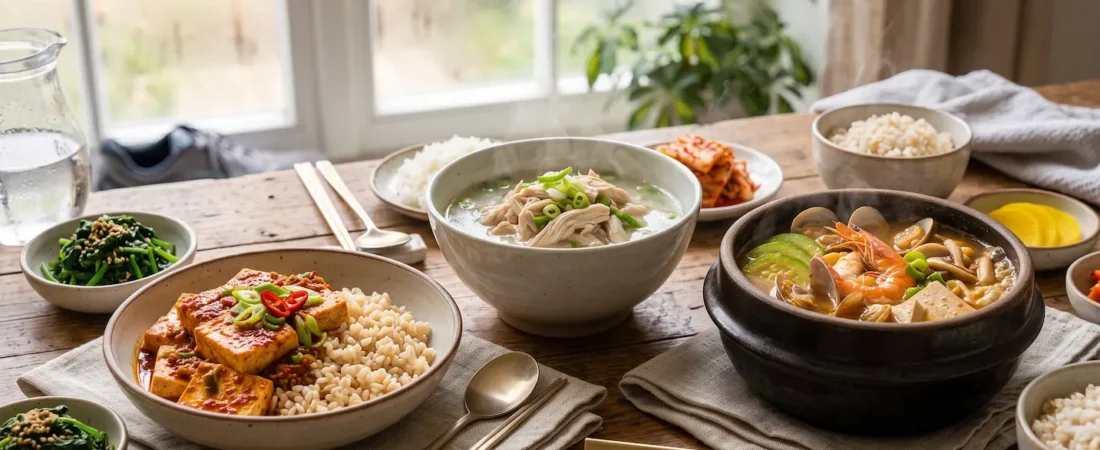
A satisfying post-run meal should do more than provide protein. Running also uses stored carbohydrates, while sweat increases your need for fluid. Combining rice or another carbohydrate with a useful protein source, vegetables and a drink creates a practical foundation for recovery.
Korean home cooking fits this formula naturally. A tofu rice bowl offers a colourful plant-based option, clear chicken soup combines protein and fluid, and doenjang-jjigae brings seafood, tofu and vegetables together in a warming stew.
These three meals use ingredients available from major UK supermarkets, with only a few Korean seasonings required. Adjust the portions to your appetite, the length of your run and how soon you plan to train again.
🌟 Key Takeaways
- Combine Carbohydrate and Protein: Rice helps replenish the carbohydrate used during running, while tofu, chicken, prawns and other protein-rich foods support muscle repair.
- Match the Meal to the Run: A complete recovery meal is particularly useful after a long run, interval session, race or day containing more than one workout.
- Rehydrate with the Meal: Water is suitable after many recreational runs, while soup and normally seasoned food can also contribute fluid and sodium after a hot or sweaty session.
What Makes a Balanced Post-Run Meal?
During longer or more demanding runs, the body draws on glycogen stored in the muscles and liver. Carbohydrate-rich foods help restore these stores, while dietary protein supplies amino acids used in muscle repair and adaptation.
A practical recovery meal can include four elements:
- rice, noodles, potatoes or another carbohydrate source;
- tofu, chicken, seafood, eggs or another protein source;
- vegetables for colour, fibre and micronutrients; and
- water or another suitable drink.
There is no need to force every meal into a fixed carbohydrate-to-protein ratio. A runner completing a short, easy session will usually need less food than someone finishing a half-marathon or another demanding workout.
Eating soon after exercise is most useful when the recovery period is short and another training session is planned. For many recreational runners, having a balanced meal when comfortably hungry and eating consistently across the day is a realistic approach.
Meal 1: Dubu Jorim with Brown Rice and Sesame Spinach
Dubu jorim (두부조림) is tofu gently braised in a savoury sauce made with soy sauce, garlic and gochugaru. Brown rice supplies carbohydrates, while spinach adds colour and texture. It is a convenient meat-free meal that can be prepared in advance and reheated after a run.
Serves: 2
Preparation: 10 minutes
Cooking: 20 minutes
Ingredients
- 300g firm or extra-firm tofu
- 300g cooked brown rice
- 150g baby spinach
- 1 tablespoon neutral cooking oil
- 1½ tablespoons reduced-salt soy sauce
- 3 tablespoons water
- 1 garlic clove, minced
- 1 teaspoon gochugaru
- 1 teaspoon maple syrup or rice syrup (optional)
- 2 teaspoons toasted sesame oil, divided
- 1 teaspoon toasted sesame seeds
- 2 spring onions, finely sliced (optional)
Method
1. Prepare the Rice and Tofu
Cook the brown rice according to the packet instructions, or reheat previously cooked rice until steaming hot throughout.
Drain the packing liquid from the tofu and cut the block into slices approximately 1cm thick. Heavy pressing is not necessary.
2. Cook the Tofu
Heat the neutral oil in a large non-stick frying pan over medium heat. Add the tofu in a single layer and cook for three to four minutes on each side until lightly golden.
3. Add the Braising Sauce
Mix the soy sauce, water, garlic, gochugaru, maple or rice syrup, if using, and one teaspoon of sesame oil. Pour the mixture over the tofu and simmer gently for three to four minutes, turning the pieces once.
4. Prepare the Spinach
Add the spinach to a separate pan with one tablespoon of water. Cover and cook for one to two minutes until wilted. Toss with the remaining teaspoon of sesame oil.
5. Assemble
Divide the rice, braised tofu and spinach between two bowls. Spoon over any sauce remaining in the pan, then finish with sesame seeds and spring onion, if using.
💡 K-Well’s Meal-Prep Tip: Cook the rice and tofu in advance and refrigerate them in separate covered containers. Reheat both until steaming hot, then prepare the spinach just before serving for the best colour and texture.
Looking for another tasty tofu meal? Try this Gochujang Tofu Rice Bowl!
Meal 2: Dak-Gomtang with Rice
Dak-gomtang (닭곰탕) is a clear Korean chicken soup served with shredded chicken, spring onions and rice. Its warm broth may be especially appealing when your appetite is low after a cold-weather run, while the chicken and rice provide a straightforward protein-and-carbohydrate combination.
Serves: 4
Preparation: 10 minutes
Cooking: 45–50 minutes
Ingredients
- 800g bone-in chicken thighs
- 1.5 litres water
- 5 garlic cloves, peeled
- ½ medium onion
- 4 spring onions
- 600g cooked white rice
- 1 teaspoon light soy sauce
- Fine salt, to taste
- Ground black pepper, to taste
Method
1. Simmer the Chicken
Place the chicken in a large saucepan with the water, garlic, onion and white parts of the spring onions. Bring to the boil, then reduce the heat and skim away any foam from the surface.
Partially cover and simmer gently for 35–40 minutes. Check the thickest piece before serving; the meat should be fully cooked with no pink areas remaining and the juices should run clear.
2. Shred the Meat
Transfer the chicken to a plate. When it is cool enough to handle, remove the bones and skin, then shred the meat into bite-sized pieces.
3. Season the Broth
Remove the cooked onion and spring onion from the broth. Return the shredded chicken to the pan and add the light soy sauce. Taste before adding a small amount of salt and black pepper.
4. Serve with Rice
Divide the hot rice and chicken between four bowls. Ladle over the broth and garnish with the finely sliced green parts of the spring onions.
💡 K-Well’s Recovery Tip: White rice is soft and easy to pair with soup after a demanding run. Increase or reduce the rice portion according to the distance completed, your appetite and the rest of your day’s meals.
For another traditional Korean chicken soup, explore Samgyetang and Post-Workout Recovery.
Meal 3: Prawn and Tofu Doenjang-Jjigae with Japgokbap
Doenjang-jjigae (된장찌개) is a savoury Korean stew seasoned with fermented soybean paste. This version combines prawns and tofu with courgette and onion, then serves the stew with japgokbap, Korean multigrain rice.
The stew contributes protein and fluid, while the rice provides the carbohydrate that turns it into a more complete post-run meal. Doenjang is concentrated, so start with a measured amount and adjust only after tasting the finished broth.
Serves: 2
Preparation: 10 minutes
Cooking: 15 minutes
Ingredients
- 500ml water
- 1–1½ tablespoons doenjang
- ½ medium onion, diced
- ½ medium courgette, diced
- 150g firm tofu, cubed
- 150g raw peeled prawns
- 1 garlic clove, minced (optional)
- 1 mild red chilli, sliced (optional)
- 1 spring onion, finely sliced (optional)
- 300g cooked japgokbap or brown rice, to serve
Method
1. Start the Stew
Pour the water into a medium saucepan and whisk in one tablespoon of doenjang. Add the onion and courgette, bring to a gentle simmer and cook for four to five minutes until the vegetables begin to soften.
2. Add the Tofu and Prawns
Add the tofu, prawns and garlic, if using. Simmer gently for three to four minutes until the prawns are pink, opaque and fully cooked. Stir carefully so the tofu remains intact.
Taste the broth and add the remaining doenjang only if you would like a stronger flavour. Finish with chilli and spring onion, if using.
3. Serve
Divide the stew between two bowls and serve with warm japgokbap or brown rice.
💡 K-Well’s Flavour Tip: Water is sufficient for this quick stew. Doenjang, onion, courgette, prawns and tofu develop a clean savoury broth without the need for commercial stock.
If you are choosing tofu in a UK supermarket, read Best Tofu at Sainsbury’s for Doenjang Jjigae.
Which Meal Should You Choose?
All three meals combine carbohydrate, protein and vegetables, but each suits a slightly different situation.
- Choose dubu jorim when you want a plant-based meal that is easy to prepare ahead.
- Choose dak-gomtang when a warm, gentle soup feels more appealing than a dry meal.
- Choose doenjang-jjigae when you want a quick, strongly flavoured stew with seafood and tofu.
After a short and easy run, your next normal meal may already provide everything you need. After a long run, race or hard interval session, use a more generous rice portion and make sure the meal contains a substantial protein serving.
What Should You Drink After a Run?
Water is an excellent starting point after most recreational runs. Continue drinking with your meal and throughout the day, particularly in warm weather.
Roasted barley tea, or boricha, is a caffeine-free Korean drink that can be served hot or cold. Its toasted flavour offers a pleasant alternative to plain water, although its electrolyte content depends on the preparation and is not equivalent to a formulated sports drink.
To make it, simmer two tablespoons of roasted barley in one litre of water for approximately ten minutes, then strain. Serve warm or refrigerate until cold.
💡 K-Well’s Hydration Tip: After a particularly long, hot or sweaty run, fluids can be paired with a normally seasoned meal such as dak-gomtang or doenjang-jjigae. This provides a practical combination of fluid, food and some sodium.
FAQ
Q1. How Soon Should I Eat After Running?
Eat when you feel comfortable after your cool-down. Eating sooner is especially useful when you have another demanding session later the same day. When recovery time is longer, the overall quality and quantity of food eaten across the day remain important.
Q2. Do I Need a Recovery Meal After Every Run?
A short, easy run may simply be followed by your next regular balanced meal. A planned recovery meal becomes more useful after longer runs, hard sessions, races or multiple workouts in one day.
Q3. Can I Make These Meals Vegetarian?
The dubu jorim meal is vegetarian and vegan when the sauces are labelled suitable for vegans. For the doenjang-jjigae, omit the prawns and increase the tofu to 250g. Check that the doenjang is labelled suitable for vegans.
Q4. Can I Prepare These Meals in Advance?
Yes. Cooked rice, dubu jorim and dak-gomtang can be prepared ahead and refrigerated in covered containers. Cool cooked food promptly, use it within two days and reheat it until steaming hot throughout. Prepare the prawns in the doenjang-jjigae shortly before serving for the best texture.
🌿 K-Well’s Everyday Kitchen Notes
Post-run recovery can begin with familiar food: rice for carbohydrates, tofu, eggs, chicken or seafood for protein, colourful vegetables for variety, and enough fluid throughout the day. Dubu jorim, dak-gomtang and doenjang-jjigae each offer a different Korean way to bring these elements together.
Personally, I like to keep my post-run routine simple. After a run, I often have lemon, ginger and honey water, followed by barley tea throughout the day. After an ordinary jog, I usually return to my usual balanced meals rather than making a special recovery meal.
After a longer run, particularly 10 km or more, I pay a little more attention to what I eat. I try to include a colourful range of vegetables, plenty of protein and enough carbohydrates to replenish the energy I have used. I particularly enjoy plant-based protein such as beans and tofu, although eggs are also a regular part of my meals. For carbohydrates, I rotate between potatoes, sweet potatoes, bread and rice depending on what I feel like eating.
During the colder months, I naturally gravitate towards warm Korean dishes such as miyeok-guk, samgyetang, vegetable soups and shabu-shabu. They are comforting, nourishing and an enjoyable way to combine protein, vegetables, carbohydrates and plenty of warm fluid in one meal.
Rather than following one perfect recovery formula, I find it more practical to choose food according to the run I have completed, my appetite and what I have available at home. Enjoying running alongside satisfying, nutritious everyday food makes recovery feel much more natural and sustainable.
Read Next
- Samgyetang and Post-Workout Recovery
- Korean Seaweed Soup (Miyeok-guk): Birthday Tradition and Easy Recipe
- Easy Korean Tofu Soup with Tesco Ingredients
References
- British Dietetic Association (BDA). Sport and Exercise Nutrition. https://www.bda.uk.com/resource/sport-exercise-nutrition.html
- Food Standards Agency (FSA). Cooking Your Food. https://www.food.gov.uk/food-safety-and-hygiene/food-safety-and-hygiene-at-home
- Kerksick, C. M. et al. (2017). International Society of Sports Nutrition position stand: Nutrient timing. Journal of the International Society of Sports Nutrition, 14, 33. https://doi.org/10.1186/s12970-017-0189-4
- National Health Service (NHS). Dehydration. https://www.nhs.uk/conditions/dehydration/
Nutrition figures are estimates and are provided for general information. They will vary according to brands, portions, and cooking methods. This article is not a substitute for personalised advice from a registered.