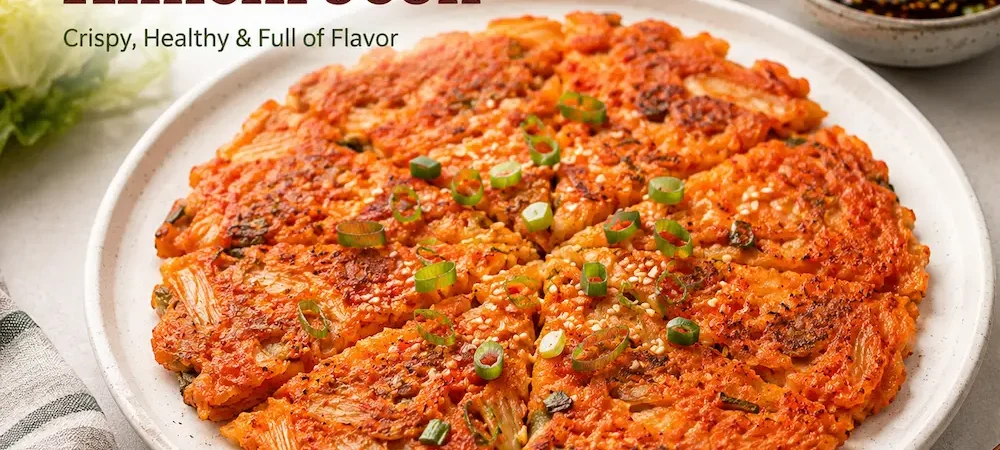
Kimchi jeon (김치전) is a savoury Korean pancake filled with chopped kimchi and spring onions. It is crisp at the edges, tender in the centre and full of the tangy chilli flavour that develops as kimchi ferments.
Traditional jeon is pan-fried with oil, but a well-heated non-stick pan can also produce a satisfying crisp finish without added oil. The most reliable approach is to make several small, thin pancakes rather than one large, heavy pancake.
This recipe combines gram flour with a small amount of cornflour. Gram flour adds structure, fibre and plant protein, while cornflour helps create a lighter surface. The result is an easy UK-friendly kimchi jeon that works as a snack, light lunch or colourful side dish.
Key Takeaways
- Use a Hot Non-Stick Pan: Thorough preheating and a thin layer of batter help the pancake brown and release cleanly without added oil.
- Choose a Strong Batter: Gram flour provides structure and plant protein, while cornflour contributes a lighter, crisper texture.
- Control the Moisture: Drain the chopped kimchi lightly and add its juice gradually so the batter remains thick enough to hold its shape.
What Is Kimchi Jeon?
Kimchi jeon is a type of buchimgae, the Korean name for savoury pancakes made by combining vegetables or other ingredients with a simple flour batter. Kimchi gives this version its red colour, lively acidity and distinctive fermented flavour.
Well-fermented kimchi is particularly suitable because its developed sourness becomes mellow and savoury as it cooks. Spring onions add freshness, while gochugaru can be included for extra chilli warmth.
Korean families often associate jeon with rainy weather. The sound of pancake batter sizzling in a pan is traditionally compared with the sound of falling rain, making kimchi jeon a familiar comfort food on cool, wet days.
Can Kimchi Jeon Be Crispy Without Oil?
Yes. A dry non-stick pan can brown a thin pancake when it is properly preheated and the batter contains the right amount of moisture. Small pancakes are easier to turn and allow more of the mixture to touch the hot surface.
Oil normally transfers heat efficiently and creates the familiar fried edges of traditional jeon. This oil-free method produces a lighter, slightly drier style of crispness, with the best texture achieved by eating the pancakes straight from the pan.
K-Well’s Crispness Tip: Make four small pancakes instead of one large pancake. Their wider edge-to-centre ratio helps them cook evenly, become crisper and flip more easily without oil.
Why Use Gram Flour and Cornflour?
Gram flour, also called chickpea flour or besan, is made from ground chickpeas. It contains more protein and fibre than standard white wheat flour and forms a naturally sturdy savoury batter.
Cornflour is a fine starch known as cornstarch in the US. A modest amount lightens the gram-flour mixture and helps moisture evaporate from the surface during cooking. Using too much can make the pancake fragile, so this recipe keeps it to approximately one-quarter of the flour mixture.
The finished pancake still contains carbohydrates, but the gram flour also contributes protein and fibre. Pairing the pancakes with tofu, edamame or a vegetable side can create a more substantial and varied meal.
What Happens to Kimchi When It Is Cooked?
Fermentation gives kimchi its acidity, aroma and complex flavour before it reaches the pan. Cooking softens the cabbage and develops a rounder, more savoury taste that works especially well in pancakes.
Heat reduces the number of live lactic acid bacteria, so cooked kimchi jeon should be appreciated primarily for its flavour and vegetable content rather than presented as a source of live probiotics. If you enjoy live-culture kimchi, serve a small portion of suitable unheated kimchi alongside the meal.
For a broader explanation of Korean fermented ingredients, read 3 Essential Korean Fermented Foods: Kimchi, Doenjang and Gochujang.
UK Shopping Guide
Kimchi is available in Korean supermarkets such as H Mart and Oseyo, East Asian grocery shops and the chilled world-food sections of some larger UK supermarkets. Well-fermented kimchi has a noticeably tangy aroma and works particularly well for cooking.
Gram flour is widely available in the world-food or baking aisles of Tesco, Sainsbury’s, Asda and Morrisons. It may be labelled gram flour, chickpea flour or besan. Cornflour is sold in the baking section of most UK supermarkets.
For a vegan pancake, choose kimchi made without fish sauce or salted shrimp. For a gluten-free version, check that the kimchi, gram flour, cornflour and gochugaru are all labelled appropriately for your needs.
Easy Oil-Free Kimchi Jeon Recipe
Makes: 4 small pancakes
Serves: 2
Preparation: 10 minutes
Cooking: 12–16 minutes
Ingredients
- 150g well-fermented kimchi, lightly drained and finely chopped
- 60g gram flour
- 20g cornflour
- 90–110ml ice-cold sparkling or still water
- 1 tablespoon kimchi juice
- 2 spring onions, thinly sliced
- ½ teaspoon gochugaru (optional)
- ½ teaspoon minced garlic (optional)
- Toasted sesame seeds for serving (optional)
Method
1. Prepare the Kimchi
Place the chopped kimchi in a sieve and press it lightly with the back of a spoon. Reserve the juice and measure one tablespoon for the batter.
The kimchi should remain moist and flavourful; the aim is simply to prevent excess liquid from making the batter too loose.
2. Mix the Dry Ingredients
Combine the gram flour, cornflour and gochugaru in a mixing bowl. Break up any visible lumps with a whisk or fork.
3. Make the Batter
Add the kimchi juice and 90ml cold water. Mix until no dry pockets remain, then fold in the kimchi, spring onions and garlic.
The mixture should be thick but easy to spread with the back of a spoon. Add the remaining water one teaspoon at a time only if needed. Kimchi varies in moisture, so the full amount may not be necessary.
K-Well’s Batter Tip: Mix the batter shortly before cooking. A cold, freshly mixed batter spreads easily and helps the pancakes retain a pleasantly light texture.
4. Preheat the Pan
Place a good-quality non-stick frying pan over medium heat for approximately two minutes. The surface should be evenly hot but not smoking.
Test it with a small dot of batter. It should begin to sizzle gently and set around the edge within a few seconds.
5. Cook Small, Thin Pancakes
Spoon one-quarter of the mixture into the pan and spread it into a thin circle approximately 10–12cm wide. Cook for three to four minutes without moving it.
When the surface looks mostly set and the edges lift easily, turn the pancake with a wide spatula. Press it gently against the pan and cook the second side for another two to three minutes.
Repeat with the remaining batter. Adjust the heat slightly if the pan becomes too hot between batches.
6. Serve Immediately
Transfer each pancake to a wire rack or plate without stacking so steam does not soften the surface. Sprinkle it with toasted sesame seeds and serve while hot.
Ripe kimchi provides plenty of seasoning, so the pancakes can be enjoyed without a dipping sauce. For a brighter contrast, serve them with fresh cucumber or a small bowl of rice vinegar with sliced spring onion.
Easy Flour Variations
Oat Flour
Replace the gram flour with finely ground oat flour for a mild, slightly softer pancake. Keep the cornflour and begin with less water, as oat flour absorbs liquid differently. Choose certified gluten-free oats when required.
Wholemeal Flour
Wholemeal wheat flour creates a flexible batter with more fibre than standard white flour. It is easy to flip but is not suitable for a gluten-free diet.
Standard Plain Flour
Plain flour produces the texture most similar to familiar wheat-based kimchi jeon. It can still be cooked without added oil using the same thin-pancake method.
Make It a More Balanced Meal
Kimchi jeon is easy to combine with additional vegetables and protein. Serve two small pancakes with one of the following:
- Warm edamame and cucumber sticks
- Pan-heated tofu with spring onions
- A crunchy cabbage and radish salad
- A boiled egg and steamed greens
- A small serving of Korean multigrain rice (Japgokbap)
Crumbled firm tofu can also be folded directly into the batter. Drain it well and use approximately 50g so the pancakes remain easy to turn.
Troubleshooting Oil-Free Kimchi Jeon
Why Is My Pancake Sticking?
Allow the pan to preheat fully and wait until the first side has formed a firm surface before turning. A wide, thin spatula also makes the pancake easier to lift cleanly.
Why Is the Centre Soft?
The pancake may be too thick or the batter may contain too much liquid. Spread each portion thinly and add water gradually when mixing. Keeping the pancakes small helps the centre cook at the same rate as the edges.
Why Did It Lose Its Crispness?
Freshly cooked pancakes release steam as they cool. Place them in a single layer rather than stacking them and serve promptly. A wire rack allows air to circulate beneath them.
Storage and Reheating
Kimchi jeon has its best texture immediately after cooking. Refrigerate leftovers in a covered container and use them within two days.
Reheat the pancakes in a dry non-stick frying pan over medium heat for approximately two minutes on each side. An air fryer at 180°C for three to four minutes also works well. Heat until steaming hot throughout.
FAQ
Q1. Is Oil-Free Kimchi Jeon Vegan?
The batter is vegan, but some kimchi contains fish sauce or salted shrimp. Choose a vegan-labelled kimchi or check the ingredient list carefully.
Q2. Can I Make It Gluten-Free?
Yes. Gram flour and cornflour are naturally gluten-free, but cross-contamination is possible. Choose certified gluten-free products and check the kimchi and gochugaru labels.
Q3. Do I Need Sparkling Water?
No. Ice-cold still water also works. Sparkling water can give the batter a slightly lighter feel, but pan temperature, batter thickness and moisture control have a greater influence on the finished texture.
Q4. Can I Make One Large Pancake?
Yes, but four small pancakes are easier to brown, release and turn without oil. If making one large pancake, spread it very thinly and use a wide plate or two spatulas to help flip it.
K-Well’s Final Thoughts
Oil-free kimchi jeon offers a simple way to enjoy the tangy flavour and comforting texture of a Korean pancake with no added cooking oil. Gram flour creates a sturdy base, cornflour lightens the surface and ripe kimchi provides enough character to keep the seasoning uncomplicated.
The most important details are practical: preheat a reliable non-stick pan, control the water and make the pancakes small and thin. Serve them straight away with fresh vegetables or a protein-rich side for an easy and colourful Korean-inspired meal.
Read Next
- Lower-Sodium Kimchi Jjigae: Healthy Korean Stew
- 3 Essential Korean Fermented Foods: Kimchi, Doenjang and Gochujang
- 7 Essential Korean Pantry Staples for Beginners in the UK
References
- Harvard T.H. Chan School of Public Health. Carbohydrates. https://nutritionsource.hsph.harvard.edu/carbohydrates/
- National Health Service (NHS). How to Get More Fibre into Your Diet. https://www.nhs.uk/live-well/eat-well/digestive-health/how-to-get-more-fibre-into-your-diet/
- Park, K. Y., Jeong, J. K., Lee, Y. E., & Daily, J. W. (2014). Health benefits of kimchi (Korean fermented vegetables) as a probiotic food. Journal of Medicinal Food, 17(1), 6–20. https://pubmed.ncbi.nlm.nih.gov/24456350/
- U.S. Department of Agriculture (USDA), Agricultural Research Service. FoodData Central. https://fdc.nal.usda.gov/