Make high-protein, lower-carb Korean gimbap with egg, tofu, tuna and vegetables, plus easy UK shopping and meal-prep tips.
Key Takeaways
- Protein First: Use generous portions of egg, tofu, chicken or tuna to make gimbap more filling and protein-rich.
- Less Rice, More Filling: A thinner layer of rice leaves more room for colourful vegetables and protein while keeping the familiar character of Korean gimbap.
- Meal Prep Smarter: Prepare your fillings ahead, then roll your gimbap close to serving time for softer rice, fresher vegetables and better texture.
A Better Way to Build Your Gimbap
Gimbap already has the foundations of a balanced meal: rice, vegetables and protein wrapped neatly in savoury gim (김).
But some rolls are dominated by a thick layer of white rice, leaving surprisingly little room for the colourful ingredients in the centre.
For a higher-protein, lower-carb gimbap, the solution doesn’t have to be removing rice completely. A simple change in proportions can make a big difference.
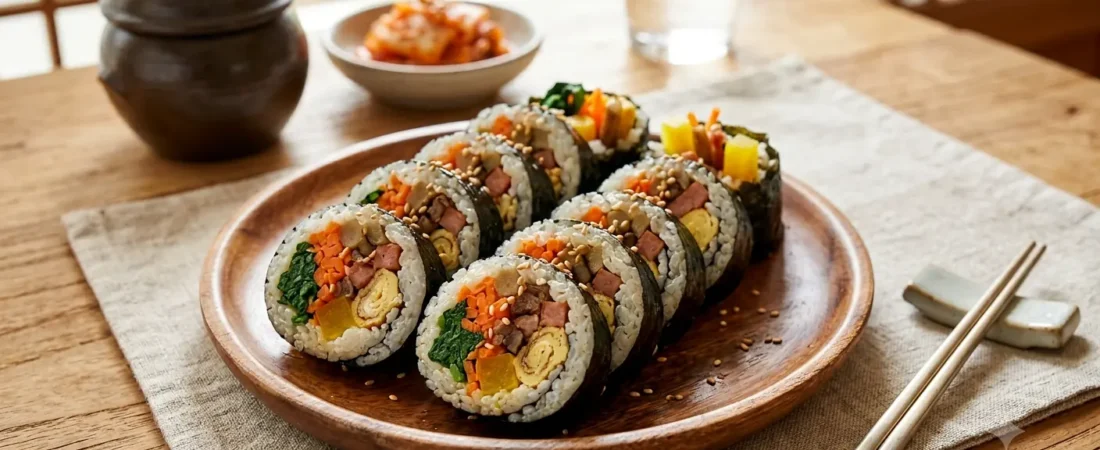
Spread the rice more thinly. Add more egg, tofu, chicken or tuna. Fill the remaining space with spinach, cucumber, carrot and other vegetables.
You still get a recognisable Korean gimbap—just with protein and vegetables playing a bigger role.
What Makes This Gimbap Higher in Protein and Lower in Carbs?
There are two easy approaches.
Option 1: Thin-Rice Gimbap
This is my favourite option for everyday meal prep.
Instead of covering the gim with a thick layer of rice, spread just enough to create a thin, even base. Then build a generous centre of protein and vegetables.
You keep the soft rice texture that makes traditional gimbap satisfying while naturally reducing the proportion of rice in each roll.
Option 2: Kito-Gimbap with Egg
For a lower-carbohydrate version, try Kito-gimbap (키토김밥).
Thinly sliced Korean egg ribbons, or gyeran-jidan (계란지단), replace most or all of the rice. The egg provides both structure and extra protein.
This works especially well with cucumber, carrot, spinach and another protein such as tofu, chicken or tuna.
K-Well’s Tip: Low-carb doesn’t have to mean rice-free. For everyday gimbap, adjusting the protein-to-rice ratio is often the easiest place to start.
Why Make Protein the Centre of the Roll?
Protein makes sense as the anchor of a meal-prep lunch.
The body needs dietary protein for normal growth and tissue maintenance, and research has also linked higher-protein meals with increased satiety under some dietary conditions.
NHS weight-management guidance similarly recommends including protein foods such as beans, pulses, fish, eggs and lean meat in meals, noting that protein can help with feeling full for longer.
Gimbap makes this easy because you can change the protein without changing the basic recipe.
Egg
Egg is one of the easiest choices.
Instead of using one narrow strip, make plenty of soft gyeran-jidan and give it a more prominent place in the roll.
Extra-Firm Tofu
Tofu works particularly well for a plant-based version.
Cut extra-firm tofu into long batons, pat them dry and lightly pan-sear with garlic and a little soy sauce or tamari.
Chicken
Cooked chicken breast or thigh can be sliced into narrow strips.
Keep the seasoning simple so that sesame, vegetables and gim remain part of the flavour rather than disappearing underneath a heavy sauce.
Tuna
Well-drained tinned tuna is one of the easiest high-protein options for a workday lunch.
Mix it with a small amount of mayonnaise, plain yoghurt or mashed avocado if you prefer a creamier filling.
5 Easy Ways to Upgrade Your Gimbap
1. Make Egg Ribbons a Real Filling
Don’t treat eggs as decoration.
A generous layer of gyeran-jidan creates a soft, savoury centre and makes it easy to increase the protein content without adding another strongly flavoured ingredient.
For Kito-gimbap, the egg ribbons can replace the rice entirely.
2. Master the Thin-Rice Technique
If you love traditional gimbap, keep the rice.
Wet your fingertips lightly and spread a thin, even layer across the gim rather than pressing on a thick bed of rice.
This creates more room for the ingredients that give each roll its personality.
For more grain variety, you can also experiment with a small amount of multigrain rice.
Read more: What Is Japgokbap? Why Korean Multi-Grain Rice Beats White Rice for a deeper guide to Korean multigrain rice.
3. Pack in Colourful Vegetables
Cucumber, carrot and spinach are classic gimbap fillings for good reason.
They bring freshness, colour and contrasting textures. You can also experiment with mushrooms, mooli, courgette or perilla leaves (kkaennip).
Aim for several different colours rather than simply trying to make the roll as large as possible.
4. Keep Danmuji in the Picture
Danmuji (단무지) gives gimbap its familiar sweet, tangy crunch.
You don’t have to remove it simply because some varieties contain added sugar. Use a modest strip, compare labels when shopping, or make a quick-pickled mooli alternative.
5. Use Sesame Oil as a Finishing Flavour
Toasted sesame oil is intensely aromatic, so you don’t need much.
A light touch in the rice, vegetables or over the finished roll can provide the familiar fragrance without making the gimbap oily.
Four High-Protein Gimbap Combinations to Try
Once you know the basic technique, you can easily change the fillings to match your taste. Here are four simple combinations to try.
Tofu Gimbap
Rice + tofu + egg + spinach + cucumber + danmuji
Lightly pan-seared tofu and soft egg create a protein-rich centre, while cucumber and danmuji add a fresh, crisp contrast.
Chicken Gimbap
Rice + chicken + egg + carrot + cucumber + danmuji
Simply seasoned chicken and egg make a satisfying protein-rich filling, with carrot, cucumber and danmuji adding colour and crunch.
Tuna & Perilla Gimbap
Rice + tinned tuna + egg + cucumber + carrot + perilla leaf
Mix well-drained tinned tuna with a small amount of mayonnaise or mashed avocado. Perilla leaf (kkaennip) adds a fresh, aromatic flavour that pairs particularly well with tuna.
Kimchi Gimbap
Rice + kimchi + egg + tofu + cucumber
Gently squeeze excess liquid from the kimchi before rolling. Egg and tofu balance kimchi’s tangy, savoury flavour while adding extra protein.
Step-by-Step: High-Protein Kito-Gimbap
This rice-free version uses egg ribbons as the base and tofu as a second source of protein.
Ingredients — Makes 4 Rolls
- 4 sheets gim/nori
- 6 large eggs
- 200 g extra-firm tofu
- 1 medium cucumber
- 1 carrot
- 100 g baby spinach
- ½ small mooli or several strips of danmuji (optional)
- 1–2 teaspoons toasted sesame oil
- 1 teaspoon soy sauce or tamari
- Toasted sesame seeds
- Small pinch of salt
Step 1: Make the Egg Ribbons
Whisk the eggs with a small pinch of salt.
Cook thin omelettes in a lightly greased non-stick frying pan. Once cooled, stack them and slice into generous ribbons.
Step 2: Prepare the Tofu
Pat the tofu dry and cut lengthways into batons.
Pan-sear until lightly golden, then season with a small amount of soy sauce or tamari. Leave to cool before rolling.
Step 3: Prepare the Vegetables
Cut the cucumber and carrot into long, thin strips.
Briefly wilt the spinach, cool it and gently squeeze away excess water. If using fresh mooli, lightly pickle it with rice vinegar for a bright, tangy contrast.
Step 4: Build Your Gimbap
Place one sheet of gim rough-side up on a bamboo rolling mat.
Spread a generous layer of egg ribbons over about three-quarters of the sheet. Arrange tofu and vegetables horizontally across the lower third.
Try to create a centre where protein and vegetables dominate the cross-section.
Step 5: Roll and Slice
Lift the edge of the bamboo mat and roll firmly over the fillings.
Brush the outside lightly with sesame oil if desired, then slice with a sharp knife. Finish with toasted sesame seeds.
Prefer Rice?
You don’t need to make your gimbap rice-free. Simply replace the egg base with a thin layer of cooked rice, then keep the protein and vegetable fillings generous.
This gives you the familiar texture of traditional gimbap while keeping the focus on protein, vegetables and a more balanced rice-to-filling ratio.
UK Grocery K-Hack: What to Buy Where
Most of the fresh ingredients can come from your regular UK supermarket.
Look for eggs, cucumber, carrots, spinach, tofu, chicken, tinned tuna, avocado and mooli at Tesco, Sainsbury’s, Waitrose or M&S Foodhall.
Then use a Korean supermarket for ingredients where the difference really matters: gim, danmuji, perilla leaves, Korean sesame oil and toasted sesame seeds.
This combination of Korean pantry ingredients + everyday UK produce makes homemade gimbap much easier to fit into a normal working week.
The Best Way to Meal Prep Gimbap
Gimbap needs a slightly different meal-prep strategy from grain bowls or overnight oats.
Rolling several days’ worth in advance isn’t ideal. Refrigerated rice can become firm, watery vegetables can soften the gim, and the whole roll loses the contrast of textures that makes fresh gimbap so satisfying.
Instead, prep the fillings rather than the finished rolls.
Cook your egg ribbons, tofu or chicken in advance. Prepare the carrots and spinach, then store the components separately in the refrigerator.
Keep cucumber and other watery ingredients separate until you’re ready to assemble.
K-Well’s Meal-Prep Tip: Think of gimbap as an assembly-prep meal. Do most of the work ahead, then roll it fresh when you need it.
Can High-Protein Gimbap Support Weight Management?
It can fit comfortably into a balanced weight-management eating pattern.
The benefit comes from the overall composition of the meal, rather than gimbap having any special fat-burning property.
Using more protein and vegetables while moderating rice and rich sauces can create a filling meal that is easier to portion according to your needs.
NHS guidance recommends including protein at meals and plenty of vegetables when trying to build filling, balanced meals for weight management.
That gives you flexibility.
Choose Kito-gimbap when you genuinely want a lower-carbohydrate meal, or choose thin-rice gimbap when you want more carbohydrate while still keeping protein and vegetables prominent.
What About Post-Workout Gimbap?
This is where low-carb shouldn’t automatically be the goal.
After gentle yoga or on a less active day, an egg-rich Kito-gimbap may suit your appetite perfectly.
After a longer run or demanding training session, carbohydrates can contribute to replenishing glycogen, while protein supports muscle protein synthesis and tissue repair. Sports nutrition guidance therefore supports combining carbohydrate and protein according to the demands of the exercise and recovery period.
On those days, choose the thin-rice version and adjust the rice portion to match your appetite and training.
The smartest gimbap is the one that fits the day.
FAQ
Q1. Is gimbap good for weight management?
It can be. A gimbap built with plenty of vegetables, a substantial protein filling and an appropriate amount of rice can fit into a balanced weight-management diet.
The overall portion and your wider eating pattern still matter more than any individual ingredient.
Q2. What can I use instead of rice in gimbap?
Korean egg ribbons (gyeran-jidan) are one of the easiest alternatives.
They make a particularly good Kito-gimbap because they provide structure, protein and a flavour that already belongs naturally in Korean gimbap.
Q3. Can I make gimbap several days ahead?
Preparing the fillings ahead works better than storing finished rolls for several days.
Cook your protein, egg and some vegetables in advance, refrigerate them safely, then assemble the roll closer to when you plan to eat it.
K-Well’s Final Thoughts
High-protein gimbap is all about balance and flexibility. Use a thinner layer of rice when you want fewer carbs, add plenty of protein and vegetables, or try egg-based Kito-gimbap for a rice-free option.
Most importantly, there are no strict rules about what belongs inside gimbap. Be mindful of the amount of rice and other carbohydrate-rich ingredients, then fill your roll with the proteins, vegetables and Korean flavours you genuinely enjoy.
The best gimbap is one that fits your lifestyle, tastes good and makes you want to make it again.
Read Next
What Is Japgokbap? Why Korean Multi-Grain Rice Beats White Rice — explore how Korean multigrain rice can bring more grain variety and texture to your everyday rice bowl.
References
- National Health Service (NHS). Healthy Eating When Trying to Lose Weight. https://www.nhs.uk/better-health/lose-weight/healthy-eating-when-trying-to-lose-weight/
- Kerksick, C.M. et al. (2017). International Society of Sports Nutrition position stand: Nutrient timing. Journal of the International Society of Sports Nutrition, 14, 33. https://pubmed.ncbi.nlm.nih.gov/28919842/
- Shishehbor, F., Mansoori, A. & Shirani, F. (2017). Vinegar consumption can attenuate postprandial glucose and insulin responses: A systematic review and meta-analysis of clinical trials. Diabetes Research and Clinical Practice, 127, 1–9. https://pubmed.ncbi.nlm.nih.gov/28292654/
- Westerterp-Plantenga, M.S., Lemmens, S.G. & Westerterp, K.R. (2012). Dietary protein – its role in satiety, energetics, weight loss and health. British Journal of Nutrition, 108(S2), S105–S112. https://pubmed.ncbi.nlm.nih.gov/23107521/