Discover how to enjoy Korean roasted seaweed as a low-calorie snack with practical portions, balanced pairings and easy gim meal ideas.
Key Takeaways
- Low-calorie swap: A measured serving of roasted gim can satisfy a crisp, savoury craving for fewer calories than many fried or pastry-based snacks.
- Pair for staying power: Gim is light rather than filling on its own. Combine it with protein, vegetables or a modest portion of rice for a more satisfying snack.
- Portion first: Place the amount you plan to eat on a plate instead of grazing from a multipack, especially when the sheets are seasoned with oil and salt.
When a Salty Craving Needs More Than Willpower
The afternoon snack decision often happens quickly. You are working, hungry enough to lose focus and looking for something crisp and savoury. A large bag of crisps is easy to open, but it is equally easy to eat without noticing how much has disappeared.
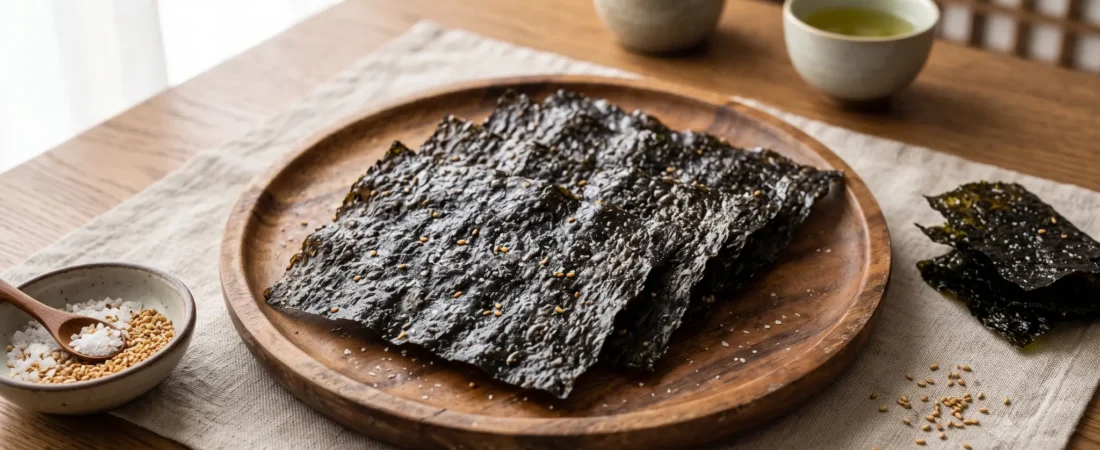
Korean roasted seaweed, or gim, offers a different experience. The sheets are thin and crisp, with an intense roasted flavour that makes a small portion feel interesting rather than plain. It can be eaten by itself, but it becomes far more useful when treated as part of a structured snack: wrapped around cucumber, paired with an egg or crumbled over a small rice bowl.
Gim’s role in weight management is practical: a clearly portioned serving can replace a more energy-dense snack, while its strong flavour can make simple foods more appealing. It fits most naturally within a wider routine built around balanced meals, daily movement, sleep and an appropriate overall energy intake.
What Is Korean Roasted Seaweed?
Gim is the Korean name commonly used for thin sheets of edible laver, usually species within the Pyropia or Porphyra groups. The seaweed is formed into sheets, dried and roasted. Korean table gim is often lightly brushed with oil and seasoned with salt before being cut into small rectangles.
In Korea, gim is not limited to snack time. It is an everyday accompaniment to rice and a familiar part of lunchboxes, breakfasts and simple home meals. A sheet can wrap a bite of rice, egg or vegetables, while crushed gim adds aroma and texture to bowls and noodles.
This article focuses on how to eat gim within a balanced, portion-aware routine. For the differences between seasoned gim, plain roasted sheets, gimbap seaweed and nori—as well as detailed label and purchasing advice—use the separate Korean seaweed UK shopping guide.
Is Gim Really a High-Nutrient Food?
Laver naturally contains protein, fibre and a range of minerals and plant pigments. Research reviews describe laver as nutritionally diverse, but its composition varies with species, growing conditions, processing and analysis. Seaweed can also contain iodine, although the amount is highly variable and is not always displayed on ordinary food labels.
There is an important difference between being nutrient-rich per gram and supplying a large quantity of nutrients per serving. Gim is extremely light: an individual snack pack may contain only a few grams of seaweed. It can contribute useful dietary variety, but it should not be treated as a replacement for vegetables, fruit, legumes, whole grains or protein-rich foods.
The most reliable nutrition information for your serving is the panel on the specific pack. Compare the declared serving size with the amount you actually eat. Calories, fat and salt can vary according to the oil, seasoning and number of sheets in the packet.
A Realistic Nutrition Snapshot
| What gim contributes | What to remember |
| Very little food weight per sheet | A packet may look large because the sheets contain plenty of air |
| Crisp texture and strong savoury flavour | These qualities can make a small, measured snack enjoyable |
| Some fibre and protein | The amount in a small snack pack is unlikely to make it filling by itself |
| Variable iodine and other minerals | Do not estimate iodine intake from appearance or marketing language |
| Added oil and salt in seasoned products | Check the serving information on the product you eat |
How Gim Can Fit a Weight-Loss Routine
The NHS explains that weight management is influenced by both food choices and portion sizes. Gim can support that practical approach as a convenient food swap and meal-building ingredient.
1. It Can Replace a More Energy-Dense Crunch
If your usual snack is a large portion of crisps, crackers or a buttery pastry, a measured serving of roasted gim may reduce the calories in that particular snack. The benefit comes from the swap, not from a special fat-burning property of seaweed.
Make the change specific. Instead of adding gim after eating your usual snack, decide in advance that it will replace the crisp component. If hunger is stronger, pair it with a food that provides more substance rather than opening several more packets.
2. Individual Sheets Create Natural Pauses
Gim is eaten one sheet or one wrapped bite at a time. That makes it easy to slow the pace, notice the roasted flavour and build a snack deliberately. This works best when the planned portion is placed on a plate with its accompaniments.
Eating straight from a multipack while working or watching television removes that advantage. The NHS recommends putting snacks into a bowl or onto a plate so the amount is visible. The same principle applies even when the food itself is low in calories.
3. It Makes Simple Foods More Appealing
A balanced eating pattern is easier to maintain when meals taste satisfying. Gim can add savoury flavour and crisp texture to plain rice, vegetables, tofu and eggs without requiring a heavy sauce. Used this way, it helps turn basic ingredients into a meal you are more likely to enjoy and repeat.
Why Gim Alone May Not Feel Filling
A packet of roasted seaweed is light in every sense. It offers crispness and flavour, but a typical serving contains only a small amount of food. That means it may satisfy a taste craving without resolving genuine physical hunger.
For a snack with more staying power, combine gim with at least one of the following:
- Protein: egg, tofu, edamame, plain Greek yoghurt or leftover chicken
- Fibre and volume: cucumber, carrots, radish, tomatoes or fruit
- Carbohydrate when needed: a small rice portion, oatcakes or wholegrain toast
- Healthy fat in a measured amount: avocado or a few nuts
The goal is not to make every snack large. It is to match the snack to your hunger. Gim alone can suit a mild craving shortly before dinner; after a run or during a long working afternoon, a more balanced combination is usually more useful.
Five Portion-Smart Ways to Eat Gim
1. Cucumber and Egg Gim Bites
Cut one boiled egg into quarters and add cucumber batons. Wrap each bite in a piece of gim. The egg provides protein, cucumber adds freshness and the seaweed supplies the crisp, savoury finish.
2. Mini Tofu Gim Wraps
Pan-sear thick tofu slices in a non-stick pan, then cool slightly. Add a small dab of gochujang dressing or a squeeze of lemon and wrap each slice with gim. This turns a very light seaweed snack into a more substantial plant-based option.
3. Gim and Edamame Snack Plate
Serve a measured portion of gim with a small bowl of cooked edamame and cucumber sticks. Enjoy them together so that each bite combines warm edamame, crisp cucumber and savoury roasted seaweed.
4. Small Kimchi Rice Cup
Place a modest portion of warm rice in a bowl and top with chopped kimchi, cucumber and crushed gim. Add an egg or tofu if this is replacing a meal rather than serving as a small snack. The gim should be added immediately before eating so it remains crisp.
5. Apple, Cheese and Gim Plate
For a Korean-inspired twist on a familiar snack, pair apple slices with a small portion of cheese and crisp gim. The sweet, creamy and savoury flavours create variety without requiring a large quantity of any single food.
The Desk-Snack Portion Method
Use this simple routine when afternoon grazing is the main challenge:
- Check your hunger: Decide whether you need flavour, a light snack or something closer to a small meal.
- Choose one portion: Take one individual pack or count out the sheets you intend to eat.
- Add substance when needed: Include an egg, tofu, edamame, vegetables or fruit.
- Use a plate: Keep the multipack in the cupboard rather than on the desk.
- Eat away from the screen when possible: Give the snack a clear beginning and end.
This method matters more than whether the pack is marketed as “healthy”. Portion awareness and the foods eaten across the whole day are what shape energy intake.
Using Gim After Running or Yoga
Gim can be a pleasant part of a post-workout meal, especially when salty, savoury food sounds more appealing than something sweet. However, seaweed alone provides too little carbohydrate, protein and overall energy to function as complete recovery nutrition.
After a short yoga session, gim with tofu and cucumber may be enough if your next meal is close. After a longer run, build a fuller bowl with rice, egg or tofu, vegetables and water alongside it. Gim then works as the flavour and texture component—not the entire recovery plan.
For an easy formula, use:
Rice or another carbohydrate + protein + vegetables + crushed gim
Examples include rice with scrambled egg and spinach, tofu with brown rice and cucumber, or leftover salmon with rice and steamed greens. This approach connects a favourite Korean pantry ingredient to a genuinely balanced meal.
Salt, Iodine and Sensible Portions
Seasoned roasted gim can contribute salt, especially when several small packs are eaten together. The NHS recommends that adults consume no more than 6 g of salt per day from all foods. Check the salt figure on the nutrition label and consider what else you are eating that day.
Seaweed is also a natural source of iodine, but levels differ considerably between varieties and products. More is not automatically better. People with thyroid conditions, anyone advised to manage iodine intake, and those eating seaweed very frequently should seek individual guidance from an appropriate healthcare professional.
This does not make gim an unsuitable everyday food for most people. It simply supports the same principle used throughout this article: enjoy it as one varied component of the diet rather than treating it as a concentrated supplement.
FAQ
Q1. Is Korean roasted seaweed good for weight loss?
Gim does not directly cause weight loss. A measured serving can fit a weight-management routine when it replaces a more energy-dense snack and remains part of an overall balanced eating pattern.
Q2. How much gim should I eat as a snack?
There is no universal serving for everyone. Begin with the serving stated on the pack or one small individual packet. If you are physically hungry, add protein, fruit or vegetables rather than relying on multiple seaweed packs.
Q3. Can I eat roasted seaweed every day?
Gim can be enjoyed regularly as part of a varied diet. Because salt, oil and iodine content vary, alternate it with other snacks and follow any personal advice you have received about sodium or iodine.
Q4. Is gim better than crisps?
They are different foods, but a portion of gim is often lighter than a typical portion of crisps. The comparison still depends on the pack size, oil and salt content. Gim is most satisfying when paired with a nourishing food such as egg, tofu, edamame or vegetables.
K-Well’s Final Thoughts
Korean roasted seaweed earns its place in a balanced routine through convenience, flavour and versatility. A few crisp sheets can replace a heavier savoury snack, encourage deliberate portions or make a simple bowl of rice and vegetables feel complete.
The most effective approach is also the least dramatic: portion the gim before eating, pair it according to your level of hunger and consider the whole meal rather than a single “weight-loss” ingredient. That turns gim from a fleeting snack trend into a practical part of everyday Korean-inspired eating.
Try one combination this week: boiled egg and cucumber bites for a work snack, or a rice, tofu and gim bowl after your next run.
Read Next
- How to Choose Korean Gim (Nori): A UK Shopping Guide
- 7 Essential Korean Pantry Staples for Beginners in the UK
References
- Cho, T. J., & Rhee, M. S. (2020). Health functionality and quality control of laver (Porphyra, Pyropia): Current issues and future perspectives as an edible seaweed. Marine Drugs, 18(1), 14. https://doi.org/10.3390/md18010014
- National Health Service (NHS). Healthy eating when trying to lose weight. https://www.nhs.uk/better-health/lose-weight/healthy-eating-when-trying-to-lose-weight/
- National Health Service (NHS). Salt in your diet. https://www.nhs.uk/live-well/eat-well/food-types/salt-in-your-diet/
- National Institutes of Health, Office of Dietary Supplements (NIH ODS). Iodine: Fact Sheet for Health Professionals. https://ods.od.nih.gov/factsheets/Iodine-HealthProfessional/
- Peñalver, R., Lorenzo, J. M., Ros, G., Amarowicz, R., Pateiro, M., & Nieto, G. (2020). Seaweeds as a functional ingredient for a healthy diet. Marine Drugs, 18(6), 301. https://pubmed.ncbi.nlm.nih.gov/32517092/