
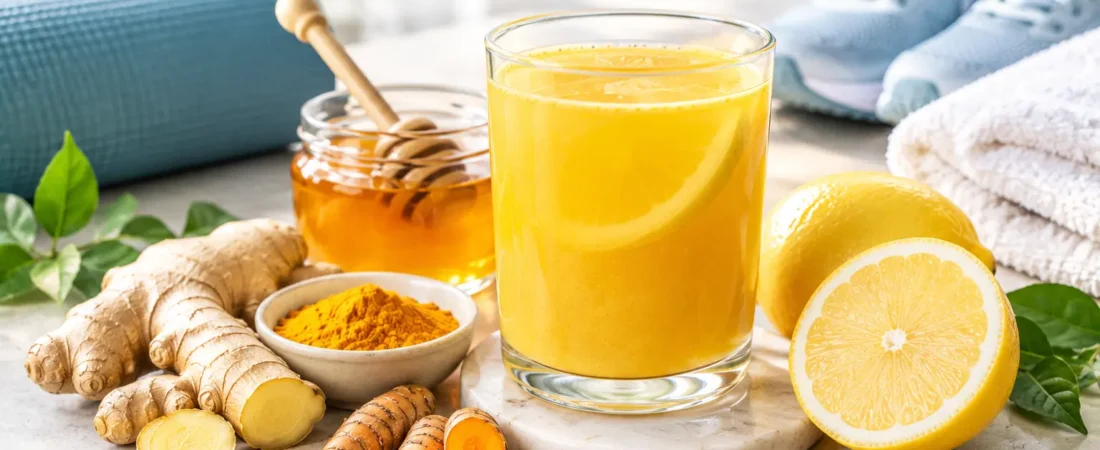
Ginger, turmeric, Manuka honey and lemon are familiar ingredients in many kitchens, but they are also often promoted as natural ways to support post-workout recovery. While each has a place in a varied diet, the evidence is more nuanced than the wellness claims often suggest.
After my morning jog, I have ginger, turmeric, Manuka honey and lemon as part of my daily routine. I enjoy combining these four ingredients, and I wanted to explore their nutritional benefits, what research says about their potential effects after exercise, and whether there is scientific evidence to support using them as part of a post-workout routine.
Ginger and turmeric provide naturally occurring plant compounds, lemon contributes vitamin C and other plant compounds, while Manuka honey mainly provides carbohydrate and sweetness. Research has explored whether ginger and curcumin may influence exercise-related soreness and recovery, but the results are mixed and do not establish this combination as a proven recovery supplement.
🌟 Key Takeaways
- Ginger: Contains gingerols and other plant compounds. Some studies suggest that regular ginger intake may modestly reduce certain types of muscle soreness.
- Turmeric: Provides curcuminoids, including curcumin. Research on concentrated curcumin supplements shows mixed results, which cannot automatically be applied to culinary turmeric.
- Lemon and Manuka honey: Lemon provides vitamin C, while honey supplies readily available carbohydrates. Both can contribute to a post-exercise drink, but neither has been shown to accelerate muscle recovery on its own.
1. Ginger: A Source of Naturally Occurring Plant Compounds
Ginger is widely used in Asian cooking and traditional food practices. Its distinctive warm, slightly spicy flavour makes it a versatile ingredient in soups, marinades, stir-fries and hot drinks.
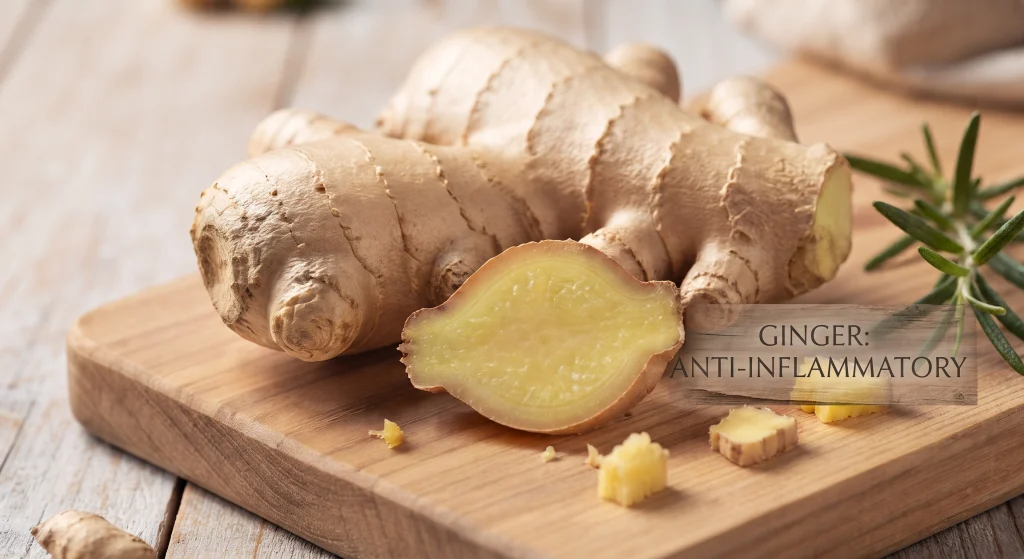
Potential Nutritional Benefits of Ginger
Ginger contains naturally occurring plant compounds, particularly gingerols and shogaols, which contribute to its characteristic flavour and aroma.
Ginger can:
- Add flavour to food and drinks without relying on additional salt or sugar.
- Contribute naturally occurring plant compounds to a varied diet.
- Make everyday meals and warm drinks more enjoyable.
- Be used in a variety of dishes, including vegetable soups, fish and tofu recipes.
Ginger has also traditionally been used to ease digestive discomfort, and some clinical research supports its potential to help with certain types of nausea. However, the effects depend on the condition and the preparation used. Culinary ginger should not be considered a treatment for digestive problems.
What Does the Research Say About Exercise Recovery?
Ginger has attracted interest for its potential effects on exercise-induced muscle soreness.
Some studies suggest that consuming ginger regularly for several days may modestly reduce muscle pain following certain types of strenuous exercise. However, the results vary, and ginger does not appear to act as an immediate pain reliever.
It is also important to distinguish between the amounts used in research and the small quantities typically added to everyday meals and drinks.
How to Use Ginger
Fresh ginger is particularly versatile in everyday cooking. You can add it to:
- Fish and tofu marinades
- Vegetable stir-fries
- Soups and broths
- Homemade ginger tea
- Warm milk or soya milk drinks
Freshly grated ginger works especially well in a warm drink because it releases its distinctive aroma.
2. Turmeric: The Spice Behind Curcumin Research
Turmeric is a bright yellow spice commonly used in South Asian cooking. It contains several naturally occurring compounds called curcuminoids, including curcumin, which is the most extensively studied.
Although turmeric is often described as an anti-inflammatory food, it is important to distinguish its general nutritional role from the effects investigated in concentrated supplement research.
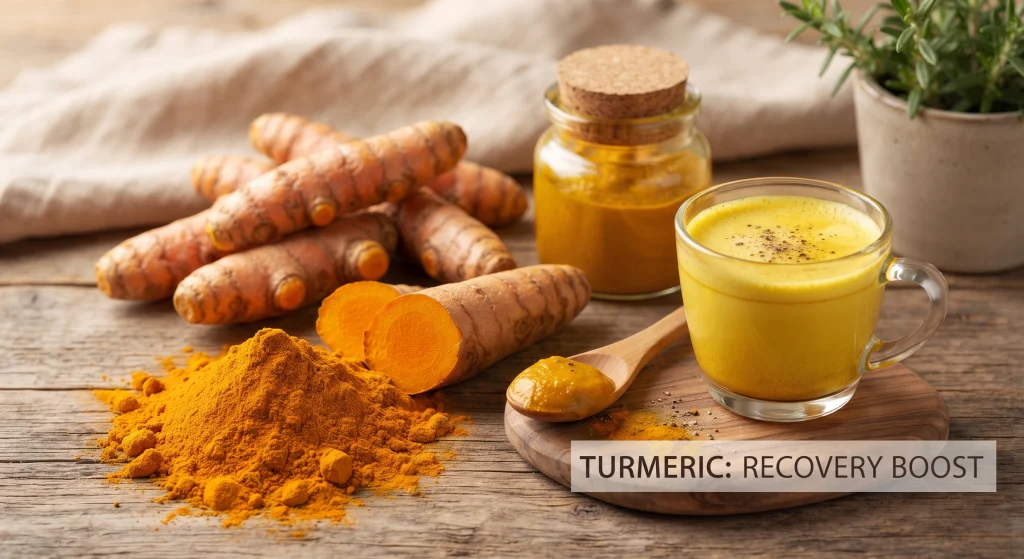
Potential Nutritional Benefits of Turmeric
Turmeric contains naturally occurring curcuminoids and other plant compounds.
As part of everyday cooking, turmeric can:
- Add colour and flavour to rice, vegetables, soups and stews.
- Contribute plant compounds to a varied diet.
- Help make simple meals more interesting without adding much salt.
- Provide an alternative to relying on the same herbs and spices every day.
Curcumin has been investigated for its antioxidant and anti-inflammatory properties. However, laboratory findings do not necessarily translate into measurable health benefits from eating ordinary amounts of turmeric.
Therefore, turmeric is best enjoyed as a culinary spice rather than treated as a concentrated source of curcumin.
What Does Curcumin Research Say About Exercise Recovery?
Curcumin has been studied for its potential effects on muscle soreness, inflammation and markers of exercise-induced muscle damage.
Some studies have reported improvements in certain recovery measures, while other systematic reviews have found no statistically significant benefits for muscle soreness or inflammation. The findings vary according to the preparation, dosage, timing and study design.
Many studies use concentrated curcumin supplements, sometimes formulated to improve absorption. These are quite different from the small amount of turmeric powder used in everyday cooking.
Consequently, there is not enough consistent evidence to conclude that adding culinary turmeric to a post-workout drink will meaningfully accelerate recovery.
Does Black Pepper Improve Curcumin Absorption?
Black pepper contains piperine, a compound that can increase curcumin absorption in certain preparations.
However, the absorption effects observed in research do not mean that adding black pepper to a homemade turmeric drink produces the same results as a specially formulated supplement.
A small pinch of black pepper can complement turmeric’s flavour, but it is optional and not essential to a balanced diet.
How to Use Turmeric
Turmeric can be incorporated into everyday meals in several ways:
- Vegetable rice
- Soups and stews
- Roasted vegetables
- Egg dishes
- Tofu marinades
- Warm milk or soya milk drinks
A small amount is often enough to add colour and a gentle earthy flavour.
3. Lemon: Vitamin C and a Refreshing Source of Flavour
Lemon adds a bright, refreshing flavour to drinks and meals. Its natural acidity also balances the warmth of ginger and the earthy taste of turmeric, making it a particularly useful ingredient in homemade drinks.
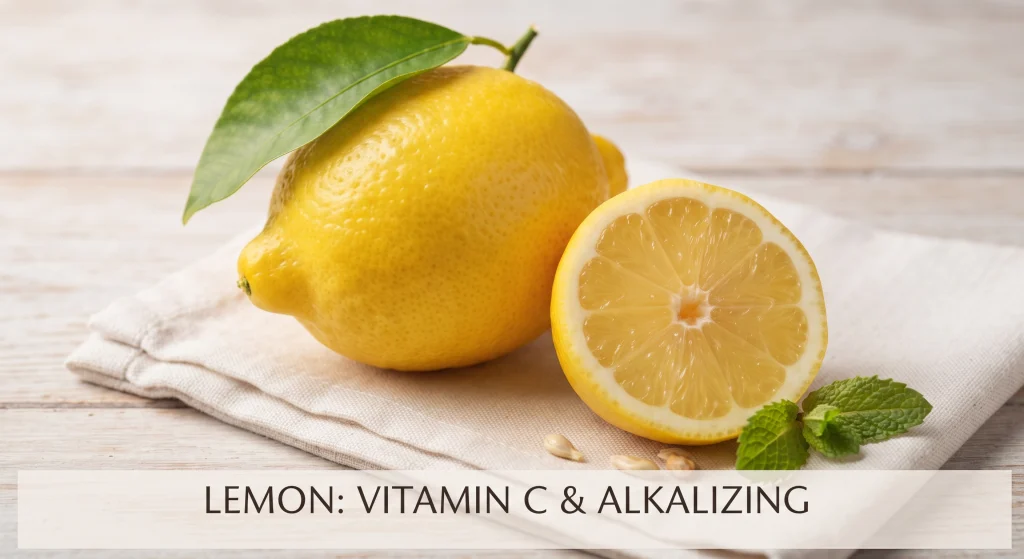
Potential Nutritional Benefits of Lemon
Lemon is a source of vitamin C, an essential nutrient that contributes to several normal bodily functions.
Vitamin C:
- Supports normal immune system function.
- Contributes to normal collagen formation, which is important for the normal function of skin, cartilage and blood vessels.
- Helps protect cells from oxidative stress through its antioxidant function.
- Improves the absorption of non-haem iron from plant-based foods.
Lemon also contains naturally occurring plant compounds, including flavonoids. However, the quantity of vitamin C and other compounds obtained from lemon juice depends on the amount used.
A little lemon juice in a drink contributes some vitamin C, but it should not be considered equivalent to eating a full serving of fruit or vegetables.
Does Lemon Help With Exercise Recovery?
Vitamin C is involved in normal collagen formation and helps protect cells from oxidative stress. These are important physiological functions, but they do not mean that drinking lemon water immediately after exercise speeds up muscle recovery.
Lemon water can be a pleasant way to make drinking fluids more enjoyable, particularly if you prefer a little acidity to plain water.
For most people, however, the main benefit of adding lemon to a post-workout drink is flavour and the small nutritional contribution it provides, rather than a proven recovery effect.
How to Use Lemon
Fresh lemon juice works particularly well in:
- Warm ginger drinks
- Homemade salad dressings
- Fish and seafood dishes
- Vegetable soups
- Fruit and yoghurt bowls
- Water or sparkling water
Adding fresh lemon juice shortly before drinking helps preserve its fresh flavour.
4. Manuka Honey: A Natural Source of Carbohydrate
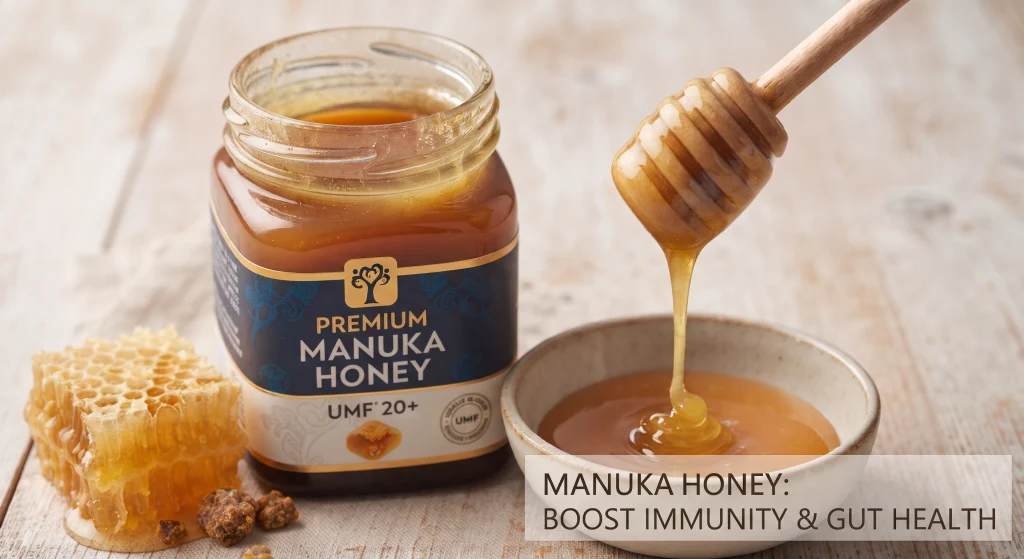
Manuka honey is produced from nectar collected from the Manuka plant, primarily in New Zealand. It has a distinctive flavour and is often sold at a higher price than ordinary honey.
Although it is frequently marketed for its special properties, its everyday nutritional role is relatively straightforward.
Potential Nutritional Benefits of Manuka Honey
The main nutritional contribution of Manuka honey is carbohydrate, primarily in the form of naturally occurring sugars.
Honey can:
- Provide readily available energy.
- Add sweetness to drinks, yoghurt and meals.
- Make spicy or bitter ingredients more palatable.
- Supply a small amount of energy when included in a meal or snack.
Honey also contains small amounts of naturally occurring plant compounds. However, it is not a significant source of protein, fibre or most essential vitamins and minerals.
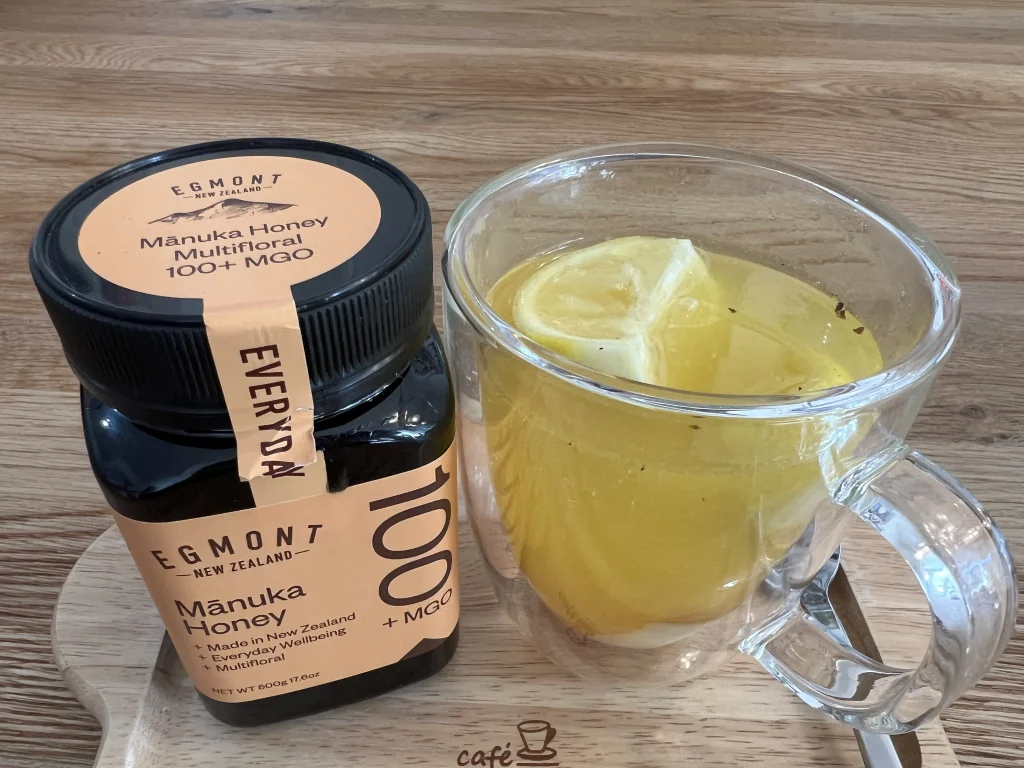
Manuka honey contains compounds associated with its characteristic antibacterial activity. Its MGO rating relates to methylglyoxal content and antibacterial properties, not to its ability to improve muscle recovery.
Is Manuka Honey Better After Exercise?
Carbohydrate is an important source of energy, particularly after prolonged or demanding exercise. Honey can contribute carbohydrates to a post-workout snack or drink.
However, there is no strong evidence that Manuka honey is superior to ordinary honey for post-exercise recovery. Both provide carbohydrate, and the amount consumed matters more for this purpose than the honey’s price or MGO rating.
If you enjoy the distinctive taste of Manuka honey, it can be a pleasant addition to your routine. However, ordinary honey is also suitable when you simply want to add sweetness.
How to Use Manuka Honey
A small amount of honey works well in:
- Ginger and lemon drinks
- Warm turmeric milk
- Plain yoghurt with fruit
- Homemade salad dressings
- Simple marinades
Because honey is high in free sugars, it is best enjoyed in modest amounts as part of a balanced diet.
5. UK Shopper’s Guide: Where and How to Source Quality Ingredients
You do not need expensive specialist products to make a ginger, turmeric, lemon and honey drink at home. In the UK, fresh ginger, lemons and ground turmeric are generally straightforward to find in supermarkets. Fresh turmeric and higher-rated Manuka honey may require a little more label checking.
Here is how I would approach shopping for these ingredients.
Choosing Manuka Honey: Holland & Barrett and UK Supermarkets
If you enjoy Manuka honey, look for a clearly stated MGO rating or a certified UMF rating on the packaging. MGO stands for methylglyoxal, while UMF stands for Unique Mānuka Factor. The two systems are related but are not interchangeable labels.
For example, UMF 10+ corresponds to MGO 263+ in the recognised grading system. This can help you compare products, but it is not a scientifically established minimum grade for post-workout recovery. A higher rating does not mean that the honey has been proven to reduce muscle soreness or accelerate recovery.
In the UK, these are useful places to start:
- Holland & Barrett: Offers a range of Manuka honey products, including Manuka Doctor and other brands with different MGO ratings. Promotions can make some options more affordable, so compare the price per 100g rather than relying on the advertised discount alone.
- Waitrose, M&S and larger Sainsbury’s stores: Selection varies by branch and online availability. Check the honey or specialist food sections for products with clearly labelled MGO or UMF ratings.
Lower-rated products are not automatically poor-quality honey. They may simply have a lower measured MGO level. Choose according to your taste, budget and reasons for buying it.
Fresh Turmeric and Ginger: Waitrose, M&S and Sainsbury’s
Fresh ginger is widely available across UK supermarkets. Fresh turmeric root can also be found in some larger stores, including Sainsbury’s, although stock and availability vary by location.
Check the fresh produce section, particularly the area where ginger and other specialist roots are displayed. Fresh turmeric is sometimes sold in small packs, such as 100g punnets.
When choosing fresh ginger or turmeric, look for roots that feel firm and plump, with relatively smooth skin. Avoid pieces that are soft, shrivelled or visibly mouldy.
Fresh turmeric can be peeled or scraped, then grated or sliced. It has a vivid yellow-orange colour, so it is worth using a chopping board that can tolerate staining.
Fresh and ground turmeric are both convenient cooking ingredients. Fresh roots provide a different flavour and texture, but they are not automatically more effective or better absorbed than the powdered spice. Choose whichever is easier to use consistently.
💡 K-Well’s practical tip: If you already have ground turmeric in your spice cupboard, there is no need to buy fresh roots just to make this drink. A small amount of ground turmeric is convenient, keeps well when stored correctly and works perfectly well in a simple homemade recipe.
What About Black Pepper?
If you use ground turmeric, you can add a small pinch of freshly ground black pepper for flavour. Piperine, a compound in black pepper, has been shown to influence curcumin absorption in specific research settings.
However, the often-quoted claim that black pepper increases absorption by up to 2,000% comes from particular experimental conditions. It should not be presented as the expected effect of adding a pinch of pepper to a homemade drink.
Black pepper is optional, and there is no need to add it if you dislike the taste or find it irritating.
Lemon and Other Everyday Ingredients
Fresh lemons are widely available in UK supermarkets. Choose firm fruit that feels relatively heavy for its size, as this can indicate a good amount of juice.
You can use freshly squeezed lemon juice or bottled lemon juice, depending on convenience. Fresh lemon offers a brighter flavour, but the most practical option is the one you will actually use.
For this recipe, a small amount of each ingredient is enough. Buying several specialist products or concentrated wellness shots is not necessary to enjoy a warm homemade drink.
6. Is a Ginger, Turmeric and Lemon Shot Worth It After Exercise?
Ginger and turmeric shots have become popular in wellness routines because they are compact, convenient and easy to drink. They are now widely available in supermarkets and health food shops, making them easy to find without having to prepare them at home.
But are these concentrated drinks worth taking after exercise?
The answer depends on what you expect from them.
What Does the Evidence Actually Support?
Research on ginger and curcumin has investigated their possible effects on muscle soreness, inflammation and other recovery measures. However, studies frequently use specific quantities or concentrated preparations rather than the small amounts found in typical homemade drinks or commercial shots.
There is also limited evidence on the combined effects of ginger, turmeric, lemon and honey as a single post-workout drink.
It would therefore be premature to claim that combining all four ingredients produces a special recovery effect.
When Is a Shot Useful?
A homemade or commercially prepared shot may be convenient if you enjoy its flavour and find it easy to include in your routine.
However, a concentrated shot is not necessarily more nutritious or more effective than using these ingredients in ordinary meals. Some commercial products also contain considerable amounts of fruit juice or added sugar.
For a short morning jog, a balanced breakfast and adequate hydration are generally more relevant to recovery than taking a concentrated shot.
7. My Morning Ginger, Turmeric, Lemon and Manuka Honey Drink
After my morning jog, I enjoy a homemade drink combining these four ingredients. I like the contrast between ginger’s warmth, turmeric’s earthy flavour, lemon’s acidity and honey’s gentle sweetness.
Ingredients
- 250ml warm water
- 1 tsp freshly grated ginger
- ¼ tsp turmeric powder
- 1–2 tsp freshly squeezed lemon juice
- 1 tsp Manuka honey or ordinary honey
- A small pinch of black pepper (optional)
Method
- Gently heat the water until warm, rather than boiling.
- Add the freshly grated ginger and turmeric.
- Leave to infuse for approximately 4–5 minutes.
- Allow the drink to cool slightly.
- Add the lemon juice and honey, then stir well.
- Add a small pinch of black pepper if desired and enjoy.
You can adjust the amount of ginger, lemon and honey according to your taste. If you prefer a milder flavour, use less ginger and lemon.
This drink can be a pleasant way to rehydrate after a jog.
💡 K-Well’s note: Ginger and lemon can aggravate heartburn in some people, and frequent exposure to acidic lemon drinks may affect tooth enamel. If you drink lemon water regularly, avoid sipping it over a prolonged period and rinse your mouth with plain water afterwards.
8. What to Eat Alongside Your Morning Drink
Although I enjoy my ginger, turmeric, lemon and honey drink after jogging, I also consider what I eat afterwards.
A balanced breakfast, lunch and dinner can provide nutrients that the drink itself does not contain.
Some practical combinations include:
- Eggs and wholegrain toast: Protein and carbohydrate in a simple breakfast.
- Unsweetened soya milk (Seoritae Duyu), fruit and nuts: Plant protein, carbohydrate, fibre and healthy fats.
- Greek yoghurt with berries or Overnight oats with berries: Protein, fibre and a variety of plant compounds.
- Tofu with rice and vegetables: A satisfying plant-based meal with protein and carbohydrates.
- Salmon with rice and vegetables: Protein, carbohydrate and omega-3 fatty acids.
For shorter, gentle jogs, your usual meals may provide everything you need. After longer or more strenuous exercise, paying attention to carbohydrate, protein and fluids becomes more important.
💡 K-Well’s Tip: Make Your Routine Sustainable
I prefer to use familiar ingredients that I can easily incorporate into my everyday routine. Ginger, turmeric and lemon are versatile enough for drinks and cooking, while honey adds sweetness when needed.
You do not need to consume large quantities or buy expensive concentrated products to enjoy these ingredients. Small amounts can add flavour and variety to an otherwise simple diet.
If you drink lemon and honey regularly, it is also worth keeping your overall intake of free sugars in mind. A little sweetness can make a drink enjoyable without needing to turn it into a heavily sweetened beverage. For me, the most useful way to think about these ingredients is simple: enjoy them as part of everyday food and drinks, while keeping the fundamentals of recovery—food, fluids, protein, carbohydrate, sleep and rest—at the centre.
FAQ
Q1. Can I drink ginger, turmeric, lemon and honey immediately after jogging?
Yes, if you enjoy the drink and tolerate the ingredients well. It can contribute to your fluid intake, but there is no established need to drink it immediately after exercise. Your overall diet and hydration are more important.
Q2. Does ginger and turmeric reduce muscle soreness?
Some studies suggest that ginger and concentrated curcumin may modestly reduce certain measures of muscle soreness. However, the evidence is mixed, and results from concentrated supplements cannot be directly applied to ordinary culinary servings.
Q3. Is Manuka honey better than ordinary honey for recovery?
There is no strong evidence that Manuka honey offers additional exercise-recovery benefits compared with ordinary honey. Both provide carbohydrates and can add sweetness to drinks and meals.
Q4. Does lemon water help with post-workout recovery?
Lemon water can make hydration more enjoyable and provides a small amount of vitamin C, depending on how much lemon juice is used. However, there is no convincing evidence that lemon water alone accelerates muscle recovery.
🌿 K-Well’s Everyday Kitchen Notes
Ginger, turmeric, lemon and Manuka honey each have a different nutritional role. Ginger and turmeric contribute naturally occurring plant compounds, lemon provides vitamin C, and honey supplies carbohydrate and sweetness.
Research suggests that ginger and concentrated curcumin may have some potential effects on exercise-related soreness, but the evidence remains mixed. Lemon and honey can make a post-workout drink enjoyable, although neither has been shown to provide a unique muscle-recovery benefit.
I will just keep enjoying these four ingredients as part of my daily routine after a morning jog, but I will see them as a complement to a balanced diet rather than a substitute for proper recovery. Adequate protein, carbohydrate, fluids, varied meals and sufficient sleep remain the foundations of an effective routine.
Ultimately, a sustainable wellness habit does not need to be complicated. A simple homemade drink, combined with nourishing everyday meals, can be an enjoyable way to look after yourself.
Read Next
- 3 Nourishing Korean Post-Run Meals for Better Recovery
- Top 3 Natural Anti-Inflammatory Foods for Post-Workout Recovery
- Korean Roasted Barley Tea: A Caffeine-Free Everyday Drink
References
• National Center for Complementary and Integrative Health (NCCIH). Turmeric. https://www.nccih.nih.gov/health/turmeric
• PubMed. Effects of ginger supplementation on exercise-induced muscle soreness and recovery: a systematic review. https://pubmed.ncbi.nlm.nih.gov/26200194/
• PubMed. Effects of curcumin supplementation on exercise-induced muscle damage and recovery: systematic reviews and meta-analyses. https://pubmed.ncbi.nlm.nih.gov/37408367/
• PubMed. Curcumin supplementation and exercise recovery: a systematic review. https://pubmed.ncbi.nlm.nih.gov/42356379/