
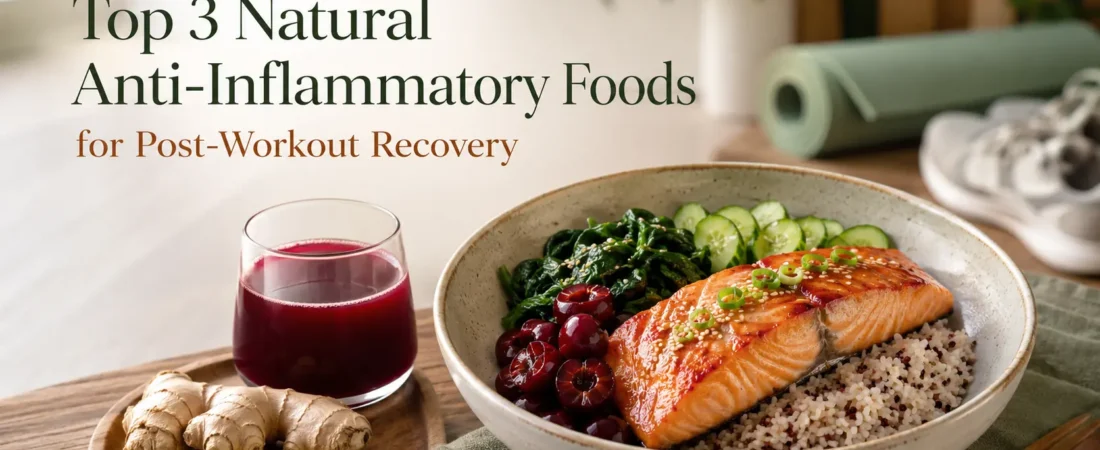
Discover three natural anti-inflammatory foods that may support post-workout recovery, with practical UK shopping tips and an easy recovery meal.
Key Takeaways
- Oily fish: Salmon, sardines and mackerel provide protein plus the long-chain omega-3 fats EPA and DHA, making them a strong foundation for a balanced recovery meal.
- Tart cherries: Research suggests that tart cherry products may help preserve muscle function after strenuous exercise, particularly when used before and after a demanding event.
- Ginger: Fresh or ground ginger adds flavour with very little sugar, while studies suggest that regular intake may modestly reduce exercise-related muscle soreness.
When Your Legs Still Remember Yesterday’s Workout
You finish a long Sunday run, a challenging strength session or a deep lower-body yoga flow feeling energised. The next morning, however, the stairs seem steeper than usual. That familiar stiffness is part of the body’s response to unfamiliar or demanding exercise.
Exercise places controlled stress on muscle tissue, followed by repair and adaptation. The practical goal is to support that process with enough food, protein, carbohydrate, fluid and sleep. Within that bigger picture, oily fish, tart cherries and ginger provide nutrients or plant compounds studied in relation to post-workout recovery.
1. Oily Fish: Omega-3 Fats Plus Complete Protein
Salmon often receives the most attention, but sardines, mackerel, trout and herring belong in the same recovery-friendly family. These fish provide EPA and DHA, the long-chain omega-3 fatty acids commonly studied for their role in inflammatory signalling. They also supply high-quality protein, which gives the body the amino acids needed to repair and remodel muscle after exercise.
What the exercise research suggests
Omega-3 fats influence cell membranes and the production of signalling molecules involved in inflammation, although the practical recovery evidence is mixed. A 2020 systematic review found low-quality evidence and no clinically important overall reduction in soreness from supplementation. Food still has a practical advantage: oily fish delivers omega-3 fats and recovery protein in the same meal (O’Connor et al., 2020).
The easiest UK options
Tesco, Sainsbury’s, M&S, Waitrose, Aldi and Lidl commonly stock fresh or frozen salmon and trout, plus tinned sardines and mackerel. Compare the salt per 100 g when buying smoked or flavoured products, especially if the meal also includes kimchi or soy sauce.
The NHS recommends at least two portions of fish per week, including one portion of oily fish; one portion is around 140 g when cooked. Separate limits apply to some groups, including those who may become pregnant, so consult the full NHS fish guidance if relevant (NHS: Fish and shellfish).
K-Well’s serving idea: Gochujang Salmon Rice Bowl
Mix a small spoonful of gochujang with grated ginger, rice vinegar and a little water. Brush it lightly over a salmon fillet, then bake until fully cooked. Serve with brown rice or mixed-grain rice, steamed spinach, cucumber and sesame seeds.
This supplies protein and omega-3 fats, carbohydrates to help restore fuel, and vegetables for fibre and micronutrients. A modest amount of concentrated gochujang provides plenty of sweet-savoury heat.
2. Tart Cherries: A Focused Option for Demanding Training Days
Tart cherries, often sold as Montmorency cherries, contain anthocyanins, a group of polyphenols also found in berries and other red, blue and purple plant foods.
Why athletes use tart cherry products
Tart cherry products have been tested around marathons, sprints and resistance training. A 2021 meta-analysis found a small improvement in muscle-strength recovery, with more mixed results for soreness and blood markers. Many studies began supplementation several days before exercise, so tart cherries may be most relevant for a planned race or heavy training block—not simply as a drink purchased after soreness appears (Hill et al., 2021; McHugh, 2022).
How to shop for tart cherry in the UK
Look online, in health-food shops or larger supermarkets for 100% tart cherry juice, Montmorency concentrate, frozen sour cherries or unsweetened dried cherries. A “cherry drink” may contain little fruit and added sugar. Even 100% juice contains naturally occurring sugar, so count it as part of the meal rather than as calorie-free hydration.
Practical ways to use it
Dilute concentrate according to the label and serve it with Greek yoghurt, fortified soya yoghurt or eggs. Cherry juice provides carbohydrate and polyphenols but little protein, so this pairing creates a more complete snack.
3. Ginger: An Everyday Ingredient With a Modest Muscle-Soreness Benefit
Ginger adds warmth to Korean marinades, broths, kimchi seasoning and tea. Its gingerols and shogaols have been studied in inflammatory pathways, as well as in clinical exercise studies.
What the studies show
A review concluded that around 2 g of ginger daily may modestly reduce muscle pain after eccentric exercise or prolonged running, particularly when used for at least five days; it did not clearly improve performance. A controlled trial also reported less exercise-related muscle pain from daily raw or heated ginger. (Wilson, 2015; Black et al., 2010) Ginger can therefore be a regular flavour rather than a concentrated wellness shot.
Fresh, ground or tea?
Use fresh ginger in rice bowls, soups and marinades, or ground ginger in porridge and yoghurt. A lightly infused tea may not match study amounts. People with reflux may prefer smaller culinary portions; ask a pharmacist or clinician before using high-dose supplements with anticoagulant medicine.
Build a Complete Post-Workout Recovery Bowl
Use this four-part formula after a challenging session:
- Choose a protein: baked salmon, sardines, tofu, eggs, chicken or Greek-style yoghurt.
- Add carbohydrates: brown rice, japgokbap, potatoes, oats or wholegrain noodles. Carbohydrate helps replenish muscle glycogen, especially after endurance exercise.
- Include colourful plants: spinach, broccoli, carrots, peppers, cucumber, berries or tart cherries provide fibre and a range of polyphenols.
- Rehydrate: drink water and replace additional sodium after long, hot or very sweaty sessions. Food and ordinary fluids are sufficient for many everyday workouts.
20-minute salmon, cherry and ginger recovery bowl
Ingredients for one serving
- 1 salmon fillet, approximately 120–150 g
- 1 teaspoon grated fresh ginger
- 1 teaspoon gochujang
- 1 teaspoon rice vinegar
- 1 serving cooked brown or mixed-grain rice
- 1 generous handful spinach
- ½ cucumber, sliced
- 2 tablespoons thawed tart cherries, or diluted tart cherry concentrate on the side
- sesame seeds and sliced spring onion, optional
Method
- Heat the oven to 200°C, or 180°C fan.
- Mix the ginger, gochujang and vinegar with a teaspoon of water. Brush over the salmon.
- Bake for 12–15 minutes, depending on thickness, until the centre is fully cooked and flakes easily.
- Wilt the spinach and warm the rice while the fish cooks.
- Arrange the rice, spinach and cucumber in a bowl. Add the salmon and tart cherries, then finish with sesame seeds or spring onion.
For a caffeine-free drink alongside the meal, see our guide to Korean roasted barley tea after morning yoga. For a fruit-based option after a warm-weather run, try this low-sugar Korean watermelon punch.
FAQ
Q1. What is the best anti-inflammatory food to eat after a workout?
Oily fish is the most complete meal component here because it provides protein and long-chain omega-3 fats. Add carbohydrate and vegetables for a balanced plate.
Q2. Should I drink tart cherry juice immediately after every workout?
Not necessarily. Studies have generally used it around demanding exercise, often for several days. Water and a balanced meal suit many everyday sessions; tart cherry can be reserved for races or heavy training periods.
Q3. Can anti-inflammatory foods prevent muscle soreness?
No. food guarantees a soreness-free workout. Tart cherry and ginger may modestly improve selected outcomes, but gradual training progression, sleep and adequate nutrition remain essential.
K-Well’s Final Thoughts
The best natural anti-inflammatory foods for post-workout recovery do not need to be exotic powders. Add an oily-fish meal to your week, keep ginger in the kitchen and reserve tart cherry for demanding training days. This supports recovery while preserving the pleasure and cultural character of real food.
References
- Black, C.D. et al. (2010). Ginger (Zingiber officinale) reduces muscle pain caused by eccentric exercise. The Journal of Pain, 11(9), 894–903. https://pubmed.ncbi.nlm.nih.gov/20418184/
- Hill, J.A. et al. (2021). Tart cherry supplementation and recovery from strenuous exercise: A systematic review and meta-analysis. International Journal of Sport Nutrition and Exercise Metabolism, 31(2), 154–167. https://pubmed.ncbi.nlm.nih.gov/33440334/
- McHugh, M.P. (2022). Understanding the role of cherry juice in exercise recovery. International Journal of Sports Physiology and Performance, 17(3), 313–320. https://pubmed.ncbi.nlm.nih.gov/35119142/
- National Health Service (NHS). Fish and Shellfish: Nutrition and Healthy Eating Guidance. https://www.nhs.uk/live-well/eat-well/food-types/fish-and-shellfish-nutrition/
- O’Connor, S. et al. (2020). Omega-3 polyunsaturated fatty acid supplementation for physical performance and recovery in athletes: A systematic review. Nutrients, 12(5), 1309. https://pubmed.ncbi.nlm.nih.gov/32382573/
- Wilson, P.B. (2015). Ginger (Zingiber officinale) as an analgesic and ergogenic aid in sport: A systematic review. Journal of Strength and Conditioning Research, 29(10), 2980–2995. https://pubmed.ncbi.nlm.nih.gov/26200194/
This article provides general food and lifestyle information and is not medical advice. It does not diagnose, prevent or treat any condition.