
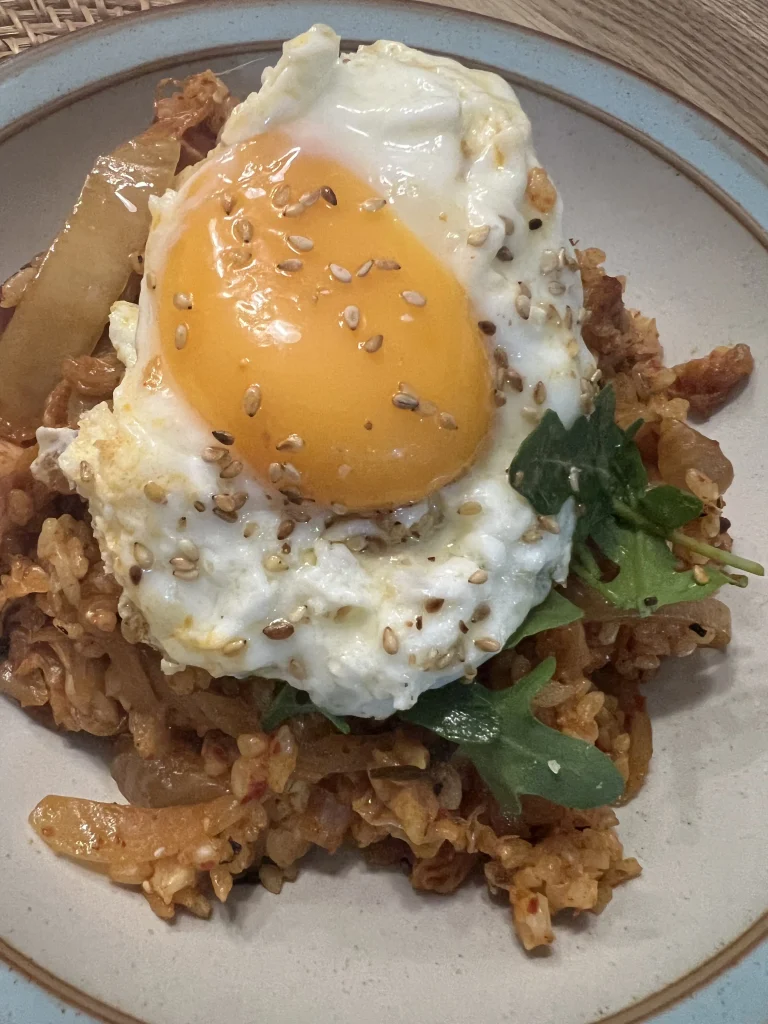
Kimchi fried rice, or kimchi-bokkeumbap (김치볶음밥), is a quick Korean home meal made with cooked rice and well-ripened kimchi. Topped with an egg, it is simple, flavourful and easy for anyone to make.
This version adds shelled edamame for extra colour, texture and plant protein. The edamame is a practical addition rather than an essential part of traditional kimchi fried rice, so you can leave it out when you want the simplest version.
Using cooked rice keeps the meal complete within approximately 15 minutes. The key is to prepare everything before heating the pan: chop the kimchi, slice the spring onions and cook the frozen edamame according to its packet instructions.
🌟 Key Takeaways
- Simple Korean home cooking: Ripe kimchi seasons the rice with chilli, acidity, garlic and fermented savouriness, so the recipe needs very little additional seasoning.
- Ready in approximately 15 minutes: Cooked rice and a short ingredient list make this suitable for a quick lunch or weeknight dinner.
- Flexible and satisfying: Egg and edamame add protein, while white, brown or multigrain rice can be used according to preference.
Why Kimchi Fried Rice Is an Everyday Korean Favourite
Kimchi fried rice is popular because it turns modest leftovers into a different meal. Briefly cooking ripe kimchi softens its sharpness, while frying the rice distributes that seasoning through every spoonful. An egg on top brings richness against the tangy kimchi.
There is no single fixed formula. Korean home cooks may add leftover meat, tuna, tofu or vegetables, or simply use rice and kimchi. It is an adaptable dish built around what is already available.
For more background on using sour kimchi in cooked dishes, read Why Koreans Cook with Aged Kimchi.
What Makes This a Balanced One-Bowl Meal?
- Rice: provides the carbohydrate base
- Egg and edamame: contribute protein
- Kimchi and spring onion: add vegetables, colour and strong flavour
- Olive or neutral cooking oil: helps the rice fry rather than steam
- Toasted sesame oil: adds a concentrated nutty finish
The NHS Eatwell Guide describes rice as a starchy carbohydrate and includes eggs and pulses among protein foods. This bowl brings several food groups together without making the recipe complicated.
Recipe at a Glance
- Servings: 2
- Preparation time: 5 minutes
- Cooking time: 10 minutes
- Total time: Approximately 15 minutes, using cooked rice
- Equipment: Large frying pan, chopping board, knife and spatula
Cooking dry rice is additional. If using frozen edamame, cook it according to the packet instructions before adding it to the pan.
Ingredients
- 300g cooked rice, chilled or freshly cooked and allowed to release excess steam
- 150g well-ripened cabbage kimchi, roughly chopped
- 100g frozen shelled edamame, cooked according to the packet instructions and drained
- 2 large eggs
- 2 spring onions, thinly sliced, white and green parts separated
- 2 teaspoons olive oil or neutral cooking oil, divided
- 1–2 teaspoons kimchi juice, only if needed
- 1 teaspoon toasted sesame oil
- 1 teaspoon toasted sesame seeds (optional)
- Crushed roasted seaweed or gim (optional)
Optional Seasoning
- Up to 1 teaspoon reduced-salt soy sauce, after tasting
- ¼ teaspoon gochugaru for additional chilli flavour
Kimchi varies considerably in salt, acidity and heat. Taste it before deciding whether the rice needs soy sauce, extra kimchi juice or gochugaru.
How to Make Korean Kimchi Fried Rice with Egg
1. Prepare the Ingredients
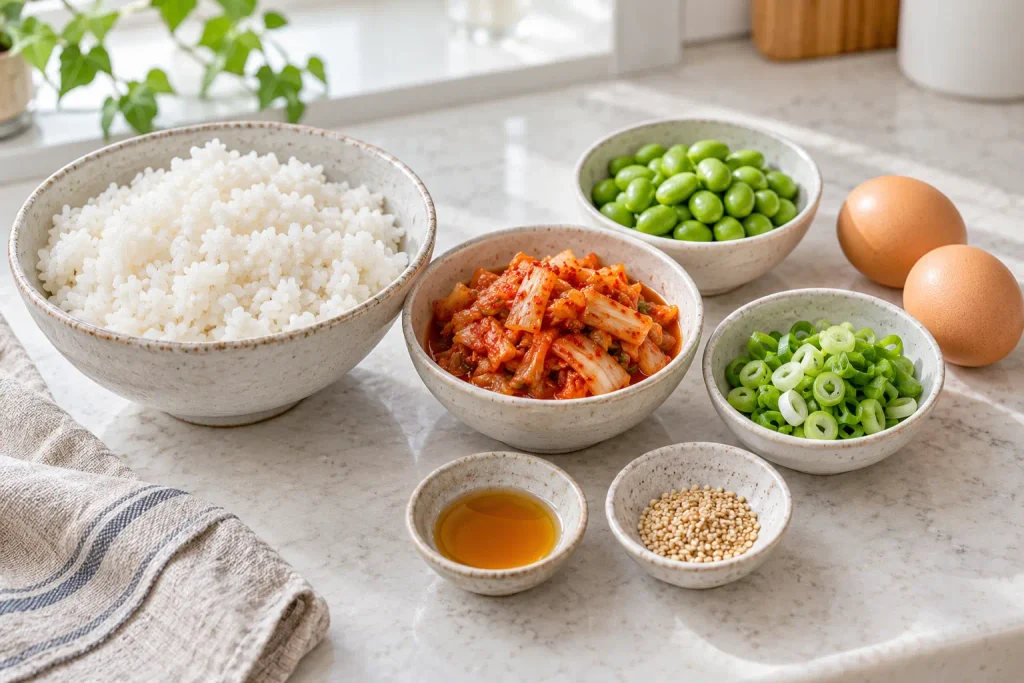
Break up the cooked rice with a fork or clean hands so that no large cold clumps remain. Chop the kimchi into small, spoon-friendly pieces and reserve a little of its juice.
Cook the edamame according to its packet instructions, then drain it thoroughly. Separate the white and green parts of the spring onions.
Prepare everything before heating the pan because the cooking moves quickly.
2. Cook the Eggs
Heat 1 teaspoon of the cooking oil in a large non-stick frying pan over medium heat. Crack in the eggs and cook them to your preferred doneness, making sure the egg safety guidance relevant to you is followed.
Transfer the eggs to a plate.
3. Sauté the Kimchi
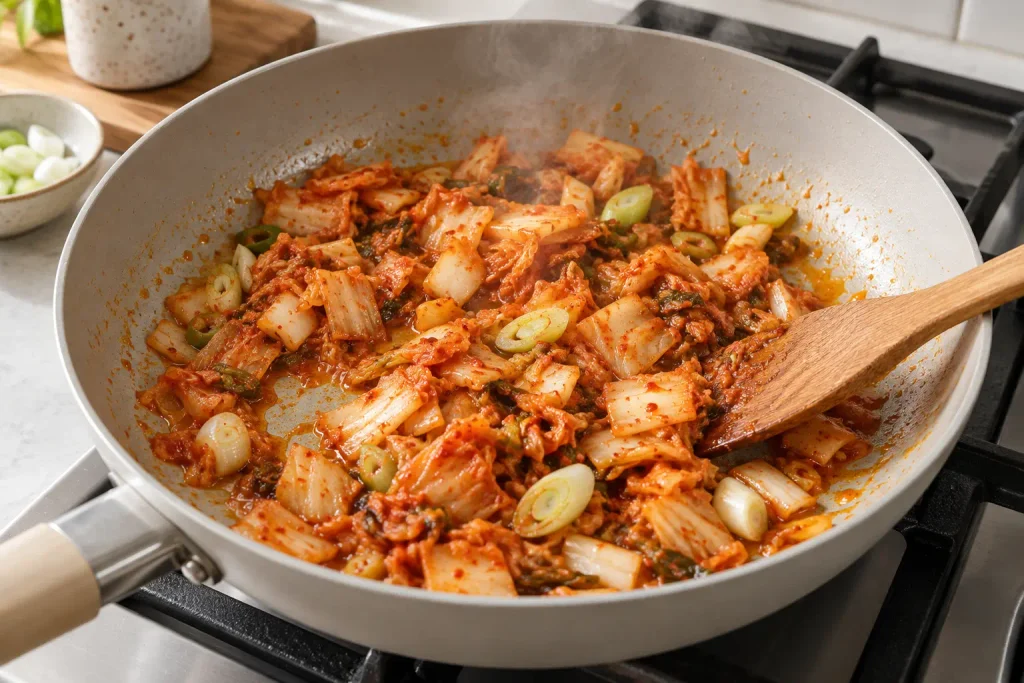
Add the remaining teaspoon of cooking oil to the same pan. Add the chopped kimchi and the white parts of the spring onions.
Cook over medium-high heat for 2–3 minutes, stirring regularly. The kimchi should soften slightly and smell savoury, while some of its surface moisture evaporates.
If using gochugaru, add it during the final 20–30 seconds and keep it moving.
💡 K-Well’s Cooking Tip : Edamame makes this version more substantial, but the recipe remains flexible. You can also use leftover vegetables from the fridge, such as cabbage, carrot or onion, making kimchi fried rice an especially useful dish for everyday cooking. If you add vegetables that have a milder flavour or contain more water, give the vegetables and other ingredients enough time to cook together with the kimchi before adding the rice. This allows the flavours to develop and blend, rather than simply mixing everything together at once. Taking a little extra time at this stage can make a noticeably more flavourful kimchi fried rice. If needed, add a little extra kimchi juice or gochugaru to bring the flavours together, and as always, taste first before adding extra seasoning.
4. Fry the Rice and Edamame
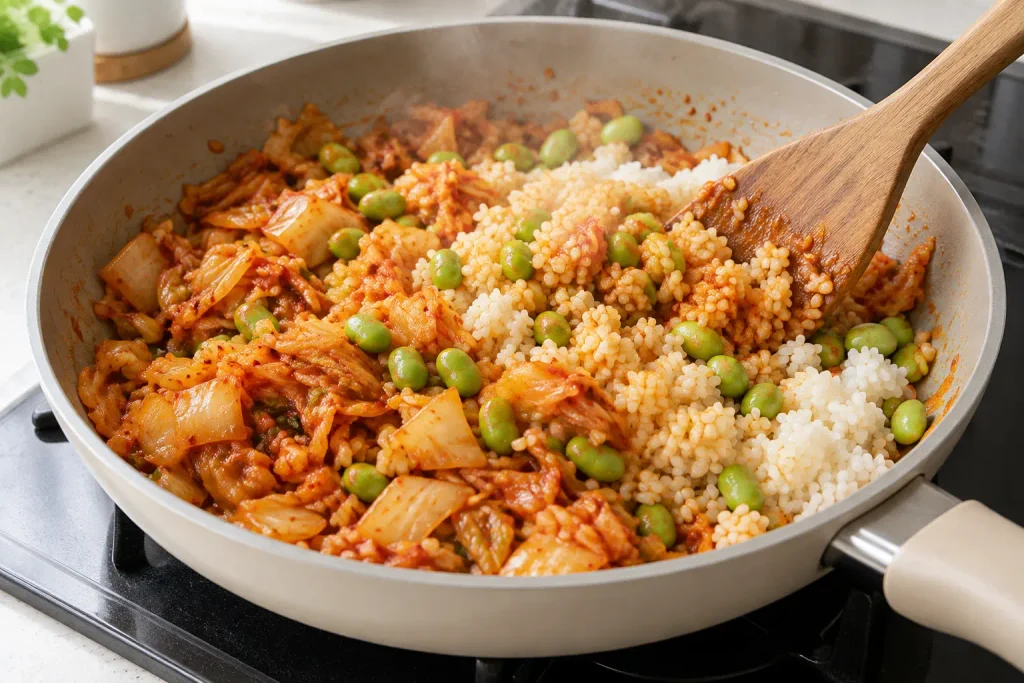
Add the rice and cooked edamame. Press any remaining clumps gently with the spatula, then toss everything together until the rice is evenly coloured.
Cook for 3–4 minutes, stirring and turning rather than pressing continuously. The rice should become steaming hot throughout, with a few lightly toasted edges.
5. Finish and Serve
Remove the pan from the heat and stir through the toasted sesame oil. Divide the fried rice between two bowls and place one egg on each portion.
Finish with the green parts of the spring onions, sesame seeds and crushed gim if using. Serve immediately.
💡 K-Well’s Tip
Cook the kimchi and other vegetables with extra kimchi juice or gochugaru before adding the rice. Giving the kimchi two or three minutes in the pan removes some excess moisture and develops a rounder flavour. If the rice goes in at the same time, the pan can become crowded and the mixture may steam instead of fry.
Do not automatically add soy sauce. Kimchi and kimchi juice can already contain plenty of salt, so taste the finished rice first. A little extra plain rice is often the easiest way to soften a batch that tastes too strong.
How to Get Better Fried-Rice Texture
- Break up cold rice before it enters the pan so that the grains season evenly.
- Drain the cooked edamame thoroughly; surface water encourages steaming.
- Use a wide pan. If it is small, fry the rice in two batches before combining everything.
- Add toasted sesame oil after removing the pan from the heat to retain its nutty aroma.
Which Kimchi Works Best?
Well-ripened cabbage kimchi is the easiest choice: its tang becomes balanced when mixed through rice and paired with egg. Fresh kimchi also works, but the flavour will be lighter; cook it for an extra minute and adjust only after tasting. Check the label if you need vegan kimchi, as traditional products may contain fish sauce or salted seafood.
Easy Variations
The Simplest Korean-Style Version
Leave out the edamame and use rice, kimchi, spring onion and egg for a pared-back bowl.
Use Brown or Multigrain Rice
Brown or multigrain rice gives the dish a chewier texture. Use the same 300g cooked weight.
Learn more about different grains in Korean multigrain rice.
Add Another Protein
Fold in safely cooked chicken, prawns or tofu with the edamame and heat until steaming throughout.
Make It Plant-Based
Replace the eggs with pan-fried firm tofu and choose a kimchi labelled vegan.
Make It Milder
Use 100g kimchi, skip the kimchi juice and gochugaru, and serve cucumber alongside.
Nutritional Snapshot
Approximate nutrition per serving, based on two servings and generic food-composition values:
| Nutrient | Approximate amount per serving |
| Energy | 390–420 kcal |
| Protein | 16–18 g |
| Carbohydrate | 44–48 g |
| Fibre | 5–7 g |
| Fat | 14–17 g |
Sodium varies substantially according to the kimchi and any soy sauce used. The estimate should therefore be recalculated from the labels of the actual products before publishing a precise sodium value.
Storage and Reheating
Kimchi fried rice is especially convenient when made with leftover rice, but cooked rice needs careful handling.
The Food Standards Agency advises cooling leftover rice as quickly as possible, ideally within one hour, refrigerating it and consuming it within 24 hours. Reheat rice only once and make sure it is steaming hot throughout.
For the best texture, cook only the amount of fried rice you plan to eat. If you do have leftovers, cool them promptly, refrigerate in a covered container and reheat once until steaming hot throughout. Prepare a fresh egg when serving if possible.
Do not leave cooked rice in a rice cooker, saucepan or frying pan to cool slowly at room temperature.
FAQ
Q1. Can I Use Freshly Cooked Rice?
Yes. Spread the freshly cooked rice on a wide plate for a few minutes so excess steam can escape, then break it up before frying. Very wet, hot rice is more likely to clump, but it can still produce a good meal when you do not have chilled rice.
Q2. Do I Need to Add Gochujang?
No. Kimchi supplies the main chilli and fermented flavour in this recipe. Adding gochujang would make the result sweeter, thicker and more strongly seasoned. Taste the rice first and use a little gochugaru if you simply want more chilli heat.
Q3. Can I Make Kimchi Fried Rice Without Edamame?
Yes. Edamame is an optional K-Wellness addition for protein, fibre and colour. Leave it out for a simpler version, or replace it with cooked peas, tofu or another ingredient you already have.
Q4. Why Is My Kimchi Fried Rice Soggy?
The most common causes are very wet kimchi, rice that has not released enough steam, undrained vegetables or an overcrowded pan. Cook the kimchi first, drain the edamame thoroughly and use a wide pan so moisture can evaporate.
🌿 K-Well’s Final Thoughts
Easy Korean kimchi fried rice shows why practical home cooking does not need a complicated sauce or a long list of ingredients. Ripe kimchi brings most of the flavour, cooked rice provides the foundation and a fried egg with a soft, runny yolk is the finishing touch that makes this dish especially satisfying. Just before eating, drizzle about one tablespoon of toasted sesame oil over the top. Its nutty aroma adds another layer of richness and brings the spicy, savoury kimchi fried rice together beautifully.
For me, the real highlight of kimchi fried rice is the combination of slightly spicy, savoury rice with a creamy egg yolk. When the yolk is still soft, breaking it over the warm rice creates a rich, silky texture that balances the tangy heat of the kimchi beautifully. It is a simple addition, but it makes a big difference to the finished dish.
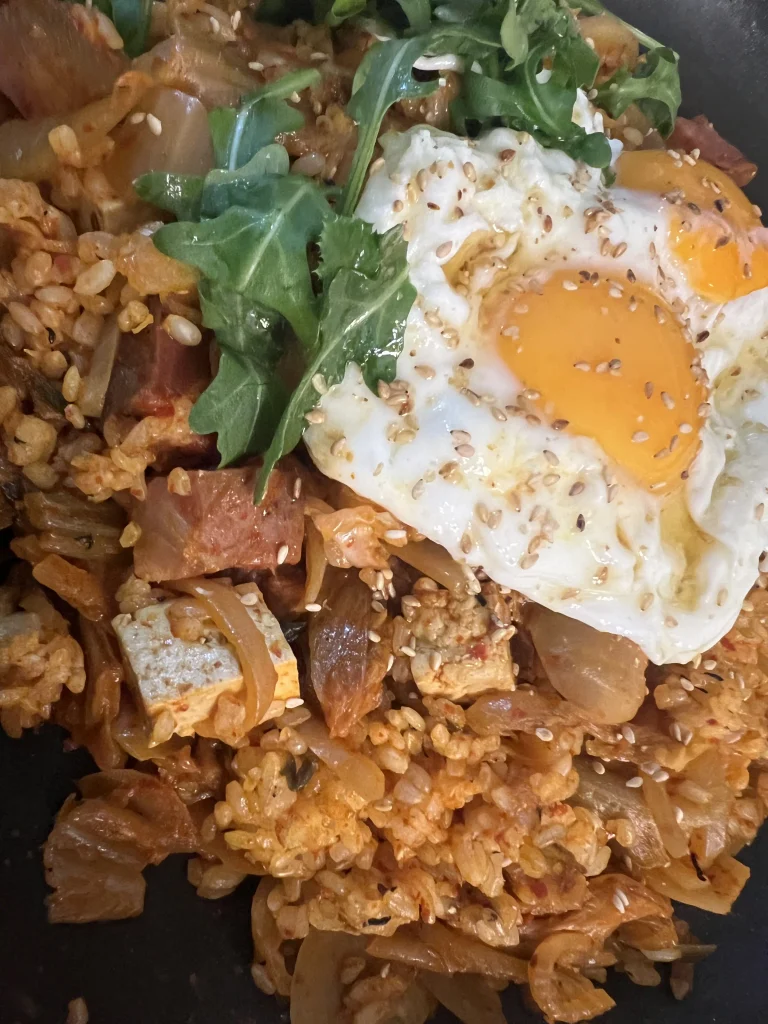
For extra plant-based protein, I have also tried making this dish with tofu instead of edamame. Tofu works particularly well with kimchi — there is even a classic Korean combination of tofu and kimchi (dubu-kimchi). If you use tofu in kimchi fried rice, choose a firm or extra-firm tofu so that it holds its shape while stir-frying. I used Tofoo & Co. tofu and found that it stayed intact while mixing well with the kimchi and rice.
Once the ingredients are prepared, the complete meal can be on the table in approximately 15 minutes. It is also a great way to use up leftover rice and makes a practical packed lunch for the next day.
Whether you make it with edamame, tofu or simply the vegetables you already have in the fridge, this is the kind of flexible Korean home cooking I love. Give it a try — it is a simple, satisfying dish that the whole family can enjoy.
Read Next
- Why Koreans Cook with Aged Kimchi
- Lower-Sodium Kimchi Jjigae: Healthy Korean Stew
- Crispy Oil-Free Kimchi Jeon: Easy Korean Pancake Recipe
References
• Academy of Korean Studies. Kimchi. https://encykorea.aks.ac.kr/Article/E0010822
• Food Standards Agency (FSA). Cooking your food. https://www.gov.uk/government/publications/cooking-your-food/cooking-your-food
• Food Standards Agency (FSA). Home food fact checker. https://www.gov.uk/government/publications/home-food-fact-checker/home-food-fact-checker
• National Health Service (NHS). The Eatwell Guide. https://www.nhs.uk/live-well/eat-well/food-guidelines-and-food-labels/the-eatwell-guide/
• United States Department of Agriculture (USDA). FoodData Central. https://fdc.nal.usda.gov/