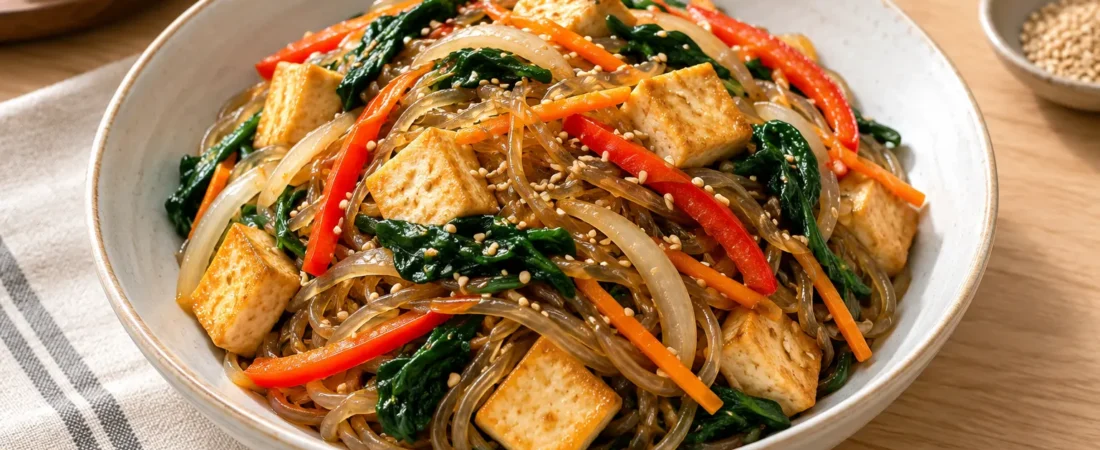
Japchae (잡채) is one of Korea’s best-known celebration dishes, combining chewy glass noodles with colourful vegetables and a savoury-sweet soy and sesame seasoning.
It often appears at holidays, birthdays and family gatherings, making it a natural dish to enjoy during Chuseok. Traditional versions frequently include beef, but japchae is also easy to adapt with mushrooms, vegetables and tofu.
This version keeps the familiar flavours of japchae while turning it into a practical plant-based meal. Crispy tofu adds substance, while spinach, mushrooms, carrots and onions bring colour and texture to the noodles.
Whether you are planning a small Chuseok meal or simply want an easy Korean noodle dish for dinner, this recipe brings the flavours of a celebration table into an everyday kitchen.
🌟 Key Takeaways
- Japchae is a classic Korean celebration dish commonly enjoyed at holidays and family gatherings.
- Tofu provides a simple plant-based alternative to beef and works especially well with mushrooms and sesame.
- Plenty of vegetables balance the glass noodles and turn this Chuseok-inspired recipe into a satisfying one-bowl meal.
What Is Japchae?
Japchae is a Korean dish of glass noodles (dangmyeon, 당면) tossed with cooked vegetables and a soy-based seasoning.
Modern japchae is usually made with translucent noodles produced from sweet potato starch. Their springy, slightly chewy texture is one of the defining characteristics of the dish.
Carrots, onions, mushrooms and spinach are common additions, while beef is frequently included in traditional celebration versions. The ingredients are often cooked separately before being combined, helping each vegetable retain its own colour, texture and flavour.
Japchae has long been associated with celebrations and special occasions in Korea. Today, however, it is also widely enjoyed as an everyday dish.
Why Is Japchae Eaten During Chuseok?
Chuseok is one of Korea’s major traditional holidays, when families gather and share seasonal and celebratory foods.
Songpyeon may be the food most strongly associated with the holiday, but dishes such as jeon, meat dishes and japchae can also appear as part of a family meal.
Japchae works particularly well for gatherings because it can be prepared in a generous batch and shared. Its mixture of colourful vegetables also makes it an attractive addition to a celebration table.
For more about the foods and customs surrounding the holiday, read What Is Chuseok? Korean Harvest Festival Foods and Traditions.
Why Add Tofu?
Beef is a familiar addition to japchae, but tofu offers an easy way to turn the dish into a plant-based meal.
Firm tofu provides a mild source of plant-based protein and absorbs the soy, garlic and sesame flavours well. It also pairs naturally with mushrooms, which add savoury depth and make the dish feel satisfying without meat.
If you usually make japchae with beef, try tofu as a simple vegan alternative this time. Cooking it separately until lightly golden gives it firmer edges and helps it hold its shape when tossed with the noodles and vegetables.
The result keeps the familiar character of japchae while offering a lighter, plant-based variation that works well for both Chuseok and everyday meals.
For another quick dinner using golden tofu, try this 15-Minute Gochujang Tofu Rice Bowl.
Ingredients
Serves 3–4
For the Japchae
- 200 g Korean sweet potato glass noodles (dangmyeon)
- 250 g firm or extra-firm tofu
- 1 medium red bell pepper, thinly sliced
- 1 medium carrot, cut into thin matchsticks
- 1 small onion, thinly sliced
- 150 g spinach
- 1 tablespoon olive or rapeseed oil, divided
- 1 teaspoon toasted sesame seeds
For the Japchae Sauce
- 3 tablespoons reduced-salt soy sauce
- 1 tablespoon toasted sesame oil
- 1 tablespoon maple syrup or honey
- 2 cloves garlic, finely minced
- freshly ground black pepper, to taste
How to Make Easy Tofu Japchae
1. Prepare the Tofu
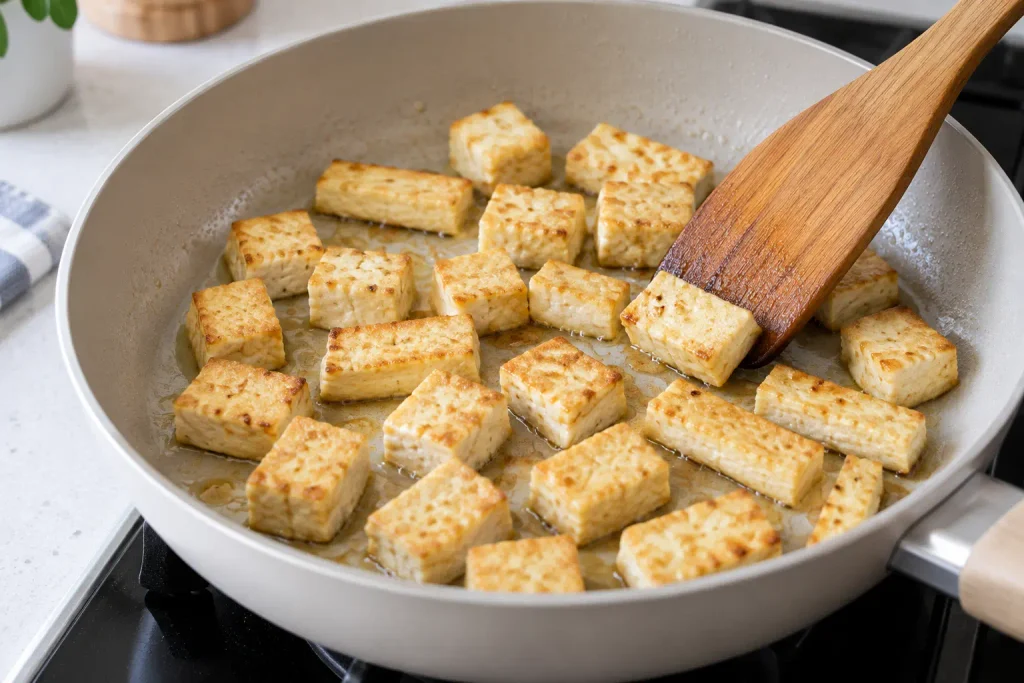
Drain the tofu and gently press away excess moisture with a clean kitchen towel.
Cut it into bite-sized cubes or short strips.
Heat half of the cooking oil in a large frying pan over medium heat. Add the tofu and cook until lightly golden on several sides.
Transfer to a plate and set aside.
2. Cook the Vegetables
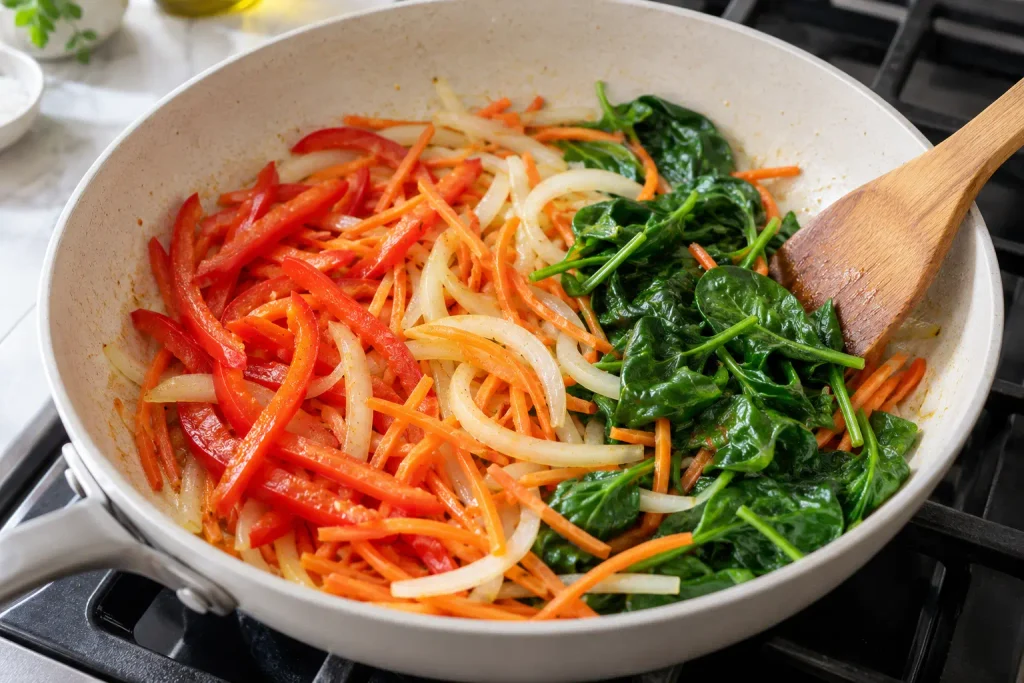
Add the remaining oil to the same pan.
Cook the onion and carrot for 2–3 minutes, keeping them slightly crisp. Add the red bell pepper and cook for 2 minutes more, until slightly softened but still colourful.
Add the spinach last and cook just until wilted.
Transfer the vegetables to a large mixing bowl.
3. Cook the Glass Noodles
Cook the dangmyeon according to the packet instructions until tender but still pleasantly chewy.
Drain thoroughly.
If the noodles are very long, use kitchen scissors to cut them a few times so they are easier to mix and eat.
4. Make the Sauce
Combine the soy sauce, toasted sesame oil, maple syrup or honey, garlic and black pepper.
Taste before adding anything else. The sauce should be savoury with gentle sweetness rather than heavily sweet.
If soy sauce and toasted sesame oil are new to your kitchen, the 7 Essential Korean Pantry Staples for Beginners in the UK guide explains how to choose and use them.
5. Bring Everything Together
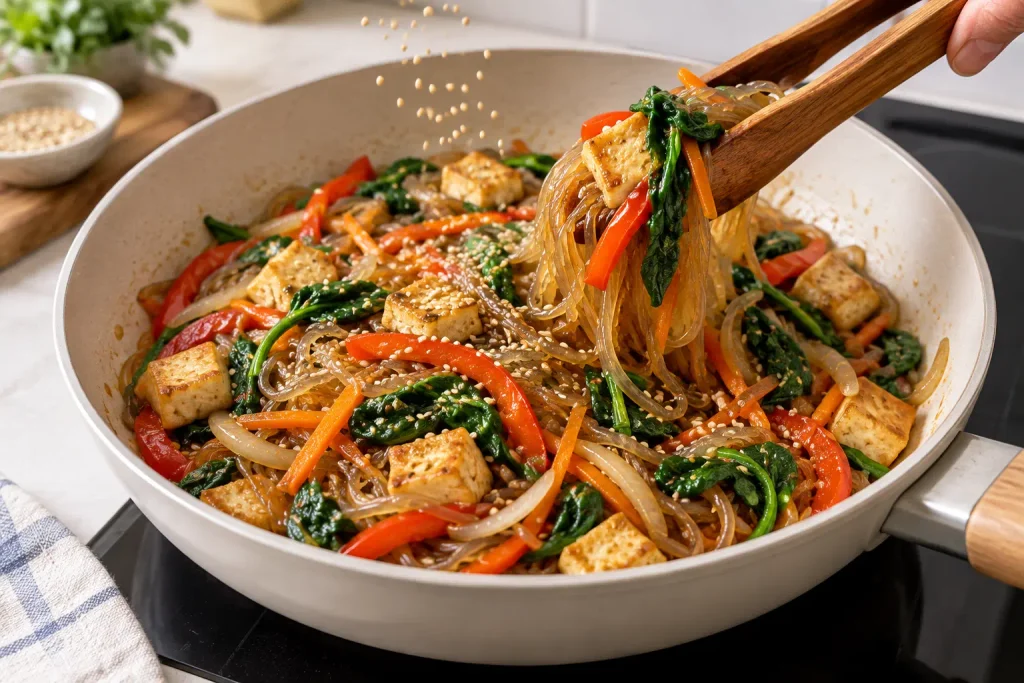
Return the drained noodles to the pan over low heat and add most of the sauce.
Toss for 1–2 minutes so the noodles absorb the seasoning.
Add the cooked vegetables and tofu and gently toss everything together.
Taste and add the remaining sauce only if needed.
Finish with toasted sesame seeds.
💡 K-Well’s Tip
Cook the vegetables in stages rather than adding everything to the pan at once. Carrots and onions need more time than red bell pepper and spinach.
This small extra step helps keep the vegetables colourful and prevents the finished japchae from becoming watery.
If you enjoy a little more crunch, add a handful of bean sprouts with the spinach and cook only briefly so they stay crisp.
For a final touch, add a few extra drops of toasted sesame oil and a sprinkle of toasted sesame seeds just before serving for a deeper nutty aroma.
How to Make Japchae a More Balanced Meal
Sweet potato glass noodles provide the characteristic texture of japchae, but noodles alone do not make a particularly balanced meal.
For an everyday version, think about the bowl in three parts: noodles for the carbohydrate base, tofu for plant-based protein, and a generous amount of vegetables for volume, colour and variety.
This recipe uses red bell pepper, carrots, onions and spinach, but you can also add courgette or edamame depending on what you have available.
You do not need to remove the noodles or dramatically change the traditional flavour. The goal is simply to build more of the meal around vegetables and protein.
Can I Make Japchae Ahead of Time?
Yes. Japchae is particularly useful when preparing food for a gathering because much of the work can be done ahead.
You can slice the vegetables and prepare the sauce in advance. The tofu can also be cooked earlier and refrigerated.
Fully prepared japchae can be stored in an airtight container in the refrigerator. The noodles will firm up as they cool, so gently reheating the dish in a frying pan with a small splash of water can help restore their softer, springier texture.
For the best texture, avoid overcooking the noodles initially.
Easy Chuseok Serving Ideas
For a small modern Chuseok meal, you do not need to prepare an enormous traditional feast.
Serve tofu japchae alongside a few seasonal or Korean-inspired dishes, such as:
- a small plate of jeon;
- kimchi or fresh vegetables;
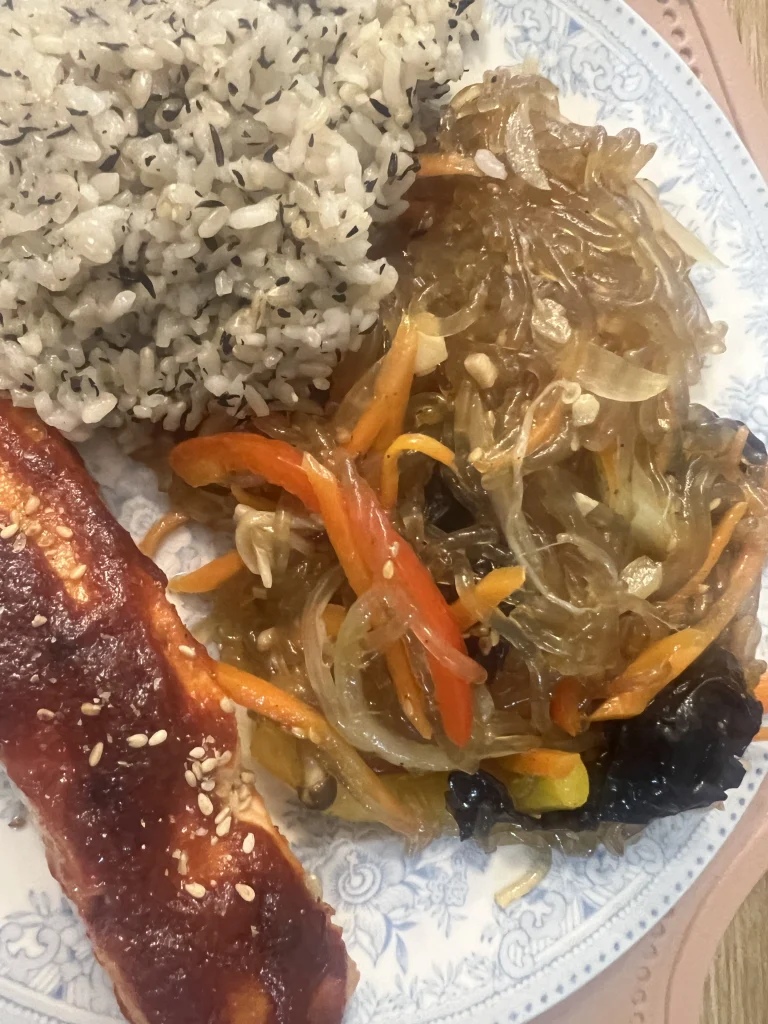
- steamed rice or Korean multi-grain rice (japgokbap) if you want a larger meal;
- seasonal Korean pear or persimmon; and
- songpyeon for a traditional Chuseok finish.
If japchae is the main dish, simply increase the amount of tofu and vegetables rather than preparing several additional dishes.
Nutritional Snapshot
The exact nutrition will depend on the brands and quantities used, particularly the noodles, tofu and soy sauce.
From a meal-building perspective, tofu contributes plant-based protein, while spinach and the other vegetables add micronutrients and dietary variety. Sweet potato glass noodles remain the primary carbohydrate source.
Using reduced-salt soy sauce and seasoning gradually can also help control the amount of sodium without losing the characteristic savoury flavour of japchae.
FAQ
Q1. Is Japchae Traditionally Vegetarian?
Not always. Many versions of japchae include beef, although recipes vary between households. Because vegetables are already central to the dish, tofu and mushrooms work well as meat-free alternatives while keeping the familiar soy, garlic and sesame flavours.
Q2. What Noodles Should I Use for Japchae?
Use Korean dangmyeon (당면), the translucent glass noodles traditionally made from sweet potato starch. Their springy, chewy texture is one of the defining characteristics of japchae and is difficult to reproduce with wheat or rice noodles.
Q3. Can I Make This Japchae Vegan?
Yes. The recipe can be made vegan by using maple syrup instead of honey. It is also worth checking the labels on packaged ingredients such as soy sauce if you have specific dietary requirements.
Q4. Is Japchae Spicy?
No. Traditional japchae is generally not spicy. Its characteristic flavour comes from soy sauce, toasted sesame oil, garlic and gentle sweetness rather than chilli, making it an approachable Korean dish for people who prefer milder flavours.
🌿 K-Well’s Kitchen Notes
Japchae shows that Korean celebration food does not have to be complicated to feel special. For Chuseok, its colourful noodles fit naturally into a meal centred on sharing and family gatherings. It is also one of my favourite dishes to prepare when inviting guests or celebrating special occasions, such as birthdays and Korean holidays. Its appealing colours and savoury flavour make it a popular choice that most people enjoy.
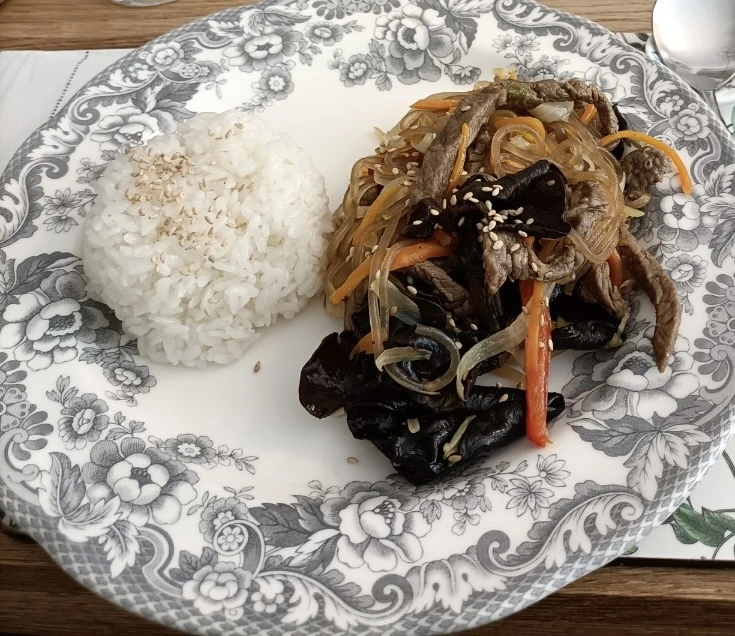
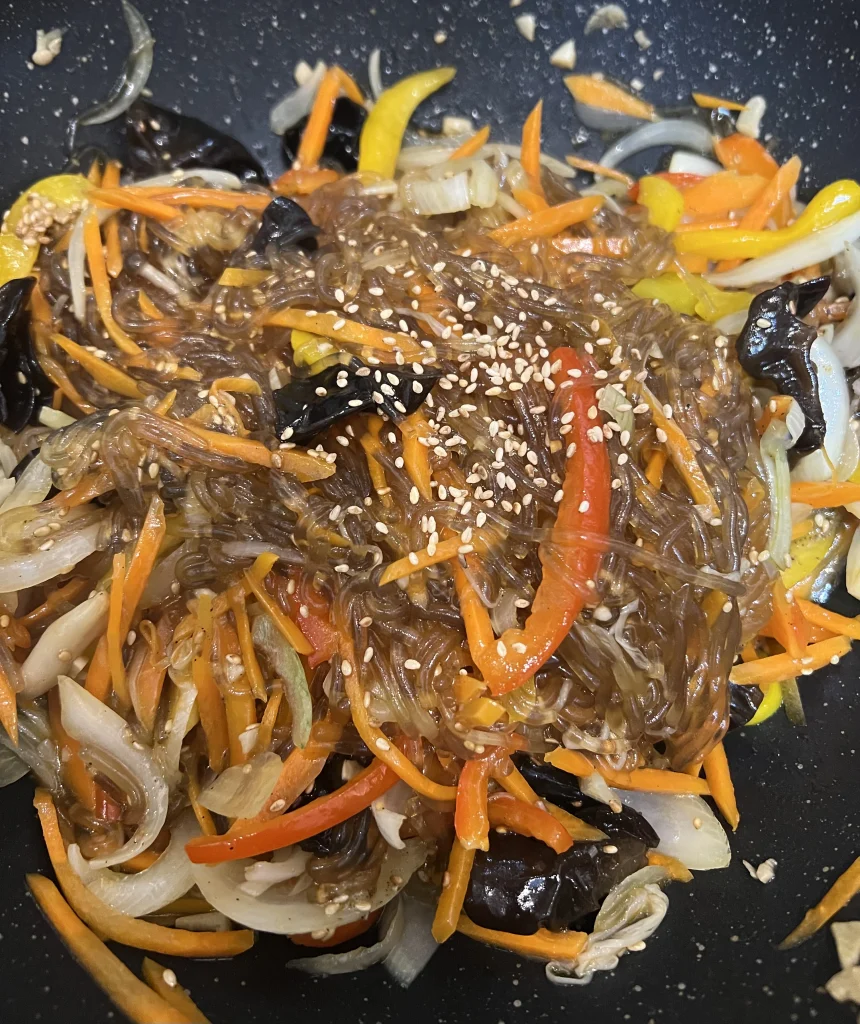
I usually make japchae with a colourful mix of vegetables, including carrots, onions, bell peppers and mushrooms. For a vegetarian version, golden tofu adds satisfying texture and protein, while beef or pork is a delicious option if you prefer meat. You can also simply use plenty of stir-fried vegetables without tofu, and the dish can still be wonderfully satisfying.
For an ordinary weekday meal, adding tofu and plenty of vegetables turns japchae into a practical and satisfying one-bowl meal. Rather than trying to recreate an entire holiday feast, start with one dish that brings the spirit of the occasion to your table. Give this easy tofu japchae a try, and you may find it becoming one of your favourite Korean dishes.
Read Next
- What Is Chuseok? Korean Harvest Festival Foods and Traditions
- 15-Minute Gochujang Tofu Rice Bowl
- 7 Essential Korean Pantry Staples for Beginners in the UK
References
• Korea Tourism Organization (KTO). Recipes for Signature Chuseok Foods. https://english.visitkorea.or.kr/svc/contents/contentsView.do?vcontsId=224166
• Korea Tourism Organization (KTO). Japchae (잡채 / Japchae). https://english.visitkorea.or.kr/svc/contents/contentsView.do?vcontsId=179814
• Korea.net. Korean Recipes: Japchae Stir-Fried Noodles (잡채). https://www.korea.net/NewsFocus/Culture/view?articleId=130980
• Korea.net. Simple Japchae: Stir-Fried Glass Noodles with Vegetables. https://www.korea.net/NewsFocus/Culture/view?articleId=150757