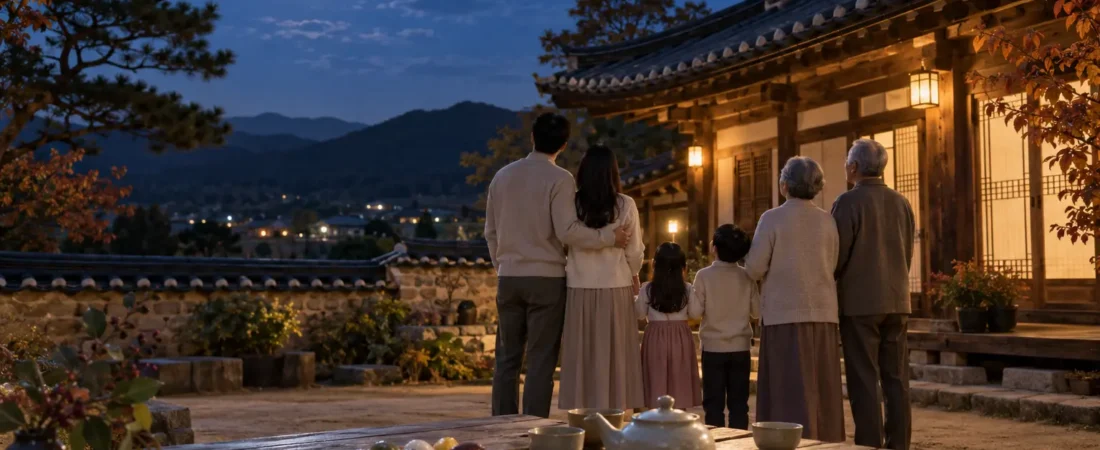
On Chuseok evening, the most meaningful sight may be above the table rather than on it. The holiday falls on the fifteenth day of the eighth lunar month, when the bright autumn moon has long represented harvest, abundance and reunion.
Families may step outside after dinner, look towards the moon and make wishes for the months ahead. On the table, another moon appears in a smaller form: songpyeon (송편), the filled rice cakes most closely associated with Chuseok.
There is an intriguing contrast between them. The festival celebrates a full moon, yet songpyeon is usually shaped like a half-moon. That shape is not a mistake. It has come to express movement, possibility and the hope that something still growing will become full.
Understanding this relationship reveals why Chuseok is more than a seasonal feast. It is a moment to look back with gratitude, gather in the present and direct hopeful wishes towards the future.
🌟 Key Takeaways
- The Chuseok full moon represents abundance and reunion, reflecting the timing of Korea’s autumn harvest festival.
- Making wishes beneath the moon is a familiar Chuseok tradition, often centred on family wellbeing, safety and hopes for the coming year.
- Half-moon songpyeon symbolises growth and a promising future, while making the rice cakes together turns food preparation into a shared family activity.
Why Is the Full Moon Important at Chuseok?
The fifteenth day of a lunar month is associated with the moon’s fullest phase. At Chuseok, that round autumn moon became a natural image of a completed harvest: crops had ripened, food could be shared and families could gather after the busiest work of the season.
Its meaning is not limited to material abundance. The unbroken circle can also suggest reunion and wholeness, making the moon a fitting focus for a holiday shaped by family memory and hopes for continued wellbeing.
For a broader introduction to the holiday, including its family customs and celebratory foods, read What Is Chuseok? Korean Harvest Festival Foods and Traditions.
Why Do People Make Wishes Under the Chuseok Moon?
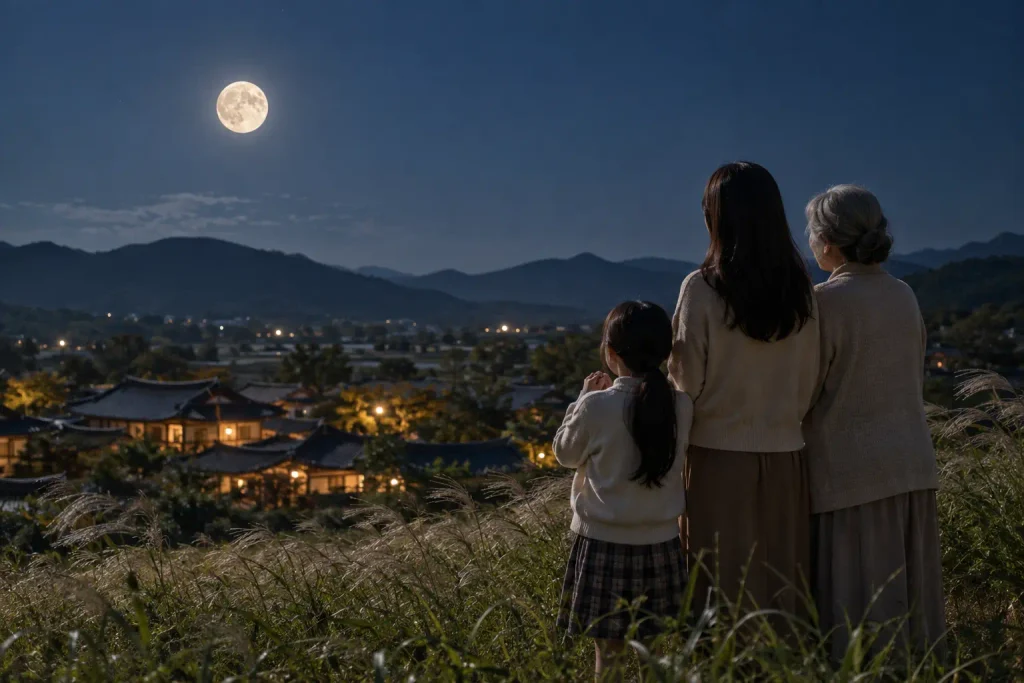
Making wishes under the Chuseok moon connects gratitude for the completed harvest with hope for the coming year. Because the round moon represents fullness and abundance, looking towards it offers a symbolic moment to wish that the family’s good fortune will continue.
The custom also gives Chuseok a forward-looking quality. After remembering ancestors and sharing food with relatives, people turn their attention towards what may come next. Past, present and future become part of the same celebration.
This is not a fixed prayer with prescribed words. A wish may be made quietly or shared with children and relatives. Familiar hopes include the health and safety of loved ones, family harmony, success in work or study and good fortune in the months ahead.
For Koreans living abroad, looking at the autumn moon can carry an additional sense of connection. Foods and surroundings may differ, but the same moon offers a simple link to family, memory and the traditions of Chuseok.
How Songpyeon Brings the Moon to the Table
Songpyeon is a filled Korean rice cake traditionally prepared for Chuseok. A piece of rice dough begins as a small round disc, is wrapped around a filling and is then sealed into its familiar crescent form.
This transformation gives the rice cake a particularly close relationship with the holiday moon. The round dough can evoke fullness, while the finished half-moon points towards movement and growth. Songpyeon therefore carries both gratitude for the harvest already received and hope for what may develop next.
Why Is Songpyeon Shaped Like a Half-Moon?
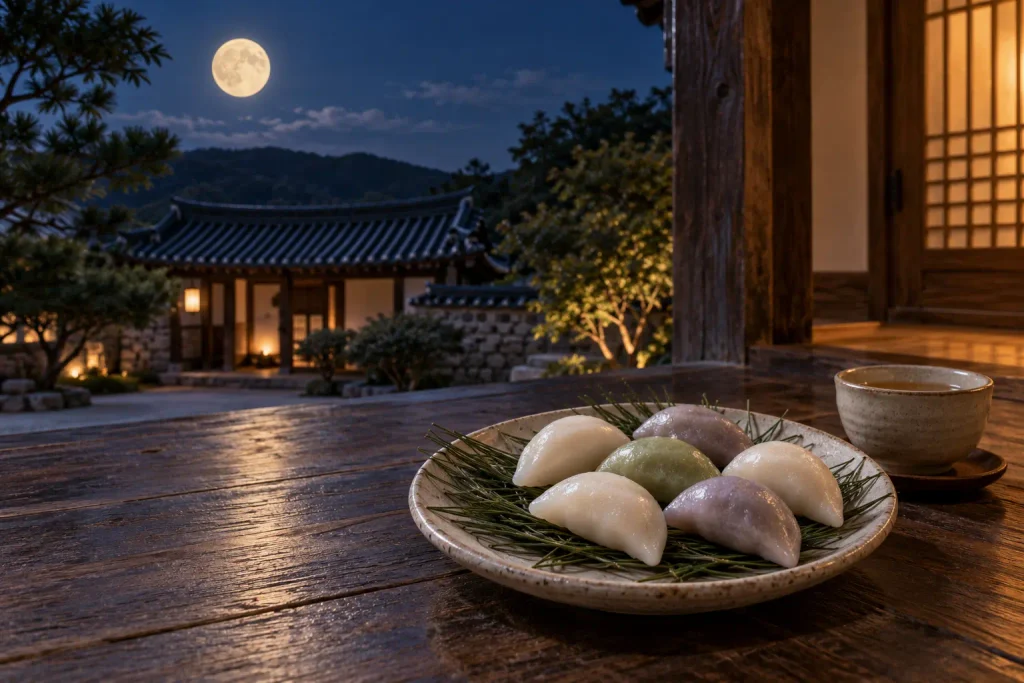
The contrast often surprises people: if Chuseok celebrates the full moon, why is its signature rice cake shaped like a crescent?
One interpretation sees the half-moon as a symbol of potential. A full moon is complete and will begin to wane, while a half-moon can continue to grow. The shape therefore represents development, hope and the possibility of better days ahead.
According to a Korean legend, a prophecy described Baekje as a full moon destined to wane and Silla as a crescent destined to grow. The story spread in Silla, where people are said to have made crescent-shaped rice cakes while praying for prosperity—helping link songpyeon with growth and better days ahead.
The legend offers a memorable answer to the full-moon puzzle: completeness is beautiful, but a crescent still has space to become brighter and fuller.
The Meanings Inside Songpyeon
The symbolism can continue inside the rice cake. The Ministry of Culture, Sports and Tourism describes sesame seeds and oil as representing fertility, red beans as protection from harmful spirits and chestnuts as strength and perseverance. These associations turn the choice of filling into another expression of good wishes.
Pine needles traditionally used during steaming add fragrance, but they also carry symbolic meaning. In the same official account, pine represents longevity, virtue and steadfastness. The finished rice cake therefore combines seasonal ingredients, aroma and wishes in one small food.
Songpyeon also reflects regional identity. Seoul is known for colourful osaek songpyeon, Chungcheong-do for pumpkin songpyeon, Gangwon-do for chewy potato songpyeon and parts of Jeolla-do for versions made with ramie leaves. Jeju even has a flatter, round variety filled with sweetened beans or peas. The familiar crescent is iconic, but it is not the only form found across Korea.
Ganggangsullae: Dancing Beneath the Full Moon
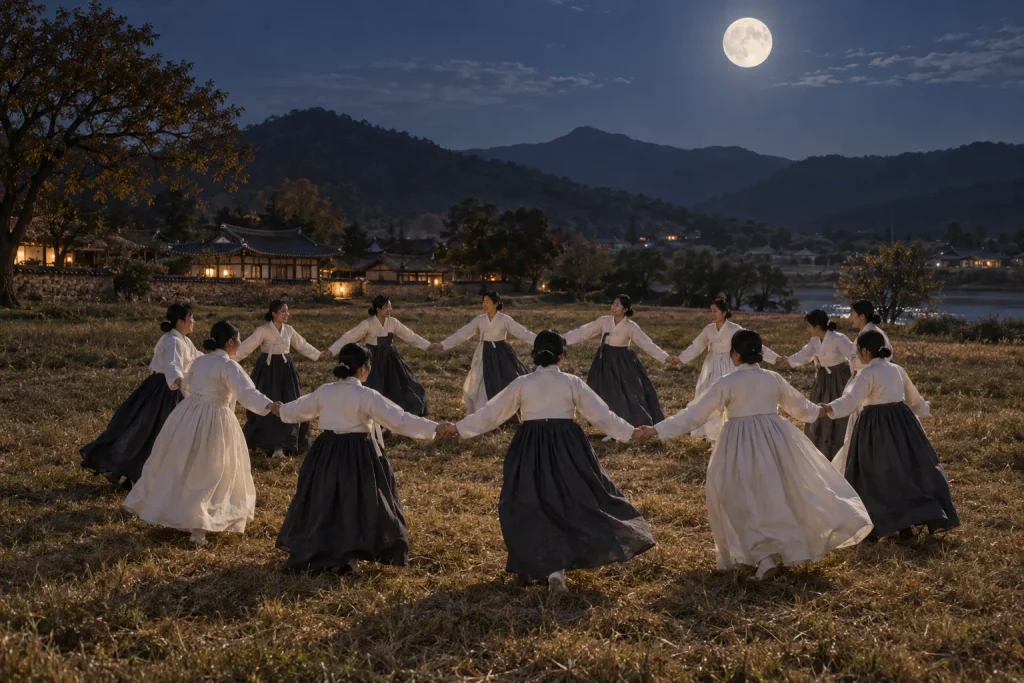
The Chuseok moon is connected not only with private wishes but also with communal celebration. Ganggangsullae (강강술래) is a traditional performance in which women join hands, form a circle and sing and dance together beneath the full moon.
The moving circle visually echoes the moon above it. The performance has been associated with prayers for abundance and safety, as well as with the joy of the harvest season. Songs, movements and games may change as the dance continues, bringing rhythm and collective energy to the night.
Ganggangsullae is inscribed on UNESCO’s Representative List of the Intangible Cultural Heritage of Humanity. Its circle, shared rhythm and setting beneath the moon make it a striking communal counterpart to the quieter custom of making a personal wish.
💡 K-Well’s Tip
If you buy ready-made songpyeon in the UK, check whether it is sold fresh, chilled or frozen and follow the packet instructions. Rice cakes become firm as they cool, so they are usually most enjoyable when gently warmed as directed and eaten soon afterwards.
When sharing them for the first time, explain the half-moon shape before serving. That one detail naturally opens a conversation about the Chuseok moon, gratitude for the harvest and hopes for what is still to come.
If you are planning a small meal around the occasion, Easy Chuseok Japchae with Tofu and Vegetables provides a practical main dish without repeating an entire ceremonial spread.
FAQ
Q1. Is Chuseok Always Celebrated on a Full Moon?
Chuseok falls on the fifteenth day of the eighth lunar month and is traditionally associated with the autumn full moon. The exact astronomical moment of fullness can vary slightly by location and year, but the full harvest moon remains central to the holiday’s cultural meaning.
Q2. Do All Koreans Make Wishes Under the Chuseok Moon?
No single custom is practised by every family. Making wishes under the full moon is a recognised Chuseok tradition, but modern celebrations differ according to household, generation, beliefs and circumstances.
Q3. Does Songpyeon Represent the Full Moon or the Half-Moon?
It can suggest both. The dough begins as a round disc before it is folded into a crescent. The full form can evoke abundance already received, while the half-moon is associated with growth and hope for the future.
Q4. Is Every Songpyeon Crescent-Shaped?
No. The crescent is the best-known Chuseok shape, but regional versions differ. Jeju songpyeon, for example, may be flatter and round, while ingredients and appearance also vary across the mainland.
🌿 K-Well’s Final Thoughts
The full moon and the half-moon songpyeon tell two parts of the same Chuseok story.
The round harvest moon represents abundance, reunion and gratitude for what has already been received. The crescent rice cake suggests potential: a life, family or hope that still has room to grow.
Between them lies the heart of the holiday. Chuseok remembers ancestors, gathers people around food and creates space to wish for a good future. Whether you celebrate with a large family table or a cup of tea and a few pieces of songpyeon, looking up at the autumn moon can make that connection feel immediate.
Read Next
- What Is Chuseok? Korean Harvest Festival Foods and Traditions
- Easy Chuseok Japchae with Tofu and Vegetables
References
• Korea Tourism Organization (KTO). Traditional Korean Holiday of Bountiful Harvest, Chuseok. https://english.visitkorea.or.kr/svc/contents/contentsView.do?vcontsId=231314
• Korea Tourism Organization (KTO). Three Major Traditional Korean Holidays: Seollal, Dano, and Chuseok. https://english.visitkorea.or.kr/svc/contents/contentsView.do?vcontsId=1566965
• Ministry of Culture, Sports and Tourism (MCST). Songpyeon: The crescent-shaped soul of Korean culture. https://www.mcst.go.kr/english/policy/kocis/newsView.jsp?pSeq=266
• Smithsonian Institution, National Museum of Asian Art. Chuseok. https://asia.si.edu/whats-on/events/celebrations/chuseok/
• United Nations Educational, Scientific and Cultural Organization (UNESCO). Ganggangsullae. https://ich.unesco.org/en/RL/ganggangsullae-00188