
When autumn arrives in the UK, pumpkins and winter squash become easy to find in supermarkets. They are perfect for making warming homemade soups as the days grow colder.
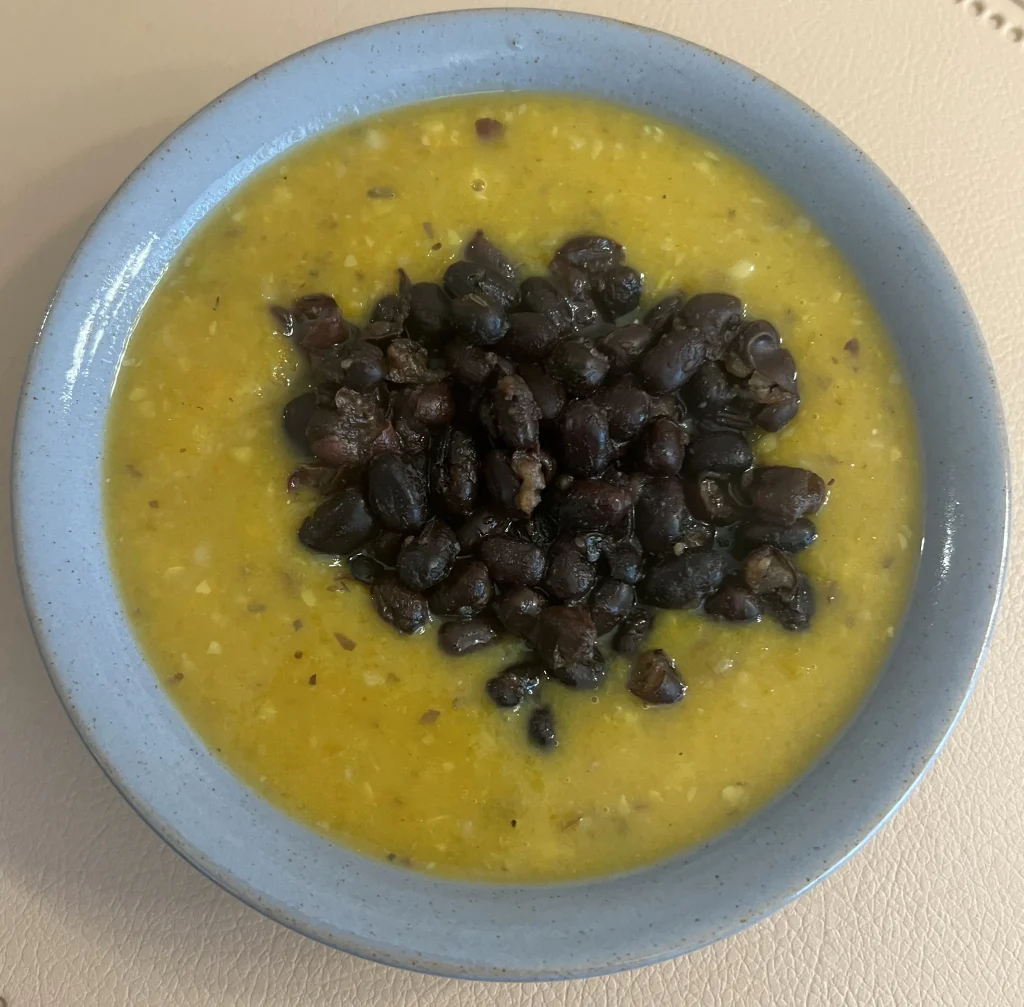
This Korean-inspired pumpkin soup combines naturally sweet pumpkin with red beans and glutinous rice. Inspired by the comforting ingredients used in traditional Korean pumpkin porridge (hobak-juk), this recipe offers a slightly different way to enjoy familiar Korean ingredients in an everyday meal.
The pumpkin provides a smooth base, the red beans add an earthy flavour, and glutinous rice helps thicken the soup without cream. It is a simple, comforting dish for an autumn lunch or a light evening meal.
🌟 Key Takeaways
- Seasonal ingredients: Use pumpkin or butternut squash readily available in UK supermarkets.
- Korean-inspired flavours: Red beans and glutinous rice flour bring traditional Korean ingredients into a modern soup.
- Simple preparation: Create a naturally thick texture without adding cream.
What is hobak-juk (호박죽), Traditional Korean Pumpkin Porridge?
In Korean, hobak (호박) means pumpkin or squash, while juk (죽) refers to porridge. Together, hobak-juk means pumpkin porridge.
Hobak-juk (호박죽) is a traditional Korean pumpkin porridge made by simmering pumpkin until soft and combining it with rice or glutinous rice to create a smooth, comforting dish. Naturally sweet and gently warming, it is enjoyed as a light meal, a snack or part of everyday Korean home cooking. Hobak-juk is particularly associated with the mild sweetness of pumpkin. Depending on the recipe and region, it may be made with different types of pumpkin or squash, and some versions include small rice balls (옹심이) or beans.
Unlike Western-style pumpkin soup, which often uses stock, cream or spices, traditional hobak-juk relies on the natural sweetness of pumpkin and the soft, thick texture of rice. It is a simple example of how Korean cooking transforms seasonal ingredients into nourishing comfort food.
When Do Koreans Eat Hobak-juk?
Hobak-juk is not limited to a particular holiday. It can be enjoyed for breakfast, as a light meal or as a snack, making it a familiar part of Korean comfort food culture.
In Korea, juk has traditionally been valued as an easy-to-eat, gentle food for older adults with delicate digestion, young children during weaning, and people recovering from illness. Its soft texture makes it a practical choice when a lighter meal is preferred.
Among the many varieties of Korean porridge, hobak-juk stands out for its naturally sweet, mild flavour. Today, it is also often served as a starter before a meal, offering a gentle introduction to the dishes that follow. Its smooth texture and delicate sweetness make it a comforting way to enjoy pumpkin, especially during the colder months.
Korean porridge culture shows how simple ingredients such as rice, beans, vegetables and grains can be transformed into dishes suited to different tastes and occasions.
How to Cook Korean-Inspired Pumpkin Soup with Red Beans and Glutinous Rice Flour
Ingredients (Serves 2–3)
- 700g pumpkin, peeled and diced
- 100–150g cooked red beans (adzuki beans)
- 1–2 tbsp glutinous rice flour
- 750ml water or low-salt vegetable stock
- A pinch of salt, to taste
- A little water for mixing the flour
💡 K-Well’s Note: Butternut squash can be used for this recipe. It is easy to find and often affordable in UK supermarkets during autumn, making it a practical choice for this Korean-inspired recipe.
Method
- Cook the pumpkin: Place the diced pumpkin and water or stock in a saucepan. Bring to a boil, then simmer for 15–20 minutes until tender.
- Blend until smooth: Blend the pumpkin and cooking liquid carefully until creamy.
- Prepare the rice flour: Mix the glutinous rice flour with 3–4 tablespoons of cold water until smooth, with no lumps.
- Thicken the soup: Return the blended soup to a gentle simmer. Slowly pour in the rice-flour mixture, stirring continuously. Cook for 3–5 minutes until the soup thickens.
- Add the beans: Stir in the cooked red beans and simmer for another 3–5 minutes. Season with salt and add a little water if the soup is too thick.
💡 K-Well’s Cooking Tip: For a smooth texture, cook the pumpkin until it is very soft before blending. If you use glutinous rice flour instead of whole rice, add it gradually and stir continuously to prevent lumps. Remember that glutinous rice flour thickens as it cooks, so start with a small amount and adjust as needed.

Why Use Red Beans and Glutinous Rice Flour?
Red beans, also known as adzuki beans, are used in a variety of Korean sweet and savoury dishes. Their earthy flavour complements the natural sweetness of pumpkin, while whole beans add a pleasant contrast to the smooth soup.
Glutinous rice flour, made from sticky rice, is commonly used in Korean cooking to create a smooth, slightly sticky consistency. Despite its name, glutinous rice flour does not contain gluten. When mixed with cold water and stirred into the simmering soup, it thickens the pumpkin mixture without the need for cream.
Together, the red beans and glutinous rice flour give this soup a comforting texture and a flavour combination inspired by Korean home cooking. Although the recipe takes inspiration from hobak-juk (traditional Korean pumpkin porridge), it is a modern, soup-style interpretation rather than a traditional preparation.
If you are exploring Korean cooking for the first time, this guide to 7 Essential Korean Pantry Staples for Beginners in the UK explains which ingredients are worth keeping in your kitchen and how to use them in everyday meals.
A Simpler Version Using a Soup Maker
Do you have a soup maker at home? I use a multifunctional machine to make soy milk, soup and porridge with very little effort. It makes preparing warm, comforting dishes especially easy on busy days.
For a simple pumpkin porridge, add diced pumpkin, water and glutinous rice flour to your soup maker, following the machine’s instructions for soup or porridge. Once the cycle is complete, stir in cooked red beans or other beans as a topping. If you are craving the chewy texture of Korean ongshimi (small dough balls traditionally added to porridge or soup), try adding gnocchi as an alternative. The texture is not exactly the same, but it offers a similar soft, chewy bite.

Another Simple Vegetable Soup
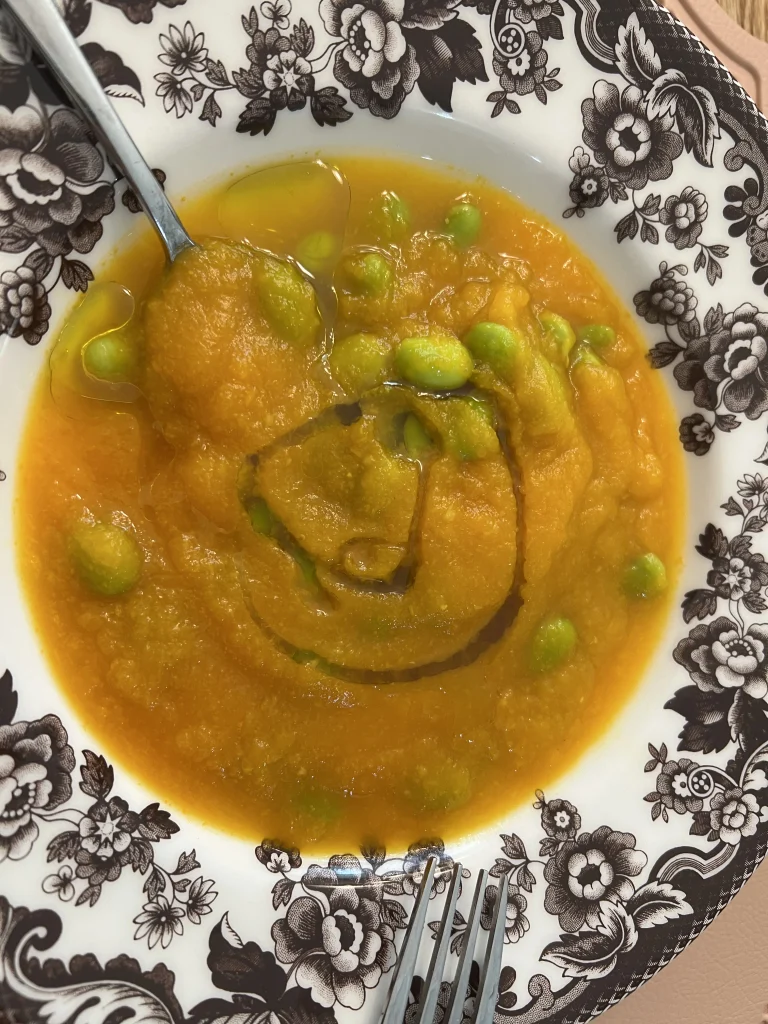
For a different version, combine diced pumpkin, carrot and parsnip with water or vegetable stock. Parsnip is particularly useful because it adds a naturally sweet flavour and helps create a smooth, creamy texture when blended.
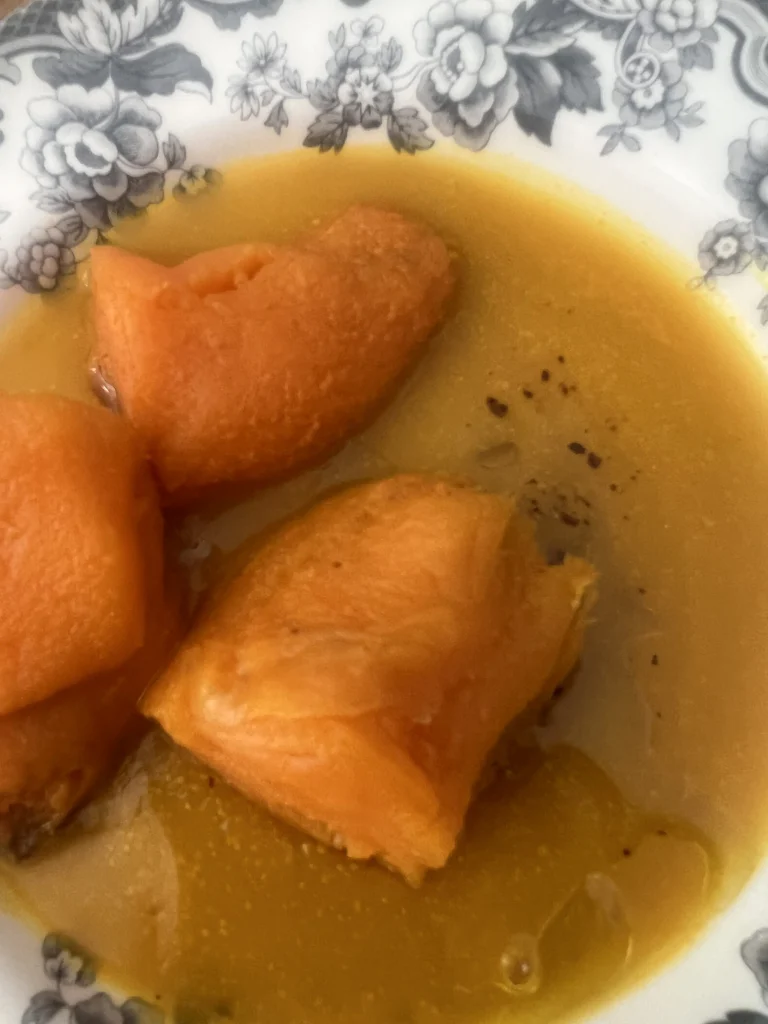
For extra flavour, stir in a little turmeric powder towards the end of cooking. If you would like to include more vegetables, add frozen mixed vegetables after blending and simmer until they are thoroughly heated. Serve the soup with steamed sweet potatoes and potatoes for a more substantial and satisfying meal, with a balance of vegetables and carbohydrates to keep you going through the day.
These simple variations make it easy to enjoy warm, vegetable-rich soups throughout autumn and winter, using affordable ingredients readily available in UK supermarkets.
If you enjoy simple, warming soups, try Easy Korean Tofu Soup with Tesco Ingredients for another practical Korean-inspired meal using ingredients readily available in the UK.
FAQ
Q1. Which pumpkin is best for this recipe?
Choose a pumpkin with firm, sweet flesh. Butternut squash is also widely available in UK supermarkets and makes a convenient alternative. The flavour and colour will vary depending on the variety.
Q2. Can I use canned red beans?
Yes. Choose canned adzuki beans, drain and rinse them, then add them near the end of cooking. Red kidney beans are a different variety and have a different texture and flavour.
Q3. Can I make this soup without glutinous rice?
Yes. The soup will be thinner, but you can still make a satisfying dish. Blend the cooked pumpkin and adjust the consistency with water or vegetable stock. Ordinary cooked rice can also provide some thickness, although the texture will differ.
🌿 K-Well’s Everyday Kitchen Notes
For me, hobak-juk brings back fond memories of my mum’s home cooking in Korea. Whenever I miss the warm, sweet and mild pumpkin porridge she used to make, I look for ways to recreate those familiar flavours with ingredients readily available in the UK.
Butternut squash is a practical choice, especially during autumn, while glutinous rice flour helps create the smooth, gently thick texture I remember without the need to cook whole rice grains. Adding cooked red beans brings another layer of texture and a flavour that complements the natural sweetness of the squash.
Another combination I love is a blended soup made with butternut squash, carrots and parsnips, served alongside steamed sweet potatoes and potatoes. The vegetables create a naturally sweet, velvety soup, while the steamed potatoes make the meal more substantial and satisfying. It is a simple, nourishing combination for a cosy autumn or winter lunch.
This Korean-inspired version is one of my favourite brunches during the chilly autumn and winter months. It is warming, satisfying and easy to adapt to my taste. For me, it is also a reminder that enjoying the flavours of home does not mean following a traditional recipe exactly. Sometimes, a few familiar ingredients are enough to bring back a comforting memory.
Read Next
- 3 Nourishing Korean Post-Run Meals for Better Recovery
- Samgyetang and Post-Workout Recovery
- Jjigae vs Guk vs Tang: Korean Soups Explained
References
- British Nutrition Foundation. Healthy Eating. https://www.nutrition.org.uk/
- NHS. Food safety. https://www.nhs.uk/live-well/eat-well/
- Visit Korea. Pumpkin Porridge (호박죽 / Hobakjuk). https://english.visitkorea.or.kr/svc/contents/contentsView.do?menuSn=181&vcontsId=178124