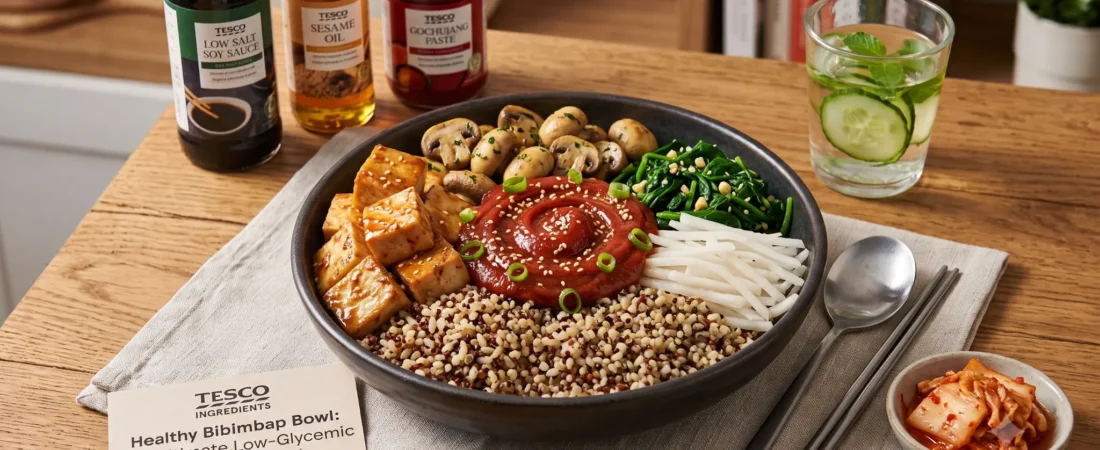
Bibimbap is one of the easiest Korean meals to adapt with everyday UK supermarket ingredients. Its name means “mixed rice”, describing a bowl of warm rice topped with seasoned vegetables, protein and gochujang sauce.
This Tesco-friendly version combines brown rice, mushrooms, spinach, carrots and tofu or egg. It keeps the colourful presentation and savoury flavour of bibimbap while using practical ingredients that can be found in many larger UK supermarkets.
Key Takeaways
- Balanced Bowl: Brown rice, colourful vegetables and tofu or egg provide carbohydrates, fibre, protein and fats in one satisfying meal.
- Tesco-Friendly Ingredients: Spinach, carrots, mushrooms, cucumber and brown rice offer practical alternatives when traditional Korean vegetables are unavailable.
- Easy to Adapt: Change the vegetables with the seasons and adjust the gochujang sauce according to your preferred sweetness and spice level.
What Makes a Balanced Bibimbap Bowl?
Traditional bibimbap brings several individually prepared ingredients together over rice. The vegetables provide contrasting colours, flavours and textures, while egg, tofu or beef adds protein. Gochujang sauce and toasted sesame oil complete the bowl with heat, sweetness and a nutty aroma.
The nutritional balance of bibimbap depends on the ingredients and proportions used. A practical home version can be built around:
- A moderate serving of rice
- At least three different vegetables
- A clear source of protein
- A small amount of flavourful sauce
- Toasted sesame seeds or sesame oil
Using brown rice adds more fibre than standard white rice, while Korean multigrain rice (japgokbap) can add a pleasantly chewy texture and a wider variety of grains and legumes. White rice can also be enjoyed as part of a balanced bowl. Learn how to prepare it in this guide to Korean multigrain rice (japgokbap)
Can Bibimbap Be Lower Glycaemic?
Bibimbap should not automatically be labelled a low-GI meal because its effect will vary with the type and quantity of rice, sauce and other ingredients.
However, choosing a moderate portion of brown rice and combining it with vegetables, protein and a small amount of fat creates a more balanced mixed meal than eating rice on its own. Research into rice-based Korean meals has found that meal composition can influence the post-meal glucose response.
For a more balanced approach:
- Use approximately 120–150g of cooked rice per person.
- Fill at least half of the visible bowl with vegetables.
- Include tofu, egg, chicken or lean beef.
- Use gochujang sauce as a condiment rather than covering the entire bowl.
- Choose a sauce with a modest amount of added sugar.
These adjustments support a satisfying meal without removing the rice that makes bibimbap distinctive.
K-Well’s Tip: Instead of replacing the rice completely, begin with a moderate portion and add generous layers of vegetables and protein. You will keep the comforting character of bibimbap while creating a more balanced bowl.
Tesco Bibimbap Shopping List
Product availability varies by branch, but these ingredients are commonly found in larger Tesco stores or through Tesco online.
| Bibimbap component | Tesco-friendly choice | Alternative |
| Rice | Brown basmati or wholegrain rice | White basmati or microwave brown rice |
| Greens | Baby spinach | Kale or pak choi |
| Mushrooms | Chestnut mushrooms | Closed-cup or shiitake mushrooms |
| Crunchy vegetable | Carrot or cucumber | Mooli, when available |
| Protein | Firm tofu or eggs | Lean beef or chicken |
| Sauce | Gochujang | Homemade gochugaru dressing |
| Finishing flavour | Toasted sesame oil | Toasted sesame seeds |
You may need a Korean or East Asian grocery shop for a wider choice of gochujang, but larger Tesco branches often stock Korean-style chilli paste or gochujang in the world-food section.
K-Well’s Time-Saving Tip: For an even quicker bowl, use a bag of mixed leaf salad instead of preparing several vegetables separately. Add the leaves just before serving to keep them fresh and crisp, then combine them with warm rice, your chosen protein and bibimbap sauce.
Easy Tesco Bibimbap Recipe
Serves: 2
Preparation: 15 minutes
Cooking: 20 minutes
Ingredients
For the Bowl
- 250–300g cooked brown rice
- 200g firm tofu, drained and cubed
- 150g chestnut mushrooms, sliced
- 100g baby spinach
- 1 medium carrot, cut into thin matchsticks
- ½ cucumber, thinly sliced
- 2 teaspoons toasted sesame oil, divided
- 1 teaspoon light soy sauce
- 1 teaspoon toasted sesame seeds
- 2 eggs (optional)
For the Quick Bibimbap Sauce
- 1 tablespoon gochujang
- 1 teaspoon rice vinegar
- 1 teaspoon toasted sesame oil
- 1 teaspoon honey or maple syrup
- 1–2 teaspoons warm water, as needed
For a more detailed sauce with gluten-free and lower-sugar options, see this Gluten-Free Bibimbap Sauce Recipe.
How to Make the Bibimbap Bowl
1. Prepare the Rice
Cook the brown rice according to the packet instructions. If using a microwave pouch, heat it thoroughly and divide it between two wide bowls.
Brown rice gives the bowl a nutty flavour and slightly chewy texture. White rice can also be used if that is what you already have at home.
2. Cook the Tofu
Warm one teaspoon of sesame oil in a non-stick frying pan over medium heat. Add the tofu and cook for five to seven minutes, turning occasionally until lightly golden.
Add the soy sauce during the final minute and toss gently to coat. Transfer the tofu to a plate.
3. Sauté the Mushrooms
Add the sliced mushrooms to the same pan. Cook for four to five minutes until they release their moisture and begin to brown.
A small pinch of salt can help develop their savoury flavour, but taste the complete bowl before adding too much because the sauce and soy sauce also contribute seasoning.
4. Wilt the Spinach
Place the spinach in the pan with one tablespoon of water. Cook for approximately one minute until just wilted.
Remove it from the heat, allow it to cool slightly and gently squeeze out excess water. Season with a few drops of sesame oil and a small sprinkle of sesame seeds.
5. Prepare the Fresh Vegetables
Cut the carrot into fine matchsticks and slice the cucumber. They can be used raw for a crisp contrast to the warm rice and cooked toppings.
For a softer carrot topping, sauté the matchsticks for two minutes in the same pan.
6. Make the Sauce
Mix the gochujang, rice vinegar, sesame oil and honey or maple syrup in a small bowl. Add warm water a teaspoon at a time until the sauce is easy to drizzle.
Taste and adjust the sweetness or acidity before serving.
7. Assemble the Bowl
Arrange the tofu, mushrooms, spinach, carrot and cucumber in separate sections over the rice. Add a fried egg to each bowl if using.
Finish with sesame seeds and a small spoonful of bibimbap sauce. Mix everything thoroughly just before eating.
K-Well’s Sauce Tip: Serve the sauce on the side and add it gradually. This lets each person adjust the heat and sweetness while preserving the individual flavours of the vegetables.
Easy Ingredient Variations
Bibimbap is designed to be flexible, so use vegetables that are already in your fridge.
- Replace spinach with lightly cooked kale.
- Use courgette ribbons instead of cucumber.
- Add steamed broccoli or shredded cabbage.
- Use mixed leaf salad for a quick, no-cook vegetable option, adding it just before serving to keep the leaves crisp.
- Replace tofu with chicken, lean beef or edamame.
- Use leftover roasted vegetables for a quick next-day lunch.
- Add kimchi for extra acidity and crunch.
For more guidance on gochujang, sesame oil and Korean soy sauce, read 7 Essential Korean Pantry Staples for Beginners in the UK.
Meal-Prep Tips
Cook the rice, tofu, mushrooms and spinach in advance, then refrigerate them in covered containers. Reheat the cooked ingredients thoroughly before assembling, then add the cucumber and sauce just before serving.
For the best texture, cook only the number of fried eggs you plan to eat immediately.
FAQ
Q1. Do I Have to Use Brown Rice?
No. White rice is traditional and can still form part of a balanced bibimbap bowl. Use a moderate serving and combine it with plenty of vegetables and a source of protein.
Q2. Can I Make This Bibimbap Vegan?
Yes. Use tofu or edamame, leave out the egg and choose a vegan-certified gochujang. Maple syrup can replace honey in the sauce.
Q3. Is Bibimbap Gluten-Free?
It can be, but standard gochujang and soy sauce may contain wheat. Choose certified gluten-free gochujang and tamari, and check every packaged ingredient.
K-Well’s Final Thoughts
Bibimbap does not require a long list of specialist ingredients. Brown rice, seasonal vegetables and tofu or eggs from Tesco can become a colourful and satisfying Korean-inspired meal with the addition of gochujang and toasted sesame oil.
Build your bowl with a moderate portion of rice, plenty of colourful vegetables and a satisfying source of protein. Add the sauce gradually to suit your preferred level of heat and sweetness. This simple formula makes bibimbap balanced, flavourful and easy to adapt throughout the year.
Read Next
- Gluten-Free Bibimbap Sauce Recipe: Low-Sugar, High-Flavour K-Wellness Hack
- 7 Essential Korean Pantry Staples for Beginners in the UK
- Is Gochujang Healthy for Weight Loss? The Hidden Sugars and Healthy Hacks
References
- Ahmad, S. R. (2020). Foods consumed with rice that elicit a reduction in glucose response among healthy individuals. Current Research in Nutrition and Food Science Journal, 8(2), 580–590.
https://doi.org/10.12944/CRNFSJ.8.2.28 - Jung, S. J., Park, S. H., Choi, E. K., Cha, Y. S., Cho, B. H., Kim, Y. G., Kim, M. G., Song, W. O., Park, T. S., & Ko, J. K. (2015). Rice-based Korean meals (bibimbap and kimbap) have lower glycemic responses and postprandial-triglyceride effects than energy-matched Western meals. Journal of Ethnic Foods, 2(4), 154–161.
https://doi.org/10.1016/j.jef.2015.11.002 - National Health Service (NHS). The Eatwell Guide.
https://www.nhs.uk/live-well/eat-well/food-guidelines-and-food-labels/the-eatwell-guide/