
A healthy-looking complexion is influenced by more than a skincare routine. Everyday habits such as eating a varied diet, getting enough sleep, staying hydrated and protecting your skin from the sun can all contribute to overall wellbeing.
In Korean food culture, tea is often enjoyed as part of everyday life rather than as a special wellness treatment. Different teas are chosen according to taste, season and occasion, making them an easy way to add variety to a daily routine.
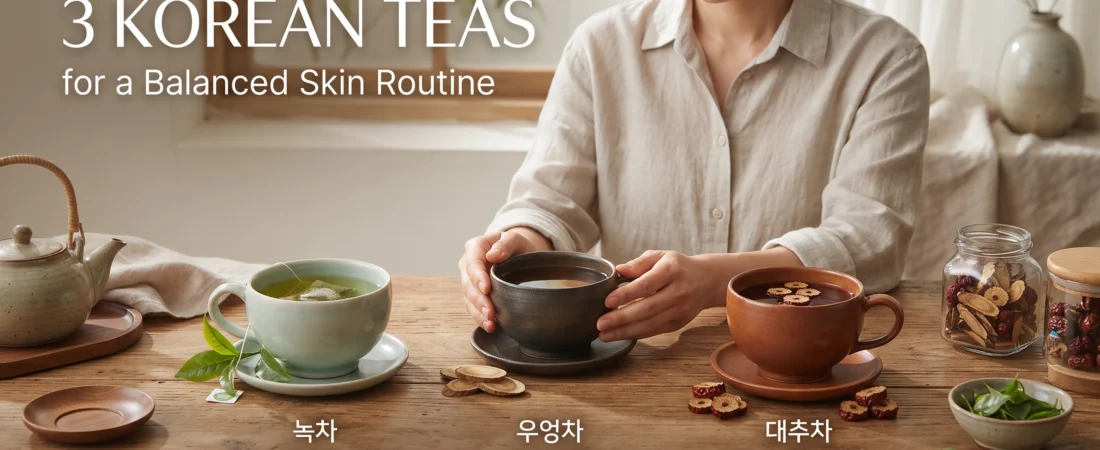
Three Korean teas that fit naturally into a balanced lifestyle are green tea (nokcha), roasted burdock root tea (ueong-cha) and jujube tea (daechu-cha). Each has a distinctive flavour and a different place in Korean food culture.
Rather than viewing these teas as beauty remedies, think of them as simple drinks that can complement a varied diet and consistent daily habits.
🌟 Key Takeaways
- Korean green tea: A traditional tea containing naturally occurring catechins and other polyphenols.
- Roasted burdock root tea: A caffeine-free drink with a distinctive roasted, earthy flavour that is easy to enjoy without added sugar.
- Jujube tea: A naturally sweet, caffeine-free Korean drink that is particularly comforting when served warm.
Why Korean Tea Can Be Part of a Balanced Routine
Korean tea culture includes both true teas made from tea leaves and herbal or grain-based infusions made from other plants and ingredients.
This distinction is useful when choosing a drink. Green tea contains caffeine because it is made from the leaves of the tea plant, while burdock root tea and jujube tea are naturally caffeine-free.
The three teas also have very different flavours. Green tea is fresh and gently bitter, roasted burdock has a deep nutty and earthy aroma, and jujube tea has a naturally fruity sweetness.
That variety can make an everyday drink routine more enjoyable without relying on sugary beverages.
1. Korean Green Tea: A Traditional Source of Plant Polyphenols
Korean green tea, known as nokcha (녹차), has a long history in Korean tea culture. It is made from the leaves of the tea plant, Camellia sinensis, and is known for its fresh aroma and gentle bitterness.
Green tea naturally contains catechins, a type of polyphenol. One of the best-known catechins is EGCG (epigallocatechin gallate). These compounds have antioxidant properties and have been studied for their potential effects on human health.
Oxidative stress is one of several natural processes associated with aging, and it has been studied in relation to changes in skin health over time. Green tea contains catechins and other polyphenols with antioxidant properties, which is one reason it has attracted interest in skin and overall health research.
For a balanced skin routine, the more practical approach is to enjoy green tea as one small part of a varied diet and healthy lifestyle.
How to Brew Korean Green Tea
Green tea is best brewed gently. Water that is too hot or a very long steeping time can produce excessive bitterness.
- Add about one teaspoon of loose green tea leaves to a cup or teapot.
- Use hot water rather than freshly boiling water, around 70–80°C.
- Steep for approximately one to two minutes.
- Taste and adjust the brewing time according to your preference.
Green tea can be enjoyed alongside breakfast or as an afternoon drink.
💡 K-Well’s Tip: If you find green tea too bitter, try using slightly cooler water or shortening the brewing time rather than adding sugar. For a more fragrant cup, you can also blend the tea with a small amount of edible flower petals, adding a delicate floral aroma without extra sweetness.
Because green tea naturally contains caffeine, people who are sensitive to caffeine may prefer to enjoy it earlier in the day.
2. Korean Burdock Root Tea: A Roasted, Caffeine-Free Everyday Drink
Burdock root tea (ueong-cha, 우엉차) is made from dried burdock root, which is usually sliced and roasted before being brewed.
Roasting gives the root a distinctive nutty, earthy aroma. The flavour is deeper than green tea but generally mild enough to drink without sugar.
Unlike green tea, burdock root tea does not come from the tea plant. It is an herbal infusion and is naturally caffeine-free.
Burdock root contains various naturally occurring plant compounds, including inulin, a type of dietary fibre. However, the amount and nutritional contribution in a cup of strained burdock tea can differ considerably from eating the whole root.
For this reason, it is better to think of burdock tea as a pleasant caffeine-free drink rather than as a concentrated source of nutrients or a skin treatment.
How to Make Korean Burdock Root Tea
Roasted burdock root is widely available in Korean and other East Asian grocery shops, either as loose dried slices or in tea bags.
For loose roasted burdock:
- Add approximately 10–15 g of dried roasted burdock root to 1 litre of water.
- Bring the water to a gentle boil.
- Simmer for around 5–10 minutes.
- Strain and serve warm.
You can adjust the amount of burdock according to how strong you like the flavour.
I particularly like the roasted aroma of burdock tea because it feels more substantial than plain water without needing sugar or other flavourings.
💡 K-Well’s Tip: Start with a lighter brew if you are new to burdock tea. Its roasted flavour can become quite strong when steeped for too long.
3. Korean Jujube Tea: Naturally Sweet and Comforting
Jujube tea (daechu-cha, 대추차) is a traditional Korean drink made from dried jujubes, known in Korean as daechu (대추).
Jujubes have a naturally sweet, fruity flavour. When simmered in water, they produce a warm and fragrant drink that is especially enjoyable during colder seasons.
Unlike green tea, jujube tea is not made from Camellia sinensis, so it is naturally caffeine-free.
Jujubes contain naturally occurring plant compounds, including polyphenols, and provide a range of nutrients when enjoyed as whole fruit. When simmered into tea, however, the amount of these compounds and nutrients that ends up in the drink can vary depending on how the tea is prepared. Jujube tea is best enjoyed for its naturally sweet flavour and comforting aroma, while the whole fruit can provide more of its nutritional value.
In Korea, jujubes are valued as a versatile ingredient and are used in many different ways. They are enjoyed as tea and traditionally used in herbal preparations, as well as in dishes such as samgyetang (ginseng chicken soup) and galbijjim (Korean braised beef short ribs). They are also used in traditional Korean sweets and rice cakes. Dried jujubes can be added to Japgokbap (multi-grain rice), bringing a subtle sweetness and pleasant chewiness to the dish.
This versatility is part of what makes jujubes interesting beyond tea. Rather than being used only as a wellness ingredient, they are a familiar part of Korean cooking and traditional food culture.
Its main appeal as a tea is its naturally sweet flavour and comforting aroma, making it an easy drink to enjoy as part of a relaxing daily routine.
How to Make Simple Jujube Tea
You can make a simple version at home using dried jujubes and water.
- Rinse five to six dried jujubes.
- Slice them in half to help release their flavour.
- Place them in approximately 500 ml of water.
- Simmer gently for 20–30 minutes.
- Strain and serve warm.
The tea is naturally sweet, so additional sugar or honey is often unnecessary.
For a different flavour, you can add a few thin slices of fresh ginger while simmering.
💡 K-Well’s Tip: If you prefer a lighter drink, simply add more water instead of adding extra sweetener.
How to Choose These Three Korean Teas
These teas do not need to compete with one another. Each one can fit a different part of your day.
| Tea | Flavour | Caffeine | A simple time to enjoy |
| Korean green tea | Fresh and gently bitter | Yes | Morning or afternoon |
| Burdock root tea | Roasted, nutty and earthy | No | Throughout the day |
| Jujube tea | Naturally fruity and sweet | No | Afternoon or evening |
Green tea is a good choice when you enjoy the flavour of traditional tea and want naturally occurring plant polyphenols.
Burdock root tea is useful when you want a caffeine-free drink with a roasted flavour.
Jujube tea works well when you want something warm and naturally sweet, particularly in cooler weather.
Korean Tea and a Balanced Skin Routine
It is tempting to look for a single food or drink that can transform the appearance of your skin. In reality, healthy-looking skin is influenced by many factors.
A balanced diet provides a wide range of nutrients, including protein, essential fats, vitamins and minerals. Fruits and vegetables provide a variety of plant compounds, while adequate fluid intake supports normal body function.
Other everyday habits matter too. Getting enough sleep, protecting your skin from excessive sun exposure and following a skincare routine that suits your skin are more meaningful long-term habits than relying on one particular tea.
This is where Korean teas can fit naturally. They can make everyday hydration more enjoyable and provide a simple connection to Korean food culture without turning a traditional drink into a beauty treatment.
FAQ
Q1. Which Korean tea is best for healthy-looking skin?
There is no single Korean tea proven to improve skin appearance. Green tea contains catechins and other polyphenols that have been studied for their antioxidant properties, while burdock root and jujube teas provide caffeine-free options. The most useful approach is to enjoy them as part of a varied diet and balanced lifestyle.
Q2. Can drinking green tea reduce wrinkles?
There is not enough clinical evidence to say that drinking green tea reduces wrinkles. Green tea contains antioxidant compounds, but laboratory research does not necessarily mean that drinking green tea will produce visible changes in human skin.
Daily sun protection, adequate nutrition and a consistent skincare routine remain more practical parts of a long-term approach to healthy-looking skin.
Q3. Is burdock root tea caffeine-free?
Yes. Burdock root tea is an herbal infusion made from the root of the burdock plant rather than from tea leaves, so it is naturally caffeine-free.
Q4. Can I drink jujube tea in the evening?
Yes. Simple jujube tea made from dried jujubes and water is naturally caffeine-free, making it suitable for an evening drink. Because jujubes are naturally sweet, you may not need to add sugar or honey.
🌿 K-Well’s Kitchen Notes
Korean teas are a simple example of how traditional food culture can fit into modern everyday routines.
Green tea offers a fresh, gently bitter flavour and naturally occurring tea polyphenols. Roasted burdock root tea brings a deeper, nutty aroma without caffeine, while jujube tea provides natural sweetness and warmth.
None of these drinks needs to be treated as a miracle beauty remedy. Instead, they can be enjoyed as small, sustainable choices within a broader routine that includes varied nutrition, hydration, sleep, sun protection and regular skincare.
For me, that is the more enjoyable approach to an inside-out wellness routine: choosing familiar foods and drinks that are easy to prepare and genuinely pleasant to enjoy.
Read Next
- Inside-Out Glow: The Daily Korean Inner Beauty Routine
- Korean Black Soybean Milk: Seoritae Duyu
- Why Koreans Drink Roasted Barley Tea
References
- Harvard T.H. Chan School of Public Health. Tea. https://nutritionsource.hsph.harvard.edu/food-features/tea/
- National Health Service (NHS). Water, drinks and hydration. https://www.nhs.uk/live-well/eat-well/food-guidelines-and-food-labels/water-drinks-nutrition/
- National Institutes of Health, National Center for Complementary and Integrative Health. Green Tea. https://www.nccih.nih.gov/health/green-tea
- U.S. Department of Agriculture, Agricultural Research Service. FoodData Central. https://fdc.nal.usda.gov/