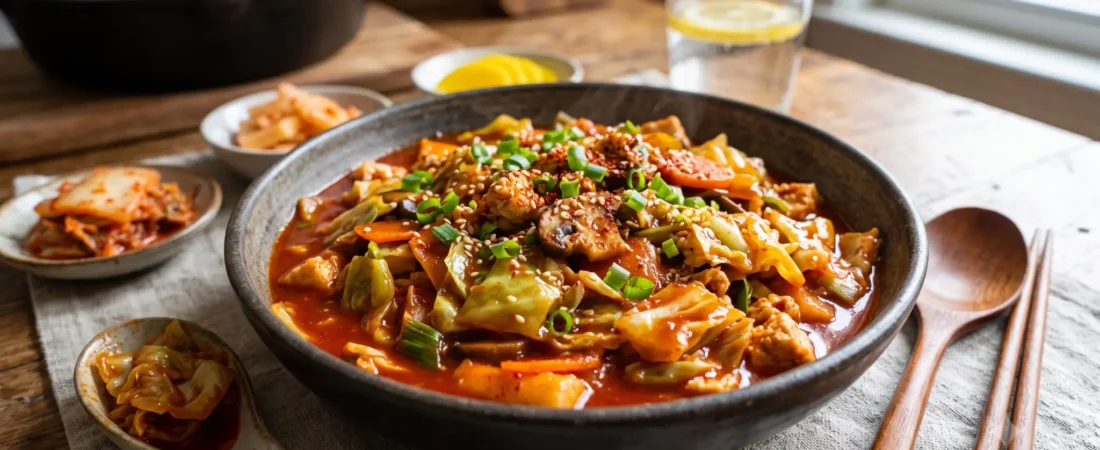
Korean tteokbokki is known for its chewy rice cakes and glossy, spicy-sweet sauce. This vegan version keeps the rice cakes that define the dish while adding sweetheart cabbage, mushrooms and golden tofu for more colour, texture and substance.
The ingredients are practical for a UK kitchen, and the sauce uses only a small amount of added sweetness. It is an approachable way to enjoy the character of tteokbokki as a satisfying lunch or casual dinner.
Key Takeaways
- Keep the Tteok: A moderate portion of Korean rice cakes preserves tteokbokki’s distinctive chew, while cabbage and mushrooms increase the vegetable content.
- Add Plant Protein: Pan-seared tofu makes the dish more substantial and provides a savoury contrast to the soft rice cakes.
- Adjust the Sauce: Gochujang provides the traditional base flavour, while gochugaru and maple syrup can be adjusted to suit your preferred heat and sweetness.
What Is Tteokbokki?
Tteokbokki (떡볶이) is a popular Korean dish made by simmering Korean rice cakes in a seasoned sauce. The familiar red version typically combines gochujang with gochugaru, garlic and a little sweetness.
Street-food versions often include fish cake and boiled egg. For this vegan recipe, tofu and mushrooms provide contrasting textures without trying to imitate every traditional ingredient.
Rice cakes are essential to the identity of the dish. Replacing them completely with cabbage would create a tasty spicy cabbage bowl, but it would no longer have the characteristic texture of tteokbokki. This recipe instead uses a smaller bed of rice cakes alongside generous vegetables and tofu.
Why Add Cabbage and Tofu?
Sweetheart, pointed or white cabbage softens in the sauce while retaining a gentle bite. Replacing some of the rice cakes with cabbage lowers the overall carbohydrate content while adding fibre and vitamin C. Its natural sweetness also balances the heat of gochujang, reducing the need for a heavily sweetened sauce.
Tofu contributes plant protein and absorbs the spicy-savoury flavours around it. Browning the tofu separately gives it firmer edges so that it holds its shape when added to the pan.
Mushrooms bring additional savoury depth and work particularly well in a vegan version. Together, these ingredients turn tteokbokki into a more varied bowl while allowing the rice cakes to remain the main attraction.
UK healthy-eating guidance encourages meals that include vegetables and a range of protein foods. Adding cabbage, mushrooms and tofu is a practical way to bring those elements into this Korean comfort-food recipe.
K-Well’s Tip: Keep enough rice cakes to enjoy their signature chew, then use cabbage, tofu and mushrooms to build volume and contrast. This creates a generous bowl without losing what makes tteokbokki distinctive.
A Simple Vegan Tteokbokki Sauce
Gochujang gives tteokbokki its fermented chilli flavour, colour and body. There is no need to replace it with miso if you want the dish to taste recognisably Korean.
Commercial gochujang varies in sweetness and saltiness, so taste the sauce before adding extra maple syrup or soy sauce. Gochugaru can be added for more chilli warmth without making the sauce much sweeter.
For a closer look at labels and serving amounts, read Is Gochujang Healthy for Weight Loss?.
UK Shopping Guide
You can find most of the fresh ingredients in larger Tesco, Sainsbury’s, M&S or Waitrose branches. Korean rice cakes and a wider selection of gochujang are more reliably available from Korean and East Asian supermarkets such as H Mart, Oseyo and Korea Foods.
| Ingredient | What to Look for in the UK |
| Korean rice cakes | Look for tteokbokki tteok (Korean rice cakes) for tteokbokki in the refrigerated or frozen section of Korean and East Asian supermarkets. |
| Cabbage | Sweetheart, pointed and white cabbage are widely available in UK supermarkets. |
| Tofu | Choose firm or extra-firm tofu so that it holds its shape in the sauce. |
| Mushrooms | Chestnut and closed-cup mushrooms are easy supermarket options; shiitake and king oyster mushrooms provide a firmer texture. |
| Gochujang | Look for Korean fermented chilli paste in red tubs or jars, checking whether the product is vegan. |
| Gochugaru | Look for Korean red pepper flakes in Korean supermarkets or East Asian grocery shops. |
Check the packet instructions because preparation and cooking times vary between rice-cake products. If the rice cakes feel firm, soaking them briefly in warm water can help them soften more evenly.
K-Well’s Tip: If you find Korean rice cakes too dense or chewy, try this recipe with potato gnocchi instead. Gnocchi has a softer, lighter texture while still holding the spicy sauce well. Cook it according to the packet instructions and add it near the end to prevent it from becoming too soft. For a vegan version, check that the product contains no egg or dairy.
New to Korean seasonings? Our guide to 7 Essential Korean Pantry Staples for Beginners in the UK explains how gochujang, gochugaru, soy sauce and toasted sesame oil are used.
Easy Vegan Tteokbokki with Cabbage and Tofu
Serves: 2
Preparation: 15 minutes
Cooking: 20 minutes
Ingredients
For the Bowl
- 200g Korean rice cakes for tteokbokki
- 200g extra-firm tofu, drained and cut into rectangles
- 250g sweetheart, pointed or white cabbage, cut into large pieces
- ½ small onion, thinly sliced
- 100g chestnut mushrooms, sliced
- 2 spring onions, sliced diagonally
- 1 teaspoon neutral cooking oil
- 500ml water
- 1 small piece dried dashima (optional)
- 1 teaspoon toasted sesame seeds, for serving
For the Sauce
- 1½ tablespoons gochujang
- 1 teaspoon gochugaru (optional)
- 1 garlic clove, minced
- 1 teaspoon light soy sauce
- 1 teaspoon maple syrup, followed by more if needed
- 2 tablespoons warm water
Method
1. Prepare the Rice Cakes
Separate the rice cakes and check the packet instructions, as soaking times vary between products. Rinse them briefly, then soak in warm water for up to 10 minutes if they feel firm. Drain well before cooking.
2. Brown the Tofu
Heat the oil in a wide non-stick frying pan over medium heat. Add the tofu and cook for two to three minutes on each side until lightly golden.
Transfer it to a plate while you prepare the sauce. Browning the tofu separately helps it remain intact later.
3. Make the Broth
Pour 500ml water into the pan and add the dashima if using. Bring it to a gentle simmer for five minutes, then remove the dashima.
If you are not using dashima, simply bring the water to a simmer.
4. Mix the Sauce
In a small bowl, combine the gochujang, gochugaru, garlic, soy sauce, maple syrup and warm water. Stir until smooth.
Taste a small amount before adding more sweetener. Gochujang brands vary, and the cabbage and onion will bring some natural sweetness as it cooks.
5. Cook the Rice Cakes, Cabbage and Onion
Stir the sauce into the simmering water. Add the rice cakes, cabbage and sliced onion, then cook uncovered over medium heat for four to five minutes, stirring regularly.
The onion will soften and add a gentle natural sweetness to the sauce.
6. Add the Mushrooms and Tofu
Add the sliced mushrooms and continue cooking for another four to five minutes, or until the rice cakes are tender and the sauce has thickened.
Return the browned tofu to the pan and add most of the spring onion. Cook for a final two minutes, turning the ingredients gently until the tofu is hot and coated in sauce.
If the sauce becomes too thick before the rice cakes are tender, add a small splash of hot water.
K-Well’s Cooking Tip: Add the onion with the rice cakes and cabbage so it has time to soften and sweeten the sauce naturally. Add the mushrooms halfway through cooking to help them retain a pleasantly firm texture.
7. Serve
Divide the tteokbokki between two bowls. Finish with the remaining spring onion and toasted sesame seeds, then serve immediately while the rice cakes are soft and chewy.
K-Well’s Sauce Tip: Add the maple syrup only after tasting your gochujang. Some brands are already noticeably sweet, so the cabbage may provide enough balance with little or no additional sweetener.
Easy Variations
Tteokbokki is flexible enough to adapt to the vegetables you already have.
- Replace sweetheart cabbage with Chinese leaf for a softer texture.
- Add pak choi during the final two minutes of cooking.
- Use king oyster mushrooms cut into thick strips for a firmer bite.
- Add shelled edamame for another plant-based protein option.
- Stir in a small handful of bean sprouts just before serving for a fresh crunch.
- Reduce or omit the gochugaru for a gentler level of heat.
If you prefer to turn Korean ingredients into a different complete bowl, try this Healthy Tesco Bibimbap Bowl.
Storage and Reheating
Tteokbokki is best eaten immediately because rice cakes become firmer as they cool. Refrigerate leftovers in a covered container and use them within two days.
Reheat gently in a saucepan with a splash of water, stirring until the sauce loosens and the rice cakes are thoroughly heated. The tofu and vegetables will reheat well, although the cabbage will become softer.
FAQ
Q1. Is Tteokbokki Usually Vegan?
Not always. Traditional and packaged versions may contain fish cake, anchovy stock or seafood-derived seasoning. For a vegan version, use water or a dashima-and-mushroom broth and check the labels on gochujang and other packaged ingredients.
Q2. Can I Make Tteokbokki Without Gochujang?
You can make a spicy sauce with gochugaru and soy-based seasonings, but it will not have the same fermented sweetness and body. Gochujang is the most recognisable base for classic red tteokbokki.
Q3. Can I Replace All the Rice Cakes with Cabbage?
You can cook cabbage in the same spicy sauce, but the result is better described as a tteokbokki-inspired cabbage bowl. Keeping a moderate portion of rice cakes preserves the defining chewy texture of the dish.
K-Well’s Final Thoughts
This vegan tteokbokki keeps the pleasure of chewy rice cakes while adding sweet cabbage, savoury mushrooms and golden tofu. The result feels familiar and comforting but offers more variety in every bowl.
Use the recipe as a flexible formula: keep the tteok, add generous vegetables and choose a plant protein that suits you. With ingredients available from UK supermarkets and Korean grocers, it is an easy way to bring a colourful Korean comfort meal into your regular cooking routine.
Read Next
- Is Gochujang Healthy for Weight Loss?
- 7 Essential Korean Pantry Staples for Beginners in the UK
- Healthy Tesco Bibimbap Bowl: Easy Korean-Inspired UK Recipe
References
- British Nutrition Foundation. A Healthy Balanced Diet.
https://www.nutrition.org.uk/creating-a-healthy-diet/a-healthy-balanced-diet/ - National Health Service (NHS). Eating a Balanced Diet.
https://www.nhs.uk/live-well/eat-well/how-to-eat-a-balanced-diet/eating-a-balanced-diet/