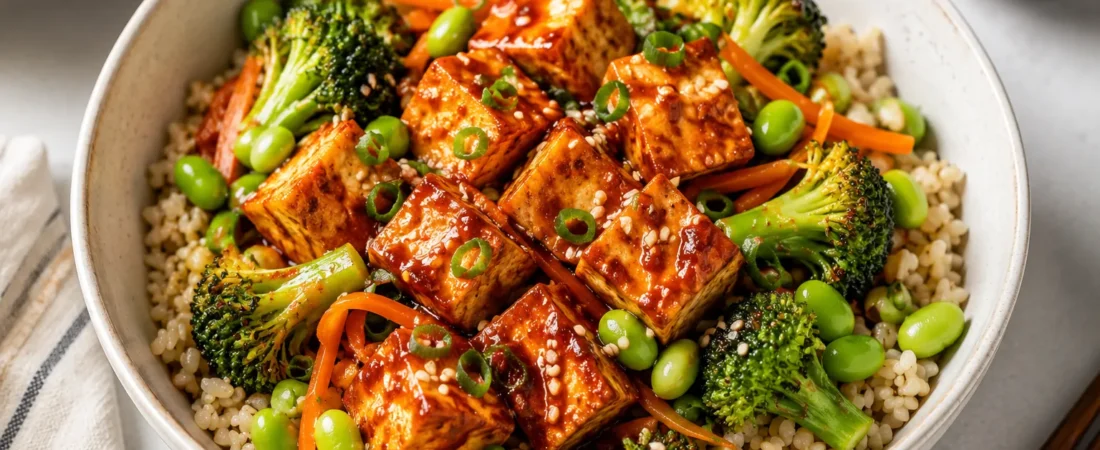
This gochujang tofu rice bowl combines golden tofu, broccoli and edamame in a spicy-savoury glaze, then serves everything over warm rice with crisp carrot. Using extra-firm tofu and ready-cooked rice keeps the entire meal within 15 minutes.
🌟 Key Takeaways
- Complete One-Bowl Meal: Rice supplies carbohydrate, tofu and edamame add plant protein, and broccoli and carrot bring colour, texture and vegetables.
- One-Pan Method: The tofu, broccoli and edamame cook in the same frying pan, keeping preparation and washing-up manageable on a busy weeknight.
- Measured Gochujang: A small, measured amount of gochujang provides the main seasoning, while rice vinegar, garlic and toasted sesame oil build flavour without automatically adding soy sauce or extra salt.
A Korean-Inspired Bowl for the Busiest Evenings
You have tofu in the fridge, rice in the cupboard and 15 minutes before dinner. This is when a concentrated Korean seasoning earns its place in the kitchen.
Gochujang brings chilli heat, gentle sweetness and savoury depth. Whisked with rice vinegar, garlic, sesame oil and water, it becomes a quick glaze for tofu and vegetables.
Unlike bibimbap, which commonly uses several individually prepared toppings, this convenience-focused bowl cooks tofu, broccoli and edamame together and adds raw carrot for instant crunch.
What Makes This a Balanced One-Bowl Meal?
A practical one-bowl dinner needs more than one featured ingredient. This bowl combines:
- Carbohydrate: brown, multigrain, basmati or white rice
- Protein: tofu and shelled edamame
- Vegetables: broccoli, carrot and spring onion
- Flavour and fat: gochujang and a small amount of toasted sesame oil
The NHS recommends choosing higher-fibre or wholegrain starchy carbohydrates where possible, making brown or multigrain rice useful options. White rice can also form part of a balanced meal. Diabetes UK notes that carbohydrate quality and portion size both matter. This bowl is therefore best described as blood-sugar-conscious, not as a meal with a formally tested glycaemic index.
Ingredients and Why They Work
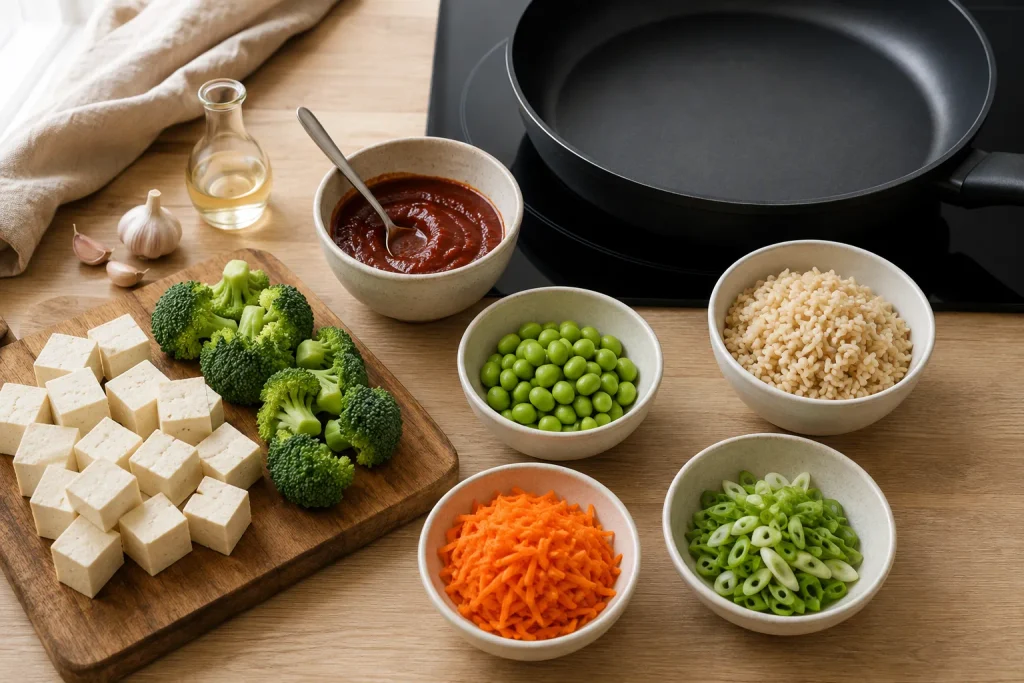
Extra-Firm Tofu
Extra-firm tofu saves time because it usually needs little or no pressing. Pat it dry, then tear or cut it into small pieces. Torn edges develop more texture and hold the glaze well. Use plain tofu so the gochujang remains the main seasoning; smoked or marinated varieties will alter the flavour and may add extra salt.
Gochujang
Gochujang is a concentrated Korean fermented chilli paste with spicy, savoury and gently sweet notes. Formulations vary in heat, salt, sweetness and allergens. Choose paste rather than a ready-made gochujang sauce so you can control the vinegar, water and optional sweetener. For label guidance, read Is Gochujang Healthy for Weight Loss? Sugar, Portions and Smart Ways to Use It.
Rice
A 250g pouch of ready-cooked rice makes the 15-minute timing realistic and provides two 125g servings. Brown, white or basmati rice all work. If you already have cooked Korean multigrain rice, use that instead; see What Is Japgokbap? Korean Multi-Grain Rice for guidance.
Broccoli, Edamame and Carrot
Small broccoli florets steam quickly with the tofu, frozen shelled edamame adds another plant-protein source, and raw grated carrot supplies instant crunch. Frozen peas are a convenient, slightly sweeter alternative to edamame.
UK Shopping Notes
In large UK supermarkets, look for:
- Plain extra-firm or firm tofu in the chilled vegetarian section
- Frozen shelled edamame, sometimes labelled soya beans
- A 250g pouch of brown, wholegrain, basmati or mixed-grain rice
- Gochujang paste in the world-food aisle or a Korean or East Asian grocer
- Plain rice vinegar rather than seasoned rice vinegar containing additional salt and sugar
Ranges differ by branch. Compare gochujang salt and sugars per 100g, remembering that the recipe uses a smaller serving. Some products contain wheat; choose one labelled gluten-free if required.
15-Minute Gochujang Tofu Rice Bowl Recipe
Preparation time: 5 minutes
Cooking time: 10 minutes
Total time: 15 minutes
Servings: 2
Dietary notes: Vegan when all packaged ingredients are confirmed vegan
Allergens: Soya and sesame; some gochujang contains wheat
Ingredients
For the Bowl
- 250g extra-firm tofu, drained and patted dry
- 250g ready-cooked brown or multigrain rice
- 150g broccoli, cut into small florets
- 100g frozen shelled edamame
- 1 small carrot, coarsely grated
- 2 spring onions (green onions), thinly sliced
- 1 teaspoon neutral cooking oil
- 1 teaspoon toasted sesame seeds, optional
For the Gochujang Glaze
- 1 tablespoon gochujang paste
- 2 teaspoons plain rice vinegar
- 1 teaspoon toasted sesame oil
- 1 small garlic clove, finely grated
- 1 tablespoon water, plus more if needed
- ½ teaspoon maple syrup (optional)
Step-by-Step Method
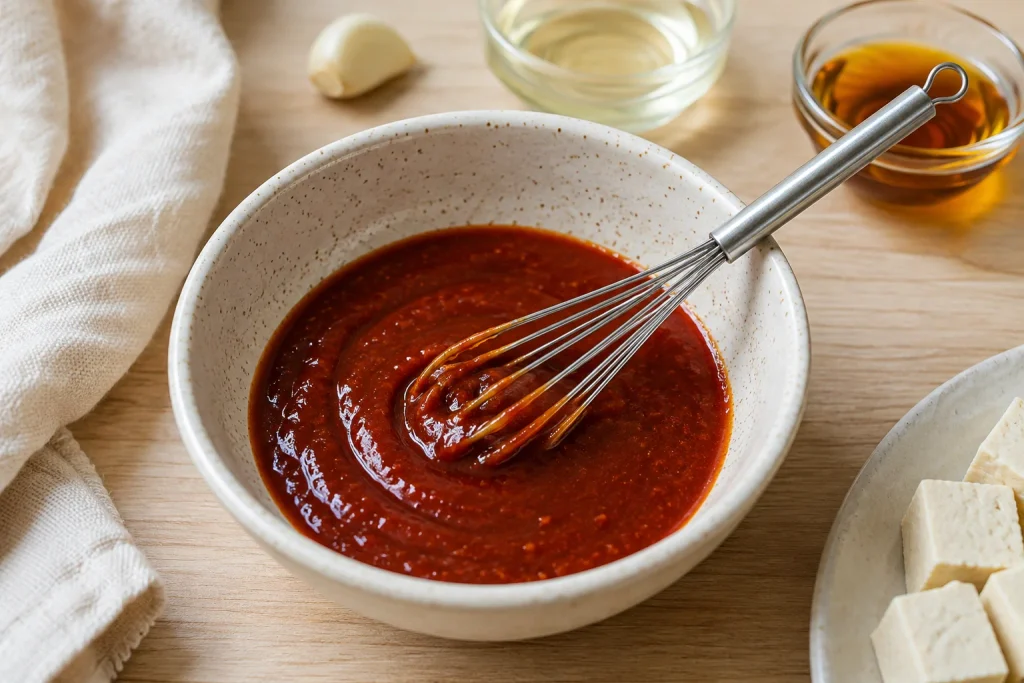
1. Mix the Glaze
Whisk the gochujang, rice vinegar, toasted sesame oil, garlic and water in a small bowl. Add the maple syrup only after tasting your gochujang; many commercial pastes are already sweet enough.
The mixture should be loose enough to coat the tofu but not watery. Add another teaspoon of water if your paste is particularly thick.
2. Brown the Tofu
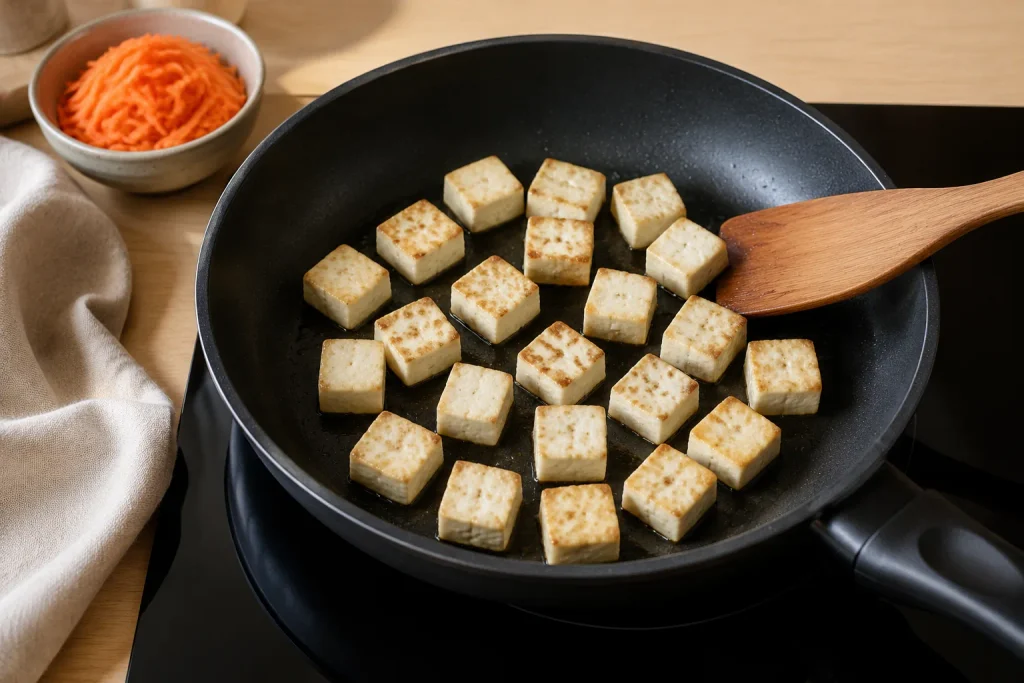
Heat the neutral oil in a large non-stick frying pan over medium-high heat. Tear the tofu into bite-sized pieces directly over the pan or cut it into 2cm cubes.
Cook for 4–5 minutes, turning occasionally, until several sides are lightly golden. Avoid moving it continuously; a little uninterrupted contact with the hot pan helps the surface colour.
3. Steam the Broccoli and Edamame
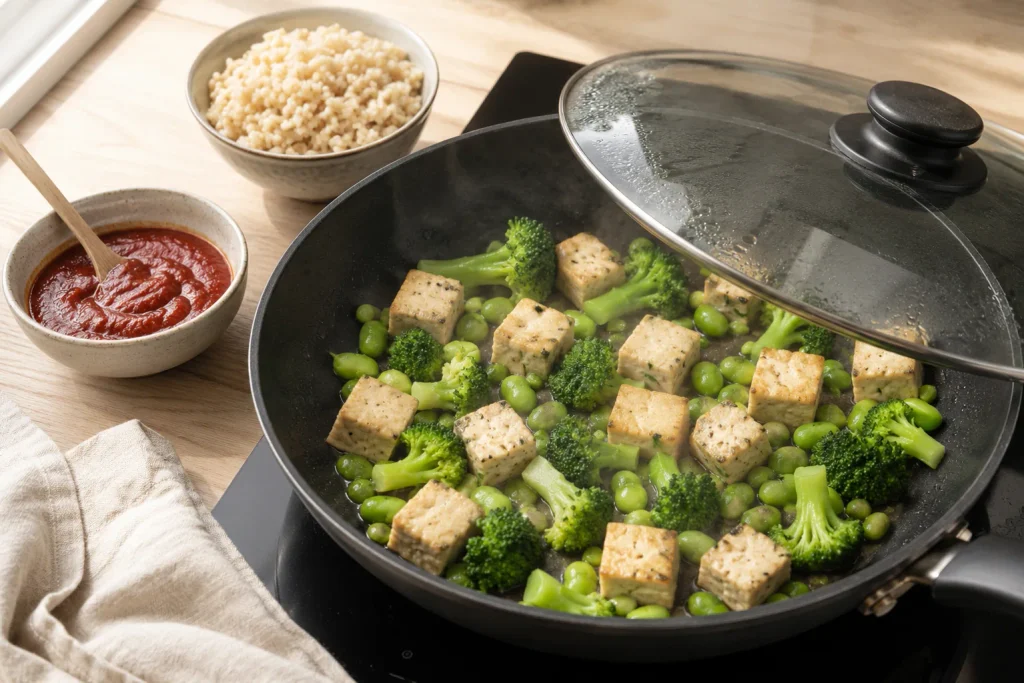
Add the broccoli, frozen edamame and two tablespoons of water. Cover the pan and cook for 2–3 minutes, until the broccoli is bright green and just tender.
Remove the lid. If water remains in the pan, allow it to evaporate for about 30 seconds before adding the glaze.
4. Add the Gochujang Glaze
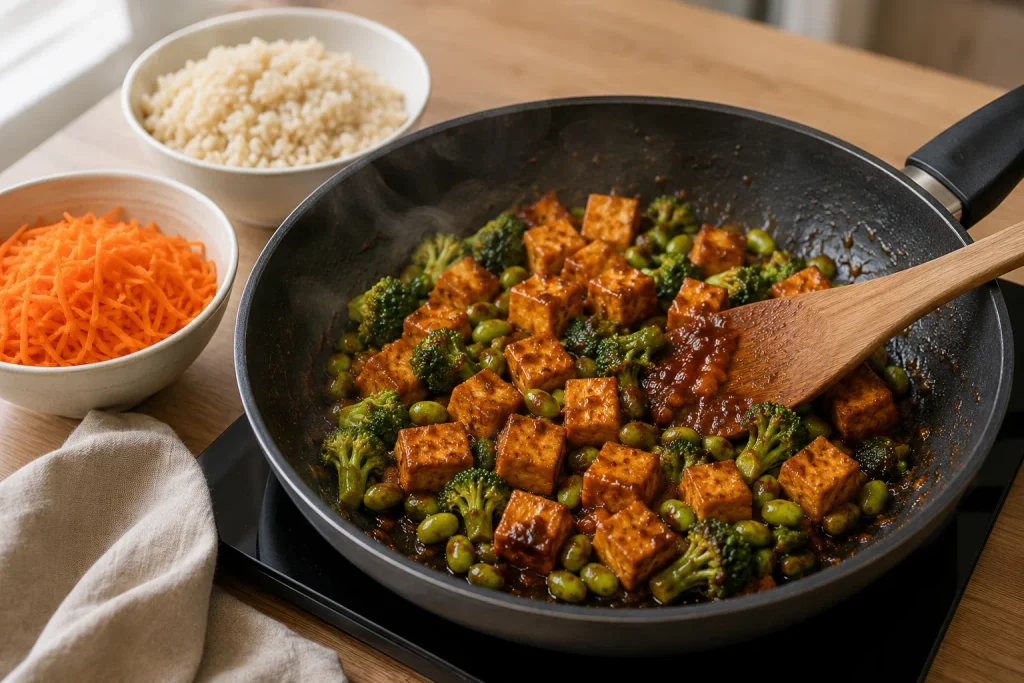
Reduce the heat to medium. Pour in the glaze and toss gently for 1–2 minutes, until it coats the tofu and vegetables and looks glossy.
Do not cook the glaze for too long. Its small amount of sugar can catch on a very hot pan, and prolonged cooking can dull the fresh acidity of the rice vinegar.
5. Heat the Rice and Assemble
Heat the rice according to the packet instructions and divide it between two bowls. Spoon over the glazed tofu, broccoli and edamame. Add the grated carrot and spring onions, then finish with sesame seeds if using.
Serve immediately while the rice and tofu are hot and the carrot remains crisp.
💡 K-Well’s Practical Tips
- Keep the pieces small: Large tofu cubes take longer to brown, while thick broccoli stems may remain firm.
- Taste before sweetening: Gochujang brands vary, so maple syrup is optional rather than automatic.
- Use a wide pan: Crowding traps steam and makes browning more difficult.
- Work as the tofu cooks: Grate the carrot and slice the spring onions during the first few minutes of cooking.
Lower-Sodium and Lower-Added-Sugar Options
Gochujang is already seasoned, so this recipe does not automatically add soy sauce or table salt. The NHS recommends no more than 6g of salt per day for adults. Because brands vary, compare labels and measure the paste.
For a lower-sodium option:
- Use two teaspoons of gochujang instead of one tablespoon.
- Increase the rice vinegar and water slightly to maintain enough glaze.
- Do not add soy sauce, stock powder or extra salt.
- Use unsalted edamame and plain rice.
- Add more spring onion, garlic or vinegar after cooking if the bowl needs greater impact.
For a lower-added-sugar option, omit the maple syrup. Replacing it with honey does not remove free sugar, so taste the gochujang first.
Follow individual advice from a healthcare professional or dietitian if you have a medically prescribed sodium, carbohydrate or potassium restriction.
Easy Variations
- Mushroom bowl: Replace the broccoli with 200g sliced mushrooms and cook until their moisture evaporates before glazing.
- Noodle bowl: Replace the rice with drained wholewheat noodles and toss them through the pan during the final minute.
- Extra vegetables: Add finely shredded cabbage or place mixed salad leaves beneath the hot tofu just before serving.
- Post-run bowl: After a longer or more demanding run, adjust the rice portion to your appetite and recovery needs. See 3 Nourishing Korean Post-Run Meals for Better Recovery for more context.
Storage and Reheating
Refrigerate the glazed tofu and vegetables in a covered container for up to two days. Follow the rice packet’s storage instructions and chill leftovers promptly. Reheat until steaming hot throughout, adding fresh carrot and spring onion afterwards. Reheat only the portion you intend to eat and follow Food Standards Agency guidance on chilling and reheating leftovers.
Estimated Nutritional Snapshot
Approximate values per serving, using generic extra-firm tofu, brown rice and unsalted edamame:
- Energy: approximately 500 kcal
- Protein: approximately 24g
- Carbohydrate: approximately 62g
- Fat: approximately 17g
- Fibre: approximately 9g
These are estimates rather than laboratory-tested values. Actual figures—especially salt and sugar—vary by brand.
FAQ
Q1. Can I Make This Gochujang Tofu Rice Bowl Without Edamame?
Yes. Replace the edamame with frozen peas, extra tofu or another quick-cooking vegetable. If you remove it without adding another protein source, the finished bowl will contain less protein than the version shown here.
Q2. Can I make this without a microwave?
Yes. Heat the cooked rice in a covered saucepan with a small splash of water, stirring and checking that it is steaming throughout. This needs another pan and may extend the total time.
Q3. Why is my tofu soft instead of golden?
Surface moisture, a crowded pan or frequent stirring can prevent browning. Pat the tofu dry, use a wide pan and give each side time against the cooking surface. Wetter tofu may need pressing before starting this recipe.
🌿 K-Well’s Kitchen Trials & Thoughts
A quick rice bowl does not need separate pans or a long list of specialist vegetables. One measured spoonful of gochujang can bring tofu, broccoli and edamame together, while rice and a handful of vegetables make the bowl more filling and complete.
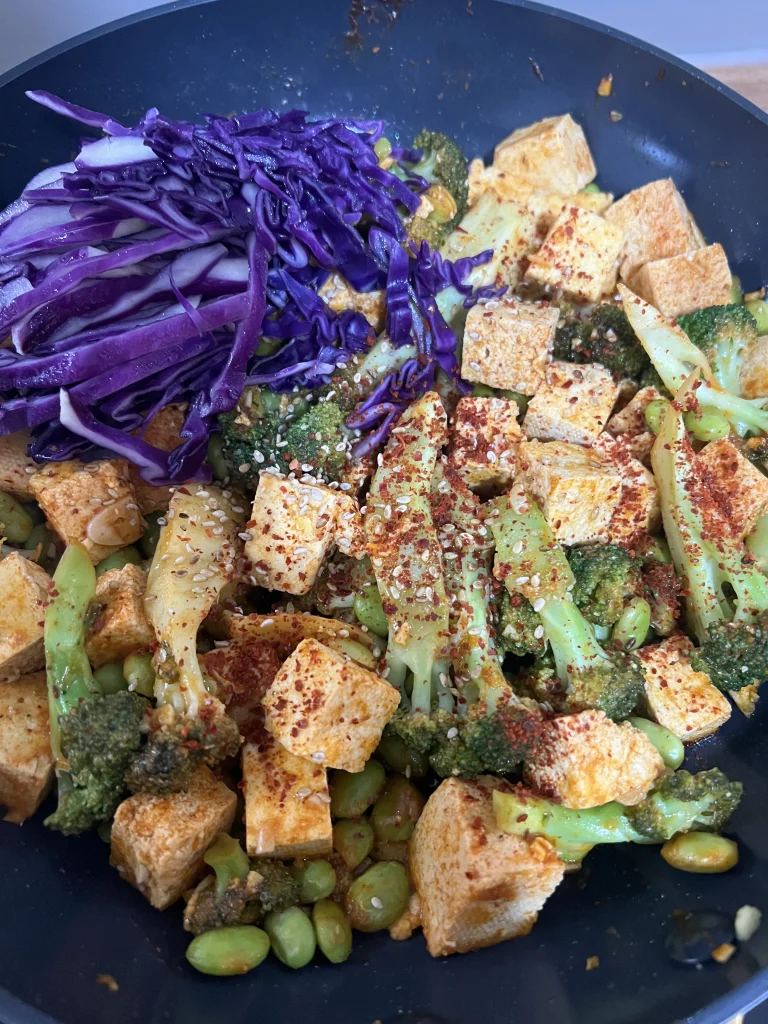
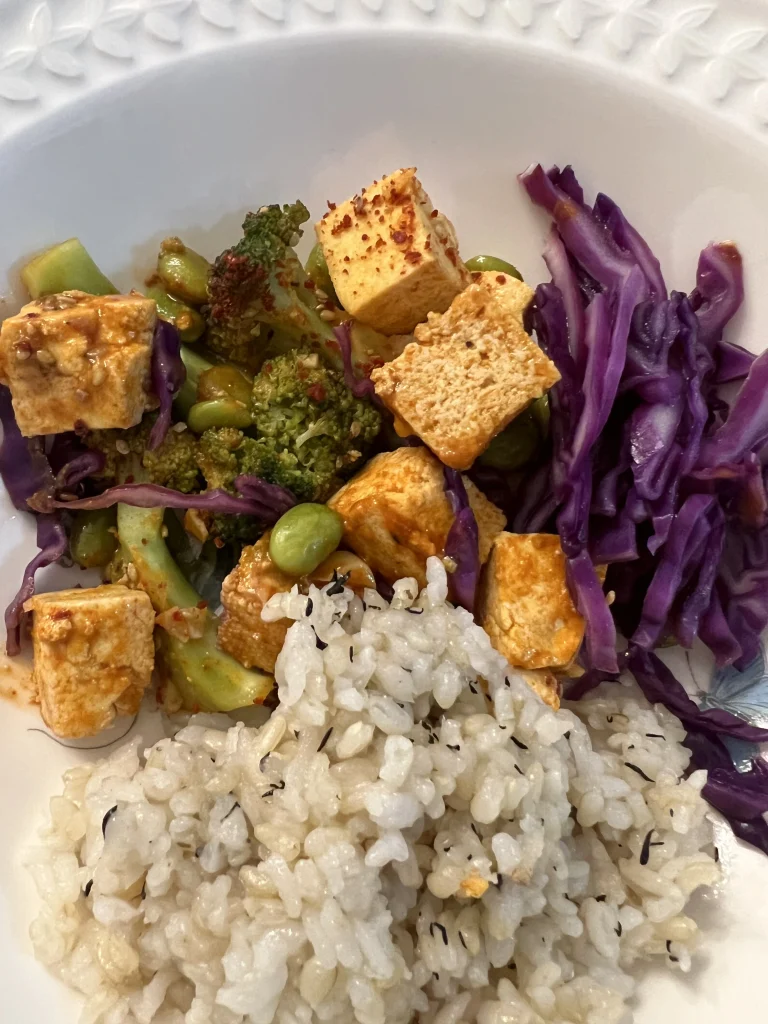
I recently tried this gochujang tofu rice bowl, and I was pleasantly surprised by how much flavour came from such a simple sauce. Instead of carrots, I also added some red cabbage I already had in the fridge, and I loved the fresh crunch and vibrant colour it brought to the bowl.
For the sauce, I used just gochujang and vinegar, keeping the seasoning straightforward without adding extra sugar or salt. At the end, I sprinkled over a little gochugaru, toasted sesame oil and sesame seeds for extra heat, aroma and nuttiness.
I really enjoyed this as an easy weeknight dinner. It comes together quickly and brings carbohydrate, plant protein and vegetables into one satisfying bowl. I especially like that the vegetables can be adapted to whatever is already in the fridge, making this an easy recipe to return to on busy days.
For a broader introduction to gochujang and other everyday seasonings, explore 7 Essential Korean Pantry Staples for Beginners in the UK.
Read Next
- Is Gochujang Healthy for Weight Loss? Sugar, Portions and Smart Ways to Use It
- Gluten-Free Bibimbap Sauce Recipe: Lower-Sugar and Full of Flavour
- What Is Japgokbap? Korean Multi-Grain Rice
References
- Diabetes UK. Carbohydrates and diabetes: What you need to know. https://www.diabetes.org.uk/living-with-diabetes/eating/carbohydrates-and-diabetes
- Food Standards Agency (FSA). Home food fact checker. https://www.food.gov.uk/safety-hygiene/home-food-fact-checker
- National Health Service (NHS). 8 tips for healthy eating. https://www.nhs.uk/live-well/eat-well/how-to-eat-a-balanced-diet/eight-tips-for-healthy-eating/
- National Health Service (NHS). Salt in your diet. https://www.nhs.uk/live-well/eat-well/food-types/salt-in-your-diet/