
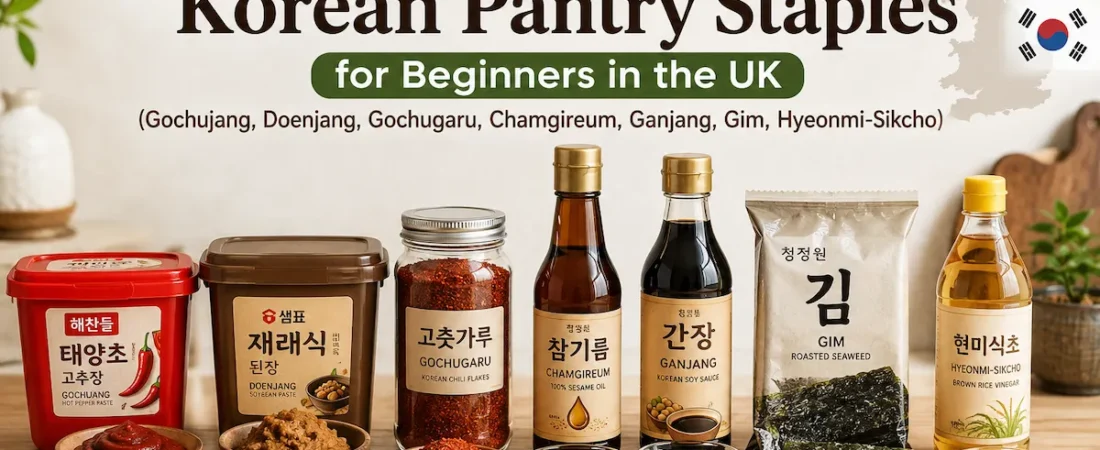
Build a Korean pantry in the UK with 7 essential staples, practical shopping tips and simple ways to use each ingredient in everyday meals.
🌟 Key Takeaways
- Start with seven versatile staples: Gochujang, doenjang, gochugaru, chamgireum, ganjang, gim and hyeonmi-sikcho cover heat, savouriness, aroma and acidity.
- Shop by function, not brand: Check the product name, ingredient list, allergens and nutrition label so you buy the Korean ingredient you actually need—not a ready-made cooking sauce.
- Build meals around everyday foods: Use these seasonings with vegetables, tofu, eggs, fish, beans and rice to make quick Korean-inspired meals without filling an entire cupboard.
A Small Pantry That Makes Korean Cooking Easier
You find a Korean recipe that looks perfect for dinner, then reach the ingredient list: gochujang, gochugaru, ganjang, chamgireum. Do you need four different chilli products and soy sauces before you can begin?
Fortunately, no. Korean cooking becomes much easier once you understand what a small group of seasonings actually does. Some provide fermented depth, one adds clean chilli warmth, one gives the familiar toasted aroma, and another brightens the finished dish. Together, they can turn a bowl of rice, a block of tofu and a few vegetables into dozens of satisfying meals.
This guide focuses on seven essential Korean pantry staples for beginners in the UK. It is not a list of every ingredient used in Korean cuisine. It is a practical starting point for busy home cooks who want authentic flavours, flexible meal ideas and products that can be found in UK supermarkets or Korean and East Asian grocers.
Your Seven-Staple Korean Pantry at a Glance
| Staple | Korean name | Main job | Easy first use |
| Gochujang | 고추장 | Sweet, savoury chilli depth | Bibimbap-style sauce |
| Doenjang | 된장 | Earthy fermented soybean flavour | Tofu and vegetable stew |
| Gochugaru | 고춧가루 | Fruity chilli warmth and colour | Spicy cucumber salad |
| Chamgireum | 참기름 | Toasted nutty aroma | Finishing vegetables or rice |
| Ganjang | 간장 | Salty, savoury seasoning | Tofu dressing |
| Gim | 김 | Crisp roasted seaweed flavour | Rice topping or snack |
| Hyeonmi-sikcho | 현미식초 | Mild, rounded acidity | Quick vegetable pickle |
1. Gochujang: The Versatile Korean Chilli Paste
Gochujang is a concentrated Korean chilli paste that brings savoury depth, gentle sweetness and a rounded heat to everyday dishes. For a beginner’s pantry, the most important step is choosing the paste itself rather than a ready-made sauce.
Look for a tub or jar labelled gochujang, rather than “gochujang sauce” or “Korean-style cooking sauce”. Prepared sauces may already contain vinegar, oil, sweeteners and additional seasonings, making them less adaptable for different recipes. Brands also vary in heat, sweetness and salt, so compare the ingredient and nutrition labels instead of assuming every red tub will taste the same. Some products contain wheat, making the allergen statement particularly important for anyone avoiding gluten.
Whisk one teaspoon of gochujang with one teaspoon each of rice vinegar and toasted sesame oil, then loosen it with water. Spoon it over rice, roasted mushrooms, steamed greens, tofu or a boiled egg. Refrigerate after opening according to the label.
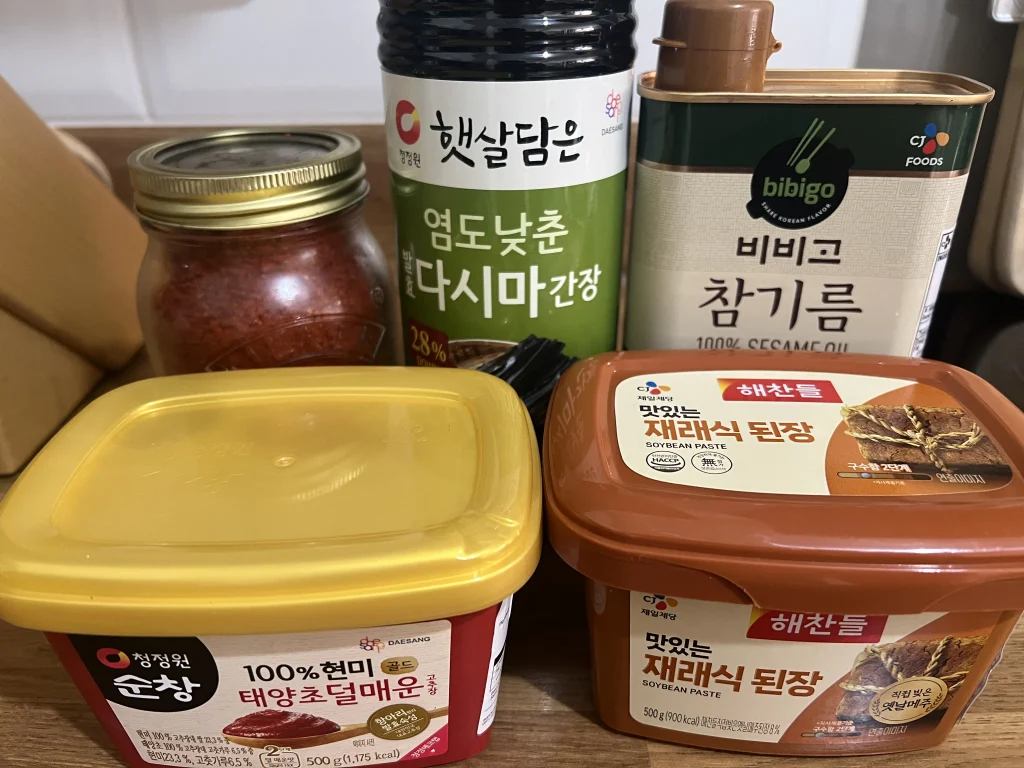
Put these pantry staples to work in a gochujang tofu rice bowl, with rice vinegar and toasted sesame oil rounding out the glaze.
UK shopping tip: Selected larger supermarkets now stock gochujang, but Korean grocers such as H Mart and Oseyo usually offer more choice. Availability varies by branch and online stock.
2. Doenjang: The Foundation of Savoury Soups and Stews
Doenjang is the deeply savoury soybean paste used in Korean soups, stews and seasoned vegetable dishes. When shopping in the UK, check that the label specifically says doenjang or 된장: Japanese miso, Chinese soybean paste and ready-seasoned ssamjang have different flavour profiles and culinary uses.
Ingredient lists vary between brands, and some products include wheat or additional seasonings. Check the allergen statement for soya and possible wheat, then begin with a small tub while you discover which flavour strength suits your cooking. Because doenjang is highly concentrated, a modest spoonful can season an entire pot of vegetables and tofu.
For a simple weeknight meal, dissolve about one tablespoon in 500 ml of water or unsalted stock. Add onion, courgette, mushrooms and tofu, then simmer until tender. Taste before adding any other salty ingredient. For help choosing the right tofu texture, see this guide to The Best Tofu for Doenjang Jjigae at Sainsbury’s and Tesco Grocery K-Soup: Easy Korean Tofu Soup.
💡 K-Well’s Tip: Press doenjang through a small sieve into the broth if you want a smoother soup while keeping its characteristic flavour.
3. Gochugaru: Chilli Warmth Without a Mixed Spice Blend
Gochugaru is Korean red pepper powder or flakes. It brings warm, slightly fruity chilli flavour and vivid red colour to kimchi, soups, stews and vegetable side dishes.
Gochugaru vs UK Chilli Powder
Gochugaru is usually made from dried Korean red chillies and is valued for its fruity flavour, vibrant colour and mild-to-medium heat. By comparison, many mild or hot chilli powders sold in UK supermarkets are finely ground seasoning blends that may also contain cumin, garlic, oregano or salt. Those added spices can noticeably change the flavour of kimchi, Korean stews and vegetable side dishes, so ordinary UK chilli powder is not a direct substitute. Check the ingredient list and look for a packet labelled gochugaru or 고춧가루 for the most authentic result.
Gochugaru is sold in different textures. Coarse flakes are useful for kimchi, salads and general cooking; a finer grind is often used for pastes and sauces. Heat varies, so the first spoonful should be modest. Look for a bright red product with gochugaru or 고춧가루 on the pack.
Mix half a teaspoon with rice vinegar, a little ganjang and crushed garlic, then toss with sliced cucumber. The same combination works with radish, spring cabbage or lightly blanched bean sprouts.
Gochugaru keeps best when protected from heat, air and light. Seal it well after opening. If you buy a large bag, keep a small working jar in the cupboard or fridge and store the remainder in the freezer to preserve its colour and aroma for longer.
4. Chamgireum: Toasted Sesame Oil as a Finishing Touch
Chamgireum means sesame oil, but the Korean pantry staple beginners usually want is toasted sesame oil. Its dark colour and pronounced nutty aroma make it a seasoning oil rather than the main oil for frying.
Add a small drizzle at the end of cooking to spinach, mushrooms, noodles, tofu or rice. Heating it aggressively for a long time wastes much of the aroma that makes it special. A quick dressing of ganjang, rice vinegar and chamgireum is also useful for salads and grain bowls.
Toasted sesame oil is widely available in UK supermarket world-food sections. Check that the label says toasted or roasted if you want the familiar Korean flavour. Keep the bottle tightly closed in a cool, dark cupboard and buy a size you can use while its aroma is still fresh.
Sesame is one of the allergens that must be declared on UK food labels. Anyone with a sesame allergy should avoid both the oil and sesame-containing sauces and check for cross-contact information.
5. Ganjang: The Everyday Savoury Seasoning
Ganjang is the Korean word for soy sauce, but Korean recipes may call for different types. For a beginner pantry, an all-purpose Korean soy sauce—often labelled jin-ganjang—is the most flexible choice for marinades, stir-fries, dipping sauces and seasoned vegetables. Guk-ganjang, or soup soy sauce, is lighter in colour but intensely salty and is used mainly to season soups and namul.
If Korean soy sauce is unavailable, a standard light or all-purpose soy sauce can work in many beginner recipes, although the flavour will not be identical. Avoid assuming that dark soy sauce is the best replacement: it is darker, often sweeter and can change the colour of a dish.
Combine one tablespoon ganjang with one tablespoon water, one teaspoon hyeonmi-sikcho, spring onion and a few drops of chamgireum. This quick sauce works with pan-seared tofu, steamed broccoli or vegetable dumplings.
Soy sauce and fermented pastes can contribute significant salt, so measure them rather than pouring freely and taste the complete dish before adding more. The NHS recommends no more than 6 g of salt per day for adults.
6. Gim: Roasted Seaweed for Rice, Lunchboxes and Snacks
Gim is edible seaweed, usually laver, prepared in thin sheets. Korean roasted gim is often brushed with oil, lightly salted and cut into small rectangles for eating with rice. Unsalted sheets are also available, while thicker, unseasoned sheets may be intended for gimbap.
For the simplest meal, wrap a piece around a spoonful of warm rice and add cucumber, egg or tofu. Crumble it over bibimbap-style bowls, noodles or fried rice just before serving so it stays crisp.
Check whether the pack is seasoned, because oil and salt levels vary. Individual snack packs are convenient; larger sheets usually offer more flexibility and less packaging. Once opened, keep gim airtight and dry. Moisture quickly softens its crisp texture.
This pantry overview keeps seaweed brief because choosing between roasted gim, snack packs and gimbap sheets deserves its own explanation. Read the complete Korean seaweed UK shopping guide for a more detailed comparison.
7. Hyeonmi-Sikcho: Brown Rice Vinegar for Balance and Brightness
Hyeonmi-sikcho is brown rice vinegar. It has a mild, rounded acidity that balances the sweetness of gochujang and the savouriness of ganjang. Use it in dipping sauces, dressings, seasoned vegetables and quick pickles.
Hyeonmi-Sikcho vs Apple Cider Vinegar
Hyeonmi-sikcho is made from brown rice and has a mild, rounded acidity that blends easily with ganjang, gochujang and toasted sesame oil. Apple cider vinegar has a fruitier aroma and a sharper, more distinctive flavour. It can replace brown rice vinegar in quick pickles or simple dressings when necessary, but it may add a noticeable apple note to the finished dish. For a more traditional Korean flavour, choose plain brown rice vinegar.
Plain rice vinegar is a suitable substitute when brown rice vinegar is difficult to find. Check whether the bottle is seasoned rice vinegar, which usually contains added sugar and salt. Seasoned vinegar can still be useful, but it gives you less control over the final flavour.
For a five-minute pickle, combine two tablespoons vinegar with two tablespoons water and a small pinch each of salt and sugar. Toss with thinly sliced cucumber or radish and leave for 10–15 minutes. The result adds freshness and crunch to rice bowls or grilled dishes.
Rice vinegar is common in larger UK supermarkets; brown rice vinegar is more likely to appear in wholefood shops and Korean, Japanese or wider East Asian grocery stores.
How to Shop Without Buying the Wrong Product
Begin with the four ingredients you will use most—gochujang, ganjang, toasted sesame oil and rice vinegar—then add doenjang, gochugaru and gim as you try soups, banchan and rice dishes.
When comparing products, use this quick checklist:
- Read the exact product name. A paste, powder and ready-made sauce are not interchangeable.
- Check the allergen panel. Soya, wheat and sesame are common across this pantry.
- Compare salt and sugar per 100 g or 100 ml. This is more useful than judging the front-of-pack design.
- Choose a realistic pack size. Large tubs can be economical only if you will use them.
- Follow the storage instructions. Pastes usually require refrigeration after opening; gim must stay dry, and oils need protection from heat and light.
Three Easy Meals from the Same Seven Staples
Tofu and Vegetable Rice Bowl
Pan-sear tofu and serve it with rice, shredded cabbage and cucumber. Finish with a sauce of ganjang, hyeonmi-sikcho, chamgireum and a little gochugaru.
Quick Doenjang Vegetable Soup
Simmer doenjang with onion, mushrooms, courgette and tofu. Serve with rice and gim. It is a simple way to use leftover vegetables without needing a long ingredient list.
Gochujang Mushroom Bowl
Roast mushrooms and peppers, then coat them lightly with diluted gochujang. Add rice, greens and a final drizzle of chamgireum. Keep the components separate until serving for better texture.
FAQ
Q1. Do I need to buy all seven ingredients at once?
No. Start with gochujang, ganjang, toasted sesame oil and rice vinegar if you mainly make bowls, dressings and marinades. Add doenjang for soups, gochugaru for kimchi-style vegetables and gim for rice meals.
Q2. Where can I buy authentic Korean ingredients in the UK?
Larger Tesco and other supermarkets may stock gochujang, soy sauce, toasted sesame oil, rice vinegar and seaweed. Korean and East Asian grocers—including H Mart, Oseyo and Korea Foods—usually provide a wider choice of doenjang, gochugaru and Korean-labelled products. Check current online stock before making a special journey.
Q3. Are these Korean pantry staples gluten-free?
Not automatically. Gochujang, doenjang and soy sauce may contain wheat, while recipes and formulations vary by brand. Read the allergen statement every time and choose a product specifically labelled gluten-free if that is medically necessary.
🌿 K-Well’s Everyday Kitchen Notes
A useful Korean pantry doesn’t have to be filled with dozens of bottles and jars. For me, it starts with a few ingredients I use regularly and know how to combine.
In my kitchen, the Korean staples I use most often are gochujang, doenjang, ganjang, and toasted sesame oil (chamgireum). I usually pick them up from a Korean supermarket in London, while the gochugaru I use comes from my mum, which makes it particularly special.
These simple staples cover a surprising range of everyday cooking. Gochujang adds a rich, gently spicy depth, doenjang brings savoury fermented flavour, ganjang adds seasoning and umami, and chamgireum gives dishes its distinctive nutty aroma. Gochugaru adds a clean chilli warmth that can be adjusted to taste.
I like keeping my pantry practical rather than collecting ingredients just because a recipe calls for them. With a few staples on hand, simple ingredients such as tofu, vegetables, eggs and leftover rice can easily become satisfying Korean-style breakfasts, lunches or dinners.
Which staple will you try first—and what would you like to cook with it?
Read Next
- Korean Seaweed UK Shopping Guide: How to Choose Gim (Nori)
- Best Tofu Brands at Sainsbury’s for Doenjang Jjigae
- 5 Healthy Foods to Buy at Oseyo London: A Korean Grocery Guide
- Easy Korean Tofu Soup with Tesco Ingredients
References
- Korean Culture and Information Service (KOCIS). The Origin: Doenjang. https://www.korean-culture.org/eng/webzine/202501/sub05.html
- Korean Culture and Information Service (KOCIS). The Origin: Gochujang. https://www.korean-culture.org/eng/webzine/202502/sub05.html
- National Health Service (NHS). Salt in your diet. https://www.nhs.uk/live-well/eat-well/food-types/salt-in-your-diet/
- National Health Service (NHS). Food labels. https://www.nhs.uk/live-well/eat-well/food-guidelines-and-food-labels/how-to-read-food-labels/
- UK Food Standards Agency (FSA). Allergen guidance for food businesses. https://www.food.gov.uk/business-guidance/allergen-guidance-for-food-businesses