
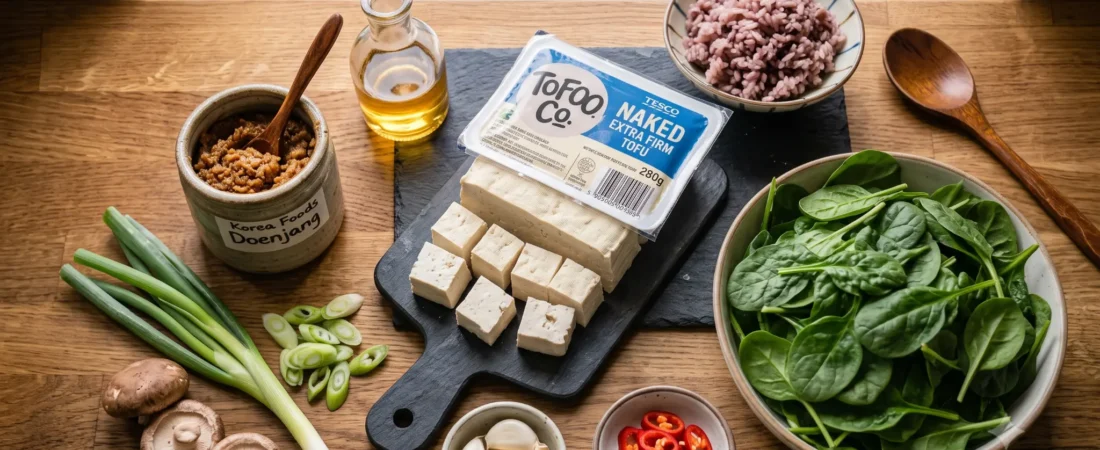
Make an easy Korean tofu soup with Tesco ingredients, doenjang, spinach and mushrooms for a balanced, blood-sugar-friendly weeknight meal.
Key Takeaways
- Balanced Bowl: Tofu, mushrooms and leafy greens create a satisfying soup with plant protein and vegetables, while you control the amount of rice served alongside it.
- Tesco-Friendly Ingredients: Firm tofu, spinach, courgette, mushrooms, garlic and spring onions are easy to find during a regular UK supermarket shop.
- Authentic Korean Flavour: Doenjang gives the broth its characteristic earthy depth. Use it as a concentrated seasoning and adjust the quantity to suit your sodium needs.
A Korean Comfort Bowl for Busy UK Weeknights
It is late, the weather is grey, and a supermarket ready meal feels like the easiest option. But with one block of tofu, a bag of spinach and a few everyday vegetables, you can make something warmer and more satisfying in about 25 minutes.
This Korean tofu soup with Tesco ingredients is inspired by doenjang guk (된장국), an everyday Korean soup seasoned with fermented soybean paste. It is lighter than a thick doenjang jjigae but still has the savoury, earthy flavour that makes Korean home cooking so comforting.
The recipe is also easy to adapt into a blood-sugar-friendly meal. Tofu provides plant protein, mushrooms and spinach add vegetables, and the accompanying carbohydrate portion remains flexible. That final point matters: blood glucose response depends on the whole meal, including the amount and type of carbohydrate eaten—not simply whether one ingredient is described as “low GI.”
Is This Soup Really Low-Glycaemic?
The glycaemic index, or GI, ranks carbohydrate-containing foods according to how quickly they raise blood glucose. Tofu, mushrooms and leafy vegetables contain relatively little available carbohydrate, so they do not contribute the same carbohydrate load as a large serving of white rice, noodles or bread.
However, calling an entire homemade soup “low GI” is not completely precise unless the finished recipe has been formally tested. A more accurate description is blood-sugar-friendly because the soup makes it easy to build a meal around:
- A generous serving of non-starchy vegetables
- Plant protein from tofu
- No added sugar
- A measured portion of rice or another whole grain
- Flavour from fermented seasoning rather than a sweet bottled sauce
Diabetes UK explains that GI can be useful, but portion size, total carbohydrate and the nutritional quality of the entire meal also matter. This means a large bowl of soup with a modest serving of rice may suit some people better than a small bowl accompanied by a large portion of refined noodles.
Individual glucose responses vary. Anyone using insulin or glucose-lowering medication should follow the carbohydrate guidance provided by their healthcare team.
Why Tofu Works So Well in This Soup
Plant Protein Without a Heavy Broth
Tofu is made by coagulating soya milk and pressing the resulting curds into blocks. Its mild flavour allows it to absorb the garlic, mushroom and doenjang broth without requiring cream, butter or meat stock.
The Harvard T.H. Chan School of Public Health describes soy as a nutrient-dense source of plant protein. Depending on the coagulant used, tofu may also contribute calcium, so check the nutrition label if calcium content is important to you.
Protein does not make a meal automatically “blood sugar controlling.” Its practical advantage here is that it helps transform a vegetable soup into a more substantial main meal. Tofu also provides textural contrast: firm tofu stays cubed, while medium or silken tofu produces a softer, more delicate Korean-style bowl.
Choosing the Best Tesco Tofu
For this recipe, The Tofoo Co. Naked Tofu is a convenient choice currently listed by Tesco. It is firm enough to cube without pressing and holds its shape during simmering.
You can also use:
- Extra-firm plain tofu for neat, sturdy cubes
- Standard firm tofu, drained and gently pressed
- Silken tofu for a softer sundubu-inspired texture
Choose unflavoured tofu so that the doenjang remains the main seasoning. Smoked, katsu or pre-marinated varieties will change the character of the broth and may add extra salt, sugar or oil.
Doenjang: The Flavour Foundation
In this soup, doenjang does more than season the broth. Its concentrated, savoury character brings depth to mild ingredients such as tofu, courgette and spinach, allowing you to make a satisfying soup without sweet sauces or multiple stock cubes.
Start with one tablespoon and dissolve it in a small ladleful of warm broth before adding it to the pan. Doenjang varies in saltiness and intensity between brands, so let the vegetables simmer for a few minutes and taste the finished broth before adding more.
For the most authentic flavour, use Korean doenjang from a Korean or East Asian grocery shop. Tesco availability varies, which is why this recipe treats doenjang as a Korean pantry staple and uses Tesco for the fresh tofu and vegetables.
If you are new to Korean fermented seasonings, this guide to 3 Essential Korean Fermented Foods: Kimchi, Doenjang and Gochujang explains how doenjang is made, how it differs from miso and how to choose a suitable product.
Tesco Shopping List
| Ingredient | Suggested amount | Role in the soup |
| Plain firm tofu | 280–300g | Plant protein and texture |
| Baby spinach | 100–150g | Leafy vegetables and colour |
| Chestnut mushrooms | 150g | Savoury depth and texture |
| Courgette | 1 small | Vegetable volume and mild sweetness |
| Spring onions | 2 | Fresh aromatic finish |
| Garlic | 2 cloves | Classic Korean soup flavour |
| Doenjang | 1–1½ tbsp | Fermented soybean seasoning |
| Dried shiitake or dashima | Optional | Simple umami-rich broth |
| Gochugaru | Optional | Warm, gently spicy finish |
| Sesame oil | Optional, ½ tsp | Nutty aroma added at the end |
Product ranges and availability vary by store and delivery area, so check the Tesco website or your local branch before shopping.
Easy Korean Tofu and Spinach Soup
Serves: 2 generous portions
Preparation time: 10 minutes
Cooking time: 15–18 minutes
Ingredients
- 750ml water
- 3 dried shiitake mushrooms or one small piece of dashima, optional
- 1 to 1½ tablespoons Korean doenjang
- 150g chestnut mushrooms, sliced
- 1 small courgette, cut into half-moons
- 280–300g firm tofu, cut into bite-sized cubes
- 2 garlic cloves, finely minced
- 100–150g baby spinach
- 2 spring onions, thinly sliced
- ½ teaspoon gochugaru, optional
- ½ teaspoon toasted sesame oil, optional
Step 1: Make a Quick Vegetable Broth
Place the water and dried shiitake mushrooms in a medium saucepan. Bring to a gentle simmer and cook for approximately 8–10 minutes.
Remove the mushrooms, slice them and return them to the pan. If you use dashima instead, remove it just before the water reaches a full boil. Prolonged hard boiling can make kelp broth taste overly strong or slightly bitter.
No dried mushrooms or dashima? Use plain water. Doenjang, garlic and fresh mushrooms will still create a flavourful broth without a stock cube.
Step 2: Dissolve the Doenjang
Place one tablespoon of doenjang in a ladle or small bowl. Add a little hot broth and stir until loosened, then pour it into the saucepan.
Some Korean cooks press doenjang through a fine sieve for a smoother broth. Others add it directly and retain the small soybean pieces. Both methods work; the choice is primarily about texture.
Taste before adding more. Different doenjang brands vary considerably in saltiness and strength.
Step 3: Cook the Firm Vegetables
Add the chestnut mushrooms and courgette. Simmer gently for 4–5 minutes, until the mushrooms have softened and the courgette is tender but still holds its shape.
Using plenty of vegetables increases the volume and variety of the meal without relying on a large portion of noodles or rice.
Step 4: Add the Tofu and Garlic
Carefully add the tofu cubes and minced garlic. Stir gently so that the tofu does not crumble.
Simmer for another 4–5 minutes. Avoid a vigorous boil: tofu does not require long cooking, and a gentle simmer preserves its soft interior.
Step 5: Add the Spinach Last
Stir in the baby spinach and cook for 30–60 seconds, just until wilted. Finish with the sliced spring onions and optional gochugaru.
Taste the broth before adding any additional salt or soy sauce. Doenjang may already provide all the seasoning required.
If desired, remove the pan from the heat and add ½ teaspoon of toasted sesame oil. A small amount is enough to provide its characteristic nutty aroma.
How to Build a More Balanced Meal
The soup itself is relatively light. What you serve with it determines whether it functions as a starter or a complete meal.
Option 1: Soup with a Measured Rice Portion
Serve each bowl with approximately 80–100g of cooked brown rice, multigrain rice or basmati rice. The best portion will depend on your appetite, activity level and personal carbohydrate needs.
Keeping rice in a separate bowl makes the portion easier to see than adding an unmeasured quantity directly to the soup.
Option 2: Add More Protein
For a higher-protein meal, increase the tofu or add:
- A poached egg
- Shelled edamame
- Cooked prawns
- Shredded cooked chicken
These additions are optional rather than requirements for “flattening” a glucose response. Their main purpose is to create a more satisfying meal that suits different diets and activity levels.
Option 3: Increase the Vegetables
Add pak choi, cabbage, frozen edamame, bean sprouts or broccoli. Use what is already in your fridge rather than treating the ingredient list as rigid.
This flexibility is one of the strengths of Korean home-style soup: the broth provides continuity while seasonal vegetables change.
Easy Adjustments for Different Needs
For a Lower-Sodium Bowl
Start with one tablespoon of doenjang, use water or unsalted mushroom broth, and avoid adding stock cubes, salt and soy sauce automatically. Build flavour with garlic, spring onions, shiitake and gochugaru instead.
For a Gluten-Free Version
Traditional doenjang may contain wheat, and manufacturing methods vary. Check the label carefully and choose a certified gluten-free product if medically required.
For a Spicier Soup
Add ½–1 teaspoon of gochugaru. Unlike many bottled chilli sauces, pure gochugaru generally adds chilli flavour without added sugar, but always check the package ingredients.
For Post-Workout Recovery
After a long run or demanding training session, the soup can provide fluid, vegetables and protein. Add an appropriate serving of rice or another carbohydrate source to replenish energy rather than avoiding carbohydrate completely.
Recovery needs depend on exercise duration and intensity. A short yoga session and a long-distance run do not require identical meals.
Frequently Asked Questions
Q1. Can Korean tofu soup lower blood sugar?
No single soup can be promised to lower or control blood glucose. This recipe is designed to support a balanced eating pattern by combining tofu and non-starchy vegetables while allowing you to manage the type and portion of carbohydrate served alongside it.
Q2. Is doenjang probiotic after cooking?
Doenjang is produced through fermentation, but heating can reduce the number of live microorganisms. Its flavour, soy nutrients and fermentation-derived compounds remain useful culinary features, but a hot bowl of doenjang soup should not automatically be presented as a reliable source of live probiotics.
Q3. Can I use miso instead of doenjang?
Yes, if convenience is the priority, but the flavour will be milder and less earthy. Begin with a similar amount and adjust after tasting. For cultural accuracy, describe the finished dish as Korean-inspired miso tofu soup rather than traditional doenjang guk.
K-Well’s Final Thoughts
This Tesco-friendly tofu soup is valuable because it makes balanced home cooking feel achievable. A few supermarket vegetables, a plain block of tofu and one traditional Korean seasoning become a warm meal in less time than many ready meals take to heat and serve.
Its blood-sugar-friendly quality comes from the structure of the whole bowl: plentiful vegetables, tofu-based protein, no sweet sauce and a carbohydrate portion chosen to match the individual. That is a more useful and sustainable approach than expecting one “superfood” ingredient to control glucose on its own.
Start with the basic version, then make it yours. Add mushrooms for deeper umami, gochugaru for warmth or a small bowl of multigrain rice when you need a more substantial dinner.
Read Next
Explore the flavours and everyday uses of kimchi, doenjang and gochujang in 3 Essential Korean Fermented Foods.
References
- Diabetes UK. Glycaemic Index and Diabetes. https://www.diabetes.org.uk/living-with-diabetes/eating/carbohydrates-and-diabetes/glycaemic-index-and-diabetes
- Diabetes UK. Carbohydrates and Diabetes. https://www.diabetes.org.uk/living-with-diabetes/eating/carbohydrates-and-diabetes
- Harvard T.H. Chan School of Public Health. Straight Talk About Soy. https://nutritionsource.hsph.harvard.edu/soy/
- National Health Service (NHS). What Is the Glycaemic Index (GI)? https://www.nhs.uk/common-health-questions/food-and-diet/what-is-the-glycaemic-index-gi/
This article provides general food and lifestyle information and is not a substitute for personalised medical or dietary advice.