
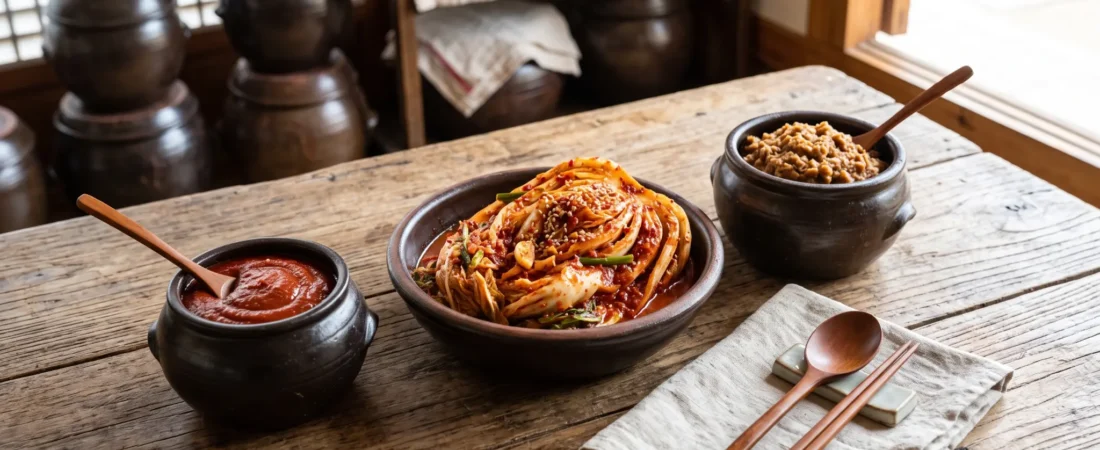
Explore kimchi, Doenjang and Gochujang, what makes each one unique, and practical ways to enjoy them in everyday UK meals.
Key Takeaways
- Fermentation-Driven Variety: These traditional foods contain fermentation-derived compounds and can add greater flavour and variety to everyday meals.
- Easy Everyday Uses: Enjoy kimchi as a side dish, stir Doenjang into soups and dressings, or use a small amount of Gochujang in grain bowls and marinades.
- UK Kitchen Friendly: All three ingredients are increasingly available from UK supermarkets and Korean grocers, making them practical additions to a modern home kitchen.
What Makes a Food Fermented?
Fermentation is a traditional food-making process in which microorganisms such as bacteria, yeasts or molds transform ingredients over time. As they interact with the natural carbohydrates and proteins in food, they produce acids, aromas and savoury compounds that influence flavour, texture and shelf life.
In Korean cooking, fermentation gives each ingredient a distinct character. Kimchi develops its refreshing acidity as seasoned vegetables ferment, while Doenjang gains its deep, earthy flavour from fermented soybeans. Gochujang combines fermented soybean ingredients with chilli and grain to create its characteristic balance of sweetness, heat and savoury depth.
Fermentation can also change the composition of food by breaking down some of its carbohydrates and proteins and producing new compounds. However, the result varies according to the ingredients, microorganisms, fermentation time and production method. This is why traditionally prepared and commercially manufactured versions of the same Korean food may differ in flavour, texture and nutritional composition.
Some fermented foods may contain live microorganisms when eaten, particularly refrigerated products that have not been pasteurised. Others are heat-treated or cooked before serving. Whether or not live microbes remain, kimchi, Doenjang and Gochujang can still bring distinctive flavour and greater variety to everyday meals.
New to Korean seasonings? This Korean pantry essentials guide for UK beginners explains how to choose and use Gochujang, Doenjang, sesame oil and other everyday staples.
1. Kimchi: Fermented Vegetables with Tang and Crunch
Kimchi is a category of seasoned fermented vegetables rather than one recipe. Napa cabbage kimchi is the best-known variety, but Korean cooking also includes radish, cucumber, spring onion and water-based kimchi.
Typical cabbage kimchi contains napa cabbage, radish, garlic, ginger, spring onion, chilli flakes and salt. Traditional versions may include fish sauce or salted seafood, while vegan products use plant-based seasoning.
What Happens During Fermentation?
Lactic acid bacteria use available carbohydrates and produce acids that contribute to kimchi’s sour flavour and preservation. The microbial community changes as fermentation progresses, so a fresh jar can taste crisp and mild before becoming softer and more acidic.
As a vegetable-based dish, kimchi is an easy way to introduce extra dietary fibre and plant diversity into your diet. Fermentation also produces organic acids and other compounds that shape its distinctive flavour. Researchers continue to study how kimchi and its microorganisms may relate to digestive health, although the results can vary according to the type of kimchi, how it is produced and the amount consumed.
How to Choose Kimchi in the UK
- Storage: Choose refrigerated kimchi if live cultures matter to you, although refrigeration does not prove probiotic benefit.
- Pasteurisation: Look for “unpasteurised” or “not heat treated” when stated.
- Allergens: Check for fish, crustaceans, molluscs and soya.
- Vegan suitability: Use a vegan label rather than judging from appearance.
- Salt and sugar: Compare nutrition panels between similar products.
Easy Ways to Use It
- Serve one or two tablespoons beside rice, eggs, tofu or grilled vegetables.
- Add chopped kimchi to a grain bowl after the hot ingredients cool slightly.
- Use mature, sour kimchi in fried rice, pancakes or stew.
- Drain very wet kimchi before adding it to the wraps.
K-Well’s Tip: Start with a small serving if the fermented or spicy foods are new to you. Increase it according to taste and comfort rather than following a fixed daily target.
If you have a jar of mature, sour kimchi to use up, try this Crispy Oil-Free Kimchi Jeon recipe for another practical way to enjoy it.
2. Doenjang: A Deeply Savoury Soybean Paste
Doenjang (된장) is a Korean fermented soybean paste with an earthy, salty flavour. It is used in soups, stews, dressings and dipping sauces.
Traditional and commercial Doenjang can differ considerably. Traditional Doenjang is commonly made from fermented soybean blocks called Meju, while many commercial varieties use controlled starter cultures and may include wheat or other grains. These differences can affect the paste’s flavour, colour, texture and saltiness.
As Doenjang is a concentrated seasoning, a small amount can add plenty of savoury depth to soups, stews and sauces. It contains soya and may also contain wheat or alcohol, so check the ingredient and allergen information before buying.
Doenjang, Miso and Ssamjang Are Different
| Product | General flavour | Common use |
| Doenjang | Robust, earthy and salty | Korean soups, stews and sauces |
| Miso | Often milder or sweeter | Japanese soups, dressings and marinades |
| Ssamjang | Seasoned and slightly spicy | Lettuce wraps and dipping |
Miso can substitute when Doenjang is unavailable, but the dish will taste different. Ssamjang usually contains Doenjang, Gochujang and additional seasonings, so it is not a direct replacement.
Learn how Doenjang and Gochujang come together in this beginner’s guide to Korean BBQ Ssam.
Shopping and Cooking Tips
- Check the allergen statement for soya and wheat.
- Compare salt per 100g and consider the quantity used.
- Check for alcohol if it affects your dietary choices.
- Refrigerate after opening when instructed.
- Add a small spoonful to tofu and vegetable soup, or thin it with lemon juice, sesame oil and water for a dressing.
K-Well’s Tip: Taste before adding soy sauce or salt. Doenjang may already provide enough seasoning.
3. Gochujang: Sweet, Spicy and Fermented
Gochujang (고추장) is a thick Korean chilli paste traditionally made with red chilli powder, grain, fermented soybean ingredients and salt. Fermentation contributes to its complex savoury character, while chilli and grain create its distinctive balance of heat and sweetness.
Its bold, concentrated flavour means that a small amount can add depth to marinades, dipping sauces, dressings and rice bowls. Heat, sweetness and saltiness vary between brands, so compare the labels, begin with a small spoonful and adjust according to the dish and your taste.
How to Choose Gochujang
- Heat: Start with mild or medium if Korean chilli paste is new to you.
- Sugar: Compare products if glucose syrup, rice syrup or sugar matters to you.
- Salt: Remember that added soy sauce increases the total.
- Allergens: Many brands contain soya and wheat; verify gluten-free claims on the label.
- Pack size: Buy a small tub for occasional use.
Easy Ways to Use It
- Stir one teaspoon into a Bibimbap-style bowl, then adjust after tasting.
- Mix with rice vinegar, sesame oil and water for a dressing.
- Combine with yoghurt or a plant-based alternative for a milder dip.
- Use a thin layer in a marinade for tofu, chicken, salmon or cauliflower.
Anyone who experiences discomfort after spicy food may prefer a smaller amount or a non-spicy sauce. Individual tolerance matters more than assuming chilli is universally beneficial or harmful.
Looking for an easy way to use Gochujang? Try this Tesco-ingredient Bibimbap bowl with vegetables, tofu and a simple chilli-paste dressing.
Kimchi vs Doenjang vs Gochujang
| Food | Main base | What it adds | Check before buying | Easy first use |
| Kimchi | Fermented vegetables | Vegetables, fibre, acidity and crunch | Salt, seafood allergens and processing | Small side dish |
| Doenjang | Fermented soybeans | Deep savoury flavour | Soya, possible wheat and salt | Add to soup |
| Gochujang | Chilli, grain and fermented soy | Heat, sweetness and seasoning | Sugar, salt, soya and possible wheat | Mix into dressing |
Are Korean Fermented Foods Good for Gut Health?
Fermented foods are an active area of nutrition research. Fermentation changes flavour, texture and chemical composition, and some products contain live microorganisms. Health effects, however, cannot be assumed from the word “fermented” alone.
The wider meal matters. Kimchi served with vegetables, protein and rice forms a different dietary pattern from a large quantity of salty sauce added to a low-variety meal. Fibre intake, overall food variety, hydration and individual needs also influence digestive health.
The realistic advantage of these staples is that they can make vegetables, tofu, grains and home-cooked meals more enjoyable. This can support dietary variety without exaggerated claims about detoxification, inflammation or disease prevention.
A Simple Three-Day Tasting Plan
Day 1: Kimchi Side Dish
Serve a small portion with rice, tofu and cucumber. Taste its spice, sourness and saltiness before adding other sauces.
Day 2: Doenjang Soup
Use a small spoonful in soup with tofu, mushrooms and courgette. Taste before adding salt.
Day 3: Gochujang Dressing
Thin Gochujang with rice vinegar and water, then add a little sesame oil. Spoon it over a grain and vegetable bowl.
This approach helps you learn what each ingredient contributes instead of treating the foods as interchangeable supplements.
Storage and Food-Safety Tips
- Follow the storage directions on the packaging and use clean utensils.
- Keep kimchi submerged in its liquid where practical and close the container securely.
- Open actively fermenting kimchi carefully because pressure may build.
- Do not rely on smell alone to judge safety.
- If unexpected mold appears, discard the product rather than scraping the surface.
FAQ
Q1. Does cooking kimchi remove all of its value?
No. Heat reduces or kills live microorganisms, but cooked kimchi can still contribute vegetables, fibre and flavour. Eat it raw for its fresh texture or cook it when the recipe calls for it.
Q2. Is every unpasteurised fermented food probiotic?
No. Unpasteurised products may contain live microorganisms, but “probiotic” requires evidence for specific microorganisms in an adequate amount.
Q3. Are shop-bought versions worth using?
Yes. Compare labels for allergens, salt, sugar, pasteurisation and storage rather than judging quality from marketing terms alone.
Q4. How much should I use?
There is no universal serving. Kimchi can be a small side dish, while Doenjang and Gochujang are concentrated seasonings generally added by the teaspoon or tablespoon across a recipe.
Q5. What if I need to limit salt?
All three foods can contribute meaningful amounts of salt. Compare labels, keep portions modest and seek personalised professional advice if you follow a sodium-restricted diet. The NHS advises adults to consume no more than 6g of salt per day from all sources.
K-Well’s Final Thoughts
Kimchi, Doenjang and Gochujang offer different introductions to Korean fermentation. Kimchi brings sourness and vegetable texture, Doenjang provides an earthy soybean flavour, and Gochujang adds sweet heat.
Their value does not depend on presenting them as miracle foods. Used thoughtfully, they can make vegetables, tofu, grains, eggs, fish or meat more enjoyable and bring greater variety to home cooking.
Start with one product, read the label and learn how it changes a familiar meal. A small amount used well is more useful than forcing a daily serving for a promised health effect.
References
- Marco, M. L., Heeney, D., Binda, S., et al. (2017). Health benefits of fermented foods: microbiota and beyond. Current Opinion in Biotechnology, 44, 94–102. https://pubmed.ncbi.nlm.nih.gov/27998788/
- Marco, M. L., Sanders, M. E., Gänzle, M., et al. (2021). The International Scientific Association for Probiotics and Prebiotics consensus statement on fermented foods. Nature Reviews Gastroenterology & Hepatology, 18, 196–208. https://pubmed.ncbi.nlm.nih.gov/33398112/
- National Health Service (NHS). Salt in your diet. https://www.nhs.uk/live-well/eat-well/food-types/salt-in-your-diet/
- Park, K. Y., Jeong, J. K., Lee, Y. E., & Daily, J. W. (2014). Health benefits of kimchi (Korean fermented vegetables) as a probiotic food. Journal of Medicinal Food, 17(1), 6–20. https://pubmed.ncbi.nlm.nih.gov/24456350/
- Tamang, J. P., Shin, D. H., Jung, S. J., & Chae, S. W. (2016). Functional properties of microorganisms in fermented foods. Frontiers in Microbiology, 7, 578. https://doi.org/10.3389/fmicb.2016.00578
Health and Safety Note: This article provides general food and nutrition information and is not medical advice. Speak with a qualified healthcare professional or registered dietitian about digestive symptoms, allergies or a medically prescribed diet.