
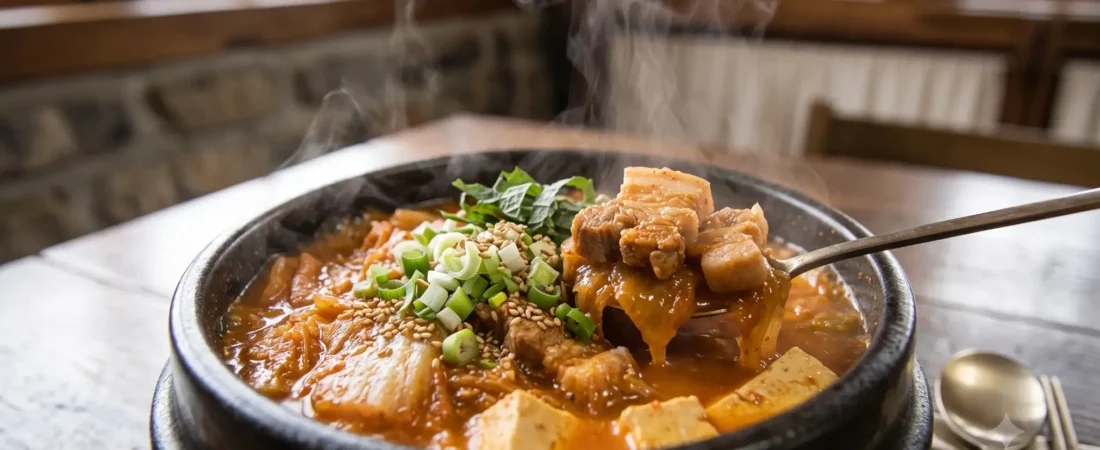
Kimchi jjigae (김치찌개) is one of Korea’s best-loved comfort foods. Ripe kimchi, tofu and vegetables simmer together to create a warming stew with plenty of savoury depth, gentle acidity and chilli heat.
Because kimchi already contributes salt and seasoning, a flavourful pot does not need stock cubes, repeated splashes of soy sauce or large amounts of added salt. This recipe uses well-fermented kimchi in a measured portion, then builds extra flavour with onion, garlic, dried shiitake mushrooms, dashima and gochugaru.
The result is a lighter, lower-sodium approach that keeps the character of traditional kimchi jjigae while adding tofu and vegetables for a more balanced everyday meal.
Key Takeaways
- Let Kimchi Lead the Seasoning: Ripe kimchi provides acidity, chilli and savoury flavour, reducing the need for several salty condiments.
- Build Natural Umami: Dashima, dried shiitake mushrooms, onion and garlic create a satisfying broth without a commercial stock cube.
- Add Tofu and Vegetables: Tofu, courgette and onion make the stew more substantial while bringing protein, fibre and varied texture to the bowl.
What Is Kimchi Jjigae?
Kimchi jjigae is a Korean stew made by simmering fermented kimchi with a protein and a small amount of broth. Pork and tofu are familiar additions, while tuna, dried shiitake mushrooms and other vegetables are also used in home kitchens.
The best kimchi for jjigae is well fermented and noticeably sour. As it simmers, its sharpness softens and spreads through the broth, producing the deep flavour associated with the dish. Fresh kimchi can still be used, but it will create a milder and less developed stew.
Kimchi jjigae is usually served bubbling hot with rice and several side dishes. For a simple everyday meal, pair one bowl with a moderate portion of rice and a fresh vegetable side.
Why Make a Lower-Sodium Version?
The NHS recommends that adults consume no more than 6g of salt per day, including the salt already present in packaged foods and the salt added during cooking. Kimchi brands vary considerably, so checking and comparing the nutrition labels is the most practical starting point.
This recipe concentrates on flavour rather than simply adding more seasoning. Using a measured amount of kimchi and kimchi juice gives you better control, while aromatic vegetables, dried shiitake mushrooms and chilli provide additional depth.
K-Well’s Tip: Taste the finished broth before adding any kimchi juice. Well-fermented kimchi may already provide enough salt, acidity and depth for the whole pot.
How to Keep the Flavour Rich
Start with Ripe Kimchi
Ripe kimchi has a pleasantly sour aroma and softer texture. Its developed flavour becomes rounder during simmering and gives the stew a fuller base without requiring several extra condiments.
Use Dried Shiitake Mushrooms and Dashima
Dried shiitake mushrooms and dashima bring complementary savoury flavours to the cooking water. This simple combination works especially well with tofu and makes commercial stock unnecessary.
Remove the dashima after a short, gentle simmer to keep the broth clean. Slice the softened dried shiitake mushrooms and return them to the stew so they become part of the finished meal.
Add Aromatic Vegetables
Onion becomes naturally sweet as it cooks, while garlic and spring onion bring freshness and aroma. Gochugaru strengthens the Korean chilli flavour without adding the salt found in many prepared sauces.
Choose a Satisfying Protein
Firm tofu absorbs the seasoned broth and makes the dish substantial without overwhelming the kimchi. Lean pork can also be included for a more traditional variation, but tofu works well as the main protein in a plant-based version.
UK Shopping Guide
Kimchi is available from Korean grocers such as H Mart and Oseyo as well as the chilled world-food sections of some larger Tesco, Sainsbury’s and Waitrose branches. Choose a cabbage kimchi with a flavour and spice level you enjoy, then compare the salt or sodium value per 100g between products.
For a vegan stew, check that the kimchi contains no fish sauce, salted shrimp or other seafood ingredients. Firm tofu, courgette, onion and spring onions are widely available in UK supermarkets. Dried shiitake mushrooms and dashima, used to make the savoury broth, are most reliably found in Korean or East Asian grocery shops.
If you are new to these seasonings, 7 Essential Korean Pantry Staples for Beginners in the UK explains how to recognise gochugaru, soy sauce, sesame oil and other useful ingredients.
Easy Lower-Sodium Kimchi Jjigae Recipe
Serves: 2
Preparation: 10 minutes
Cooking: 25 minutes
Ingredients
- 180g well-fermented cabbage kimchi, roughly chopped
- Up to 1 tablespoon kimchi juice, added only after tasting
- 200g firm tofu, drained and cut into thick rectangles
- ½ courgette, sliced into half-moons
- ½ medium onion, thinly sliced
- 2 spring onions, sliced diagonally
- 1 garlic clove, minced
- 1 teaspoon gochugaru, adjusted to taste
- 1 teaspoon toasted sesame oil or neutral cooking oil
- 600ml water
- 2 dried shiitake mushrooms
- 1 small piece of dashima, approximately 5cm square
- 100g lean pork, thinly sliced (optional)
Method
1. Make the Simple Umami Broth
Place the dried shiitake mushrooms and dashima in a heatproof bowl or saucepan. Pour over 600ml of freshly boiled water, cover and leave to infuse for 15–20 minutes.
Remove the dashima, then take out the softened shiitake mushrooms and slice them for the stew. Use the infused water as the broth, pouring it carefully to leave behind any sediment.
Alternatively, place the water, dried shiitake mushrooms and dashima in a saucepan. Simmer gently for five minutes, remove the dashima and continue simmering the mushrooms for another five minutes. Slice the softened mushrooms and reserve them for the stew.
2. Cook the Kimchi and Onion
Heat the oil in a medium saucepan or ttukbaegi over medium heat. Add the kimchi and onion and cook for four to five minutes, stirring regularly, until the onion begins to soften.
If using pork, add it with the kimchi and cook until the outside is no longer pink. Add the garlic and gochugaru during the final 30 seconds so they become fragrant without catching on the bottom.
3. Simmer the Stew
Pour in the prepared shiitake broth and add the sliced, rehydrated shiitake mushrooms. Bring to the boil, then reduce the heat and simmer gently for 12–15 minutes.
This gives the kimchi time to soften and distribute its flavour throughout the broth.
4. Add the Tofu and Vegetables
Add the tofu and courgette. Simmer for another five minutes, gently spooning some broth over the tofu rather than stirring vigorously.
Taste the broth. If it needs a little more acidity or seasoning, add the reserved kimchi juice one teaspoon at a time.
5. Finish and Serve
Add most of the spring onion and simmer for one final minute. Divide the stew between two bowls and finish with the remaining spring onion.
Serve with a modest portion of rice or Korean multigrain rice (Japgokbap) and a fresh cucumber or leafy vegetable side.
K-Well’s Flavour Tip: Allow the kimchi and onion to cook together before adding the broth. This softens the kimchi’s acidity and develops a rounder flavour without extra salty seasoning.
Easy Ingredient Variations
- Add enoki mushrooms during the final two minutes for a delicate texture.
- Use lean pork loin or tinned tuna in spring water instead of tofu.
- Add extra tofu and sliced, rehydrated shiitake mushrooms for a fully plant-based main course.
- Increase the gochugaru for more chilli flavour without adding another sauce.
- Add a small handful of bean sprouts just before serving for a fresh crunch.
When using tinned tuna, check the label and choose a lower-salt product where available. Drain it before adding it near the end of cooking.
Does Rinsing Kimchi Reduce the Salt?
Rinsing kimchi may remove some surface seasoning, but it also washes away much of the chilli, garlic and fermented flavour that makes the stew distinctive. A better approach for this recipe is to select a lower-salt product, measure the kimchi and control how much brine enters the pot.
Pressing the kimchi lightly against the side of its container is enough to prevent a large amount of brine from entering accidentally. Keep a spoonful of the juice nearby and add it gradually only if the finished broth needs it.
Nutritional Benefits of This Bowl
Tofu contributes plant protein, while kimchi, dried shiitake mushrooms, courgette and onion add a variety of vegetables to the meal. These ingredients also supply fibre and nutrients including potassium.
Potassium supports normal muscle function and fluid balance as part of an overall varied diet. The most useful approach is to combine potassium-containing vegetables and tofu with thoughtful control of salty ingredients, rather than depending on one food to offset another.
Kimchi still contributes fermentation-developed flavours and compounds after cooking. If you also want to enjoy live cultures, serve a small portion of unheated kimchi separately, choosing an unpasteurised product that contains live cultures at the point of consumption.
Storage and Reheating
Allow leftover stew to cool, transfer it to a covered container and refrigerate it within two hours. Use it within two days.
Reheat in a saucepan until steaming hot throughout. Add a small splash of water if the broth has thickened, and prepare fresh rice separately. The tofu will absorb more flavour during storage, while the courgette will become softer.
FAQ
Q1. Is Kimchi Jjigae Naturally High in Salt?
Kimchi contributes salt to the stew, and the amount varies between brands and recipes. Using water or an unsalted homemade broth, measuring the kimchi juice and avoiding unnecessary salty condiments makes the overall seasoning easier to control.
Q2. Can I Make This Recipe Vegan?
Yes. Omit the pork, use tofu and dried shiitake mushrooms, and choose kimchi made without fish sauce, salted shrimp or other seafood ingredients.
Q3. Do I Need Dried Shiitake Mushrooms and Dashima for the Umami Broth?
No, they are optional. Ripe kimchi, onion, garlic and gochugaru can create a flavourful broth with plain water. However, dried shiitake mushrooms and dashima add extra savoury depth, helping the stew taste fuller.
Q4. What Rice Goes Well with Kimchi Jjigae?
White rice offers a soft, neutral contrast to the spicy stew. Japgokbap adds whole grains, varied texture and extra fibre. Either can be enjoyed in a portion that suits the rest of the meal.
K-Well’s Final Thoughts
A satisfying kimchi jjigae does not need a long list of seasonings. Ripe kimchi, dried shiitake mushrooms, dashima and aromatic vegetables can create a broth that feels warming, savoury and distinctly Korean.
By measuring the kimchi juice, leaving out commercial stock and adding generous tofu and vegetables, you can make a lower-sodium version that fits naturally into everyday home cooking without losing the comfort of the original dish.
Read Next
- Crispy Oil-Free Kimchi Jeon: Healthy Korean Pancake Recipe
- 3 Essential Korean Fermented Foods: Kimchi, Doenjang and Gochujang
- What Is Japgokbap? Korean Multigrain Rice Guide
References
- American Heart Association (AHA). How to Reduce Sodium in Your Diet. https://www.heart.org/en/healthy-living/healthy-eating/eat-smart/sodium/how-to-reduce-sodium
- Harvard T.H. Chan School of Public Health. Potassium. https://nutritionsource.hsph.harvard.edu/potassium/
- National Health Service (NHS). Salt in Your Diet. https://www.nhs.uk/live-well/eat-well/food-types/salt-in-your-diet/
- U.S. Department of Agriculture (USDA), Agricultural Research Service. FoodData Central. https://fdc.nal.usda.gov/