Discover samgyetang benefits, Korean summer food traditions and how chicken, rice and broth can form a nourishing post-workout meal.
🌟 Key Takeaways
- Recovery Nutrition: Chicken supplies complete protein, while rice provides carbohydrates that can help replenish energy after demanding exercise.
- Korean Food Heritage: Samgyetang is traditionally enjoyed during Korea’s hottest summer days as a nourishing meal intended to restore appetite and energy.
- Ginseng-Powered Tradition: Korean ginseng gives samgyetang its signature earthy flavour while adding naturally occurring ginsenosides, compounds widely studied in relation to energy, immune function and metabolic health.
Why Koreans Eat Hot Chicken Soup in Summer
A steaming bowl of chicken soup may not be the first meal that comes to mind on the hottest day of the year. In Korea, however, summer is exactly when samgyetang (삼계탕) becomes especially popular.
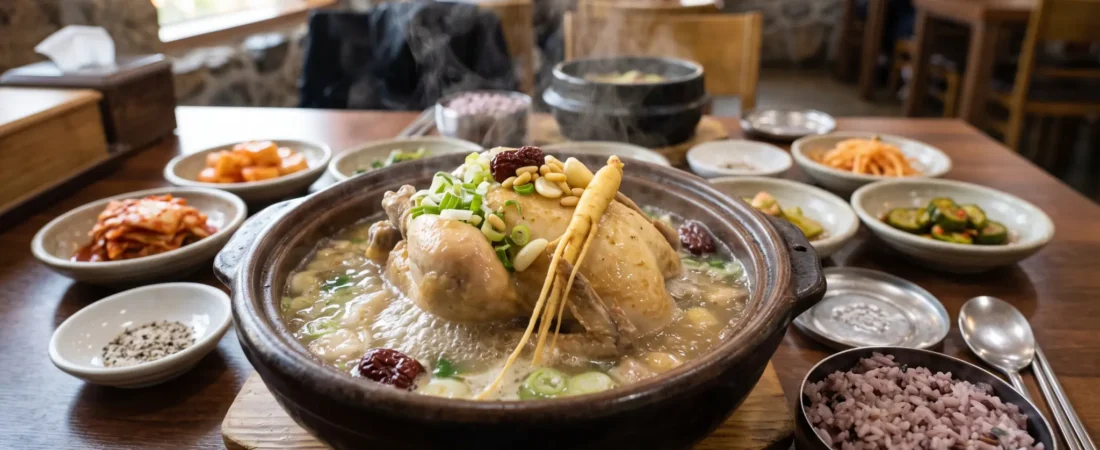
Samgyetang is made by simmering a small whole chicken with glutinous rice, garlic, jujubes and Korean ginseng. The chicken becomes tender, the rice thickens the broth, and the aromatics produce a mild yet deeply comforting flavour.
The dish is traditionally associated with sambok, the three hottest periods of the Korean summer: chobok(초복), jungbok(중복) and malbok(말복). This reflects the Korean expression iyeol chiyeol (이열치열), meaning “fight heat with heat.” The idea is that a warm, nourishing dish can restore appetite and energy during hot, exhausting weather.
The Korea Tourism Organization describes samgyetang as a signature summer meal made by stuffing a young chicken with ingredients such as ginseng, garlic, jujube and glutinous rice.
Today, the dish also fits naturally into an active lifestyle. Its combination of broth, chicken and rice provides fluid, protein and carbohydrate—the three components many runners and gym-goers look for after a challenging workout.
That does not mean samgyetang is a medicinal cure or a guaranteed recovery food. Its value lies primarily in its practical nutritional composition and its place within a balanced diet.
What Is Samgyetang?
The name explains the dish:
- Sam (삼) refers to ginseng.
- Gye (계) refers to chicken.
- Tang (탕) means soup or broth.
Traditional samgyetang usually contains a small young chicken for each person. The cavity is filled with soaked glutinous rice, garlic, jujube and a piece of fresh or dried ginseng root. The chicken is then slowly simmered until tender.
Unlike many intensely seasoned Korean stews, samgyetang has a clean and relatively delicate flavour. Salt and pepper are often served separately, allowing each diner to season the soup at the table.
The ginseng provides an earthy, slightly bitter note. Jujubes add a gentle fruitiness, while garlic becomes mellow and soft during cooking. As the glutinous rice cooks inside the chicken, it absorbs the broth and creates a creamy texture without dairy.
The Real Nutritional Benefits of Samgyetang
1. Chicken Provides Complete Protein
Chicken is the main nutritional foundation of samgyetang. It supplies complete protein, meaning that it contains all nine essential amino acids.
Protein contributes to the maintenance and growth of muscle tissue. After exercise, it provides amino acids that the body can use as part of its normal muscle-repair process.
The British Dietetic Association explains that physically active people need adequate energy, carbohydrate and protein, distributed throughout the day. Simply consuming an excessive amount of protein at one meal does not automatically produce faster recovery.
Samgyetang works well because it presents protein as part of a complete meal rather than as an isolated supplement. The rice supplies carbohydrate, the broth contributes fluid, and vegetables can be served alongside it.
Remove some or all of the chicken skin before eating if you prefer a lighter bowl. Leaving the skin on during cooking can still help produce a fuller-flavoured broth.
2. Rice Helps Replenish Exercise Fuel
Glutinous rice—also called sticky rice—is traditionally placed inside the chicken. Despite its name, it does not contain gluten. “Glutinous” refers to its sticky cooked texture.
Carbohydrate is an important fuel for working muscles, particularly during prolonged or high-intensity exercise. Following a long run, cycle or demanding gym session, including carbohydrate in the recovery meal helps replenish glycogen used during training.
The rice therefore has a genuine purpose beyond tradition and texture. It turns the soup into a more complete source of post-exercise energy.
The appropriate quantity depends on the session:
- After light yoga or a short walk: the traditional small filling may be sufficient.
- After a moderate gym session: serve the chicken with its rice and vegetables.
- After a long endurance run: add a separate portion of rice, potatoes or another carbohydrate source if needed.
This flexible approach is more useful than automatically labelling rice as either “good” or “bad.” Recovery requirements change according to exercise duration, intensity, body size and the timing of the next training session.
If you are interested in other ways to replenish your energy after running, a demanding workout, or any particularly active day, take a look at 3 Nourishing Korean Post-Run Meals for Better Recovery. It offers more Korean-inspired meal ideas to complement your post-exercise routine.
3. Warm Broth Makes the Meal Easy to Eat
Broth contributes fluid and can make protein-rich food more appealing when appetite is reduced after strenuous exercise or hot weather.
However, samgyetang should not be described as a complete electrolyte-replacement drink. The mineral and sodium content varies considerably according to the recipe and how much salt is added. People who have completed a long, sweaty endurance session may need additional fluid and electrolytes according to their individual needs.
For most recreational workouts lasting less than an hour, water and a balanced meal are usually sufficient. The soup is best understood as a hydrating food rather than a precisely formulated sports drink.
4. Garlic and Jujube Add Flavour and Variety
Whole garlic cloves soften during simmering and add savoury sweetness without the sharpness of raw garlic. Garlic contains organosulphur compounds, but the amount used in one bowl should not be presented as an immune treatment.
Dried jujubes, known as daechu (대추) in Korean, provide subtle sweetness and cultural authenticity. They are used in many Korean teas, broths and celebratory foods.
Jujubes do contain natural sugars, but the two or three fruits typically used in an entire pot contribute a relatively modest amount. Their main role in samgyetang is flavour rather than delivering a concentrated health effect.
Does Korean Ginseng Boost Immunity?
Korean ginseng, or Panax ginseng, has a long history of use in Korean food culture and traditional herbal practice. Its characteristic compounds are known as ginsenosides.
The research has examined how ginseng preparations may interact with immune signalling, fatigue and metabolic health. However, those findings do not mean that the small piece of ginseng root used in a pot of samgyetang will prevent infections or noticeably “boost” immunity.
The immune system is a complex network rather than a single function that can easily be increased. Adequate nutrition, sleep, physical activity, stress management and vaccination all contribute to normal immune health.
The US National Center for Complementary and Integrative Health reports that research into Asian ginseng and respiratory infections remains limited. It also states that most research has not shown an improvement in athletic performance.
For this reason, the strongest evidence-based description is:
Ginseng gives samgyetang its traditional identity and distinctive earthy flavour, while its wider health effects remain an active area of research.
This still allows the article to celebrate ginseng without presenting the ingredient as medicine.
Curious about Korean ginseng? Check out Korean Red Ginseng: Benefits, Traditional Uses and What the Research Says for a closer look at its health benefits and role in Korean wellness traditions.
Can Ginseng Speed Post-Workout Recovery?
Current evidence does not show that ginseng independently speeds muscle recovery.
The US NIH Office of Dietary Supplements notes that studies of Panax ginseng have generally not found meaningful improvements in exercise performance, oxygen consumption, time to exhaustion or recovery from intense activity.
The recovery value of samgyetang instead comes from the whole dish:
| Ingredient | Practical recovery role |
| Chicken | Provides protein and essential amino acids |
| Glutinous rice | Supplies carbohydrate for energy replenishment |
| Broth | Contributes fluid and makes the meal easy to eat |
| Garlic and spring onion | Add flavour and plant-food variety |
| Ginseng and jujube | Provide traditional flavour and cultural character |
Samgyetang can be a well-structured recovery meal without requiring ginseng to act as an ergogenic supplement.
Easy UK Samgyetang Recipe
Serves: 2
Preparation time: 20 minutes, plus soaking
Cooking time: 60–75 minutes
Ingredients
- 1 small whole chicken, approximately 1–1.2kg
- 100g glutinous rice
- 8–10 whole garlic cloves, peeled
- 2–3 dried Korean jujubes
- 1 small fresh ginseng root or 2–3 thin pieces of dried Korean ginseng
- 1.5–2 litres water
- 2 spring onions, thinly sliced
- Salt and ground black pepper, served separately
Optional additions:
- 1 small piece of fresh ginger
- 2 peeled chestnuts
- A small handful of sliced leek
- Cooked brown rice or multigrain rice served separately
Where to Find the Ingredients in the UK
A standard Tesco shop should provide the chicken, garlic, spring onions and ordinary rice. Glutinous rice, Korean jujubes and whole ginseng root are more reliably found at H Mart, Oseyo, Korea Foods or another East Asian grocery shop.
Look for Panax ginseng or Korean ginseng rather than products labelled Siberian ginseng. Siberian ginseng is a different plant and does not provide the traditional flavour expected in samgyetang.
If fresh ginseng is unavailable, use a small amount of dried root. Avoid replacing it with a concentrated sweetened ginseng drink because it will alter both the flavour and sugar content of the soup.
💡 K-Well’s Tip: Alternatively, single-use samgyetang herbal ingredient packs can be purchased online.
Step 1: Soak the Rice
Rinse the glutinous rice until the water becomes mostly clear. Cover it with fresh water and soak for at least one hour, then drain.
Soaking helps the rice cook more evenly inside the chicken.
Step 2: Prepare the Chicken
Remove any giblets from the cavity and trim away visible excess fat near the opening. Pat the chicken dry.
UK food-safety guidance advises against washing raw chicken because splashing water can spread bacteria around the sink and nearby surfaces.
Step 3: Fill the Cavity
Loosely fill the chicken with approximately two-thirds of the soaked rice, half the garlic, one jujube and the ginseng.
Do not pack the cavity tightly. The rice needs room to expand as it cooks. Keep the remaining rice and aromatics for the broth.
Cross the legs or secure the opening with kitchen string if necessary.
Step 4: Simmer Gently
Place the chicken in a pot that holds it snugly. Add the remaining garlic, rice, jujubes and enough water to cover most of the chicken.
Bring the water to a boil, skim off any foam, then reduce the heat. Cover partially and simmer gently for 60–75 minutes.
The cooking time will depend on the chicken’s size. Check that the meat is thoroughly cooked, with no pink meat remaining, and that the thickest part reaches a safe internal temperature.
Step 5: Season at the Table
Transfer the chicken and broth to bowls. Scatter over the spring onions and serve salt and black pepper separately.
This traditional serving style lets each person control the seasoning. It is especially helpful because the chicken and broth may already have plenty of flavour after slow cooking.
💡 K-Well’s Tip: A pressure cooker can be utilized as a time-saving alternative.
Turning Samgyetang into a Balanced Recovery Meal
Samgyetang contains protein, carbohydrate and fluid, but it is relatively low in colourful vegetables. Complete the meal with one or two simple Korean-style sides:
- Blanched spinach seasoned with sesame seeds
- Cucumber salad with rice vinegar
- Steamed broccoli or pak choi
- Shredded cabbage with a light sesame dressing
- A small serving of kimchi, if its sodium and spice suit you
After a longer run, serve more rice alongside the soup. Following a lighter yoga session, prioritise the chicken, broth and vegetables and keep the rice portion modest.
Who Should Be Careful with Ginseng?
Food-level quantities are different from concentrated ginseng supplements, but ginseng is still a biologically active herb.
According to the NCCIH, Asian ginseng may interact with medicines, affect blood clotting or influence blood glucose. It may not be suitable during pregnancy or breastfeeding, and insomnia is a commonly reported side effect of supplements.
Consult a qualified healthcare professional before using ginseng regularly if you:
- Take anticoagulant or antiplatelet medication
- Use diabetes medication
- Have an autoimmune condition
- Are pregnant or breastfeeding
- Take prescription medicines that may interact with herbal products
For a ginseng-free version, make Korean chicken and rice soup with garlic, jujube and spring onions. It will not technically be samgyetang, but it will retain much of the dish’s comforting structure.
FAQ
Q1. Is samgyetang healthy?
Samgyetang can form a balanced meal containing chicken protein, rice and broth. Its calorie, fat and sodium content depends on the chicken size, skin, rice portion and added salt. Pair it with vegetables and adjust the serving to suit your needs.
Q2. Is samgyetang good after running?
It can be a practical recovery meal after running because it combines protein, carbohydrate and fluid. Longer or more intense sessions may require additional carbohydrate and hydration.
Q3. Can I make samgyetang without a whole chicken?
Yes. Bone-in chicken thighs or a small chicken crown are convenient alternatives for a UK home kitchen. Add soaked rice directly to the broth and cook until both the chicken and rice are thoroughly done. The presentation is less traditional, but the flavours remain recognisable.
🌿 K-Well’s Everyday Kitchen Notes
In Korea, samgyetang is widely recognised as a traditional nourishing dish, often enjoyed to restore energy and replenish strength, particularly during the summer. For me, it is also a comforting choice when I feel run-down and want a substantial, nourishing meal.
You don’t need complicated ingredients or cooking techniques to make it at home. With a whole chicken, glutinous rice, a single-use samgyetang herbal ingredient pack and an Instant Pot, you can prepare this traditional Korean meal quite easily, even on a busy day.
I particularly enjoy eating samgyetang in two stages. I start with the tender chicken, then enjoy the remaining glutinous rice together with the warm, flavourful broth. Serving it with a side of kimchi adds a refreshing, tangy contrast that balances the richness of the chicken and broth.
For me, samgyetang is more than just a traditional nourishing meal. It is a simple way to enjoy Korean food culture at home, whether after a long run, on a chilly day or whenever I feel like having a comforting, substantial meal.
Read Next
- Low-Sugar Korean Watermelon Punch for Summer Hydration
- Crispy Oil-Free Kimchi Jeon: Easy Korean Pancake
- 7 Essential Korean Pantry Staples for Beginners in the UK
References
- British Dietetic Association (BDA). Sport and Exercise Nutrition. https://www.bda.uk.com/resource/sport-exercise-nutrition.html
- Korea Tourism Organization (KTO). Korean Food, Weather and Cultural Traditions. https://english.visitkorea.or.kr/svc/sp/HallyuNew/contentsView.do?dataSetId=70&vcontsId=230364
- National Center for Complementary and Integrative Health (NCCIH). Asian Ginseng: Usefulness and Safety. https://www.nccih.nih.gov/health/asian-ginseng
- National Institutes of Health (NIH), Office of Dietary Supplements. Dietary Supplements for Exercise and Athletic Performance. https://ods.od.nih.gov/factsheets/ExerciseAndAthleticPerformance-HealthProfessional/
This article provides general food and lifestyle information. It is not intended to diagnose, prevent or treat any medical condition.