
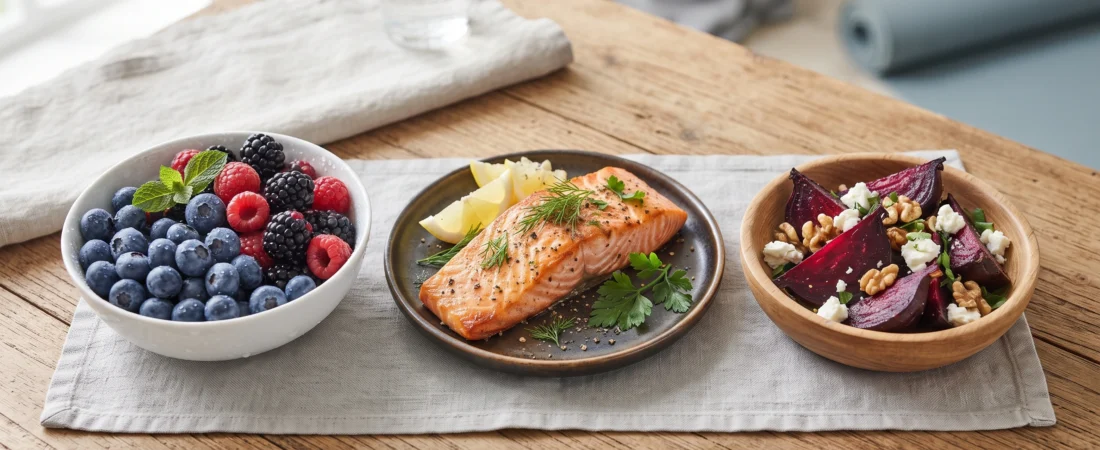
After a run, strength session or yoga practice, a balanced meal can help replenish energy and provide the nutrients your body needs for recovery. While no single food can prevent muscle soreness, some foods contain nutrients and naturally occurring compounds that have been studied for their potential role in exercise recovery.
Three foods worth including in a varied diet are oily fish, blueberries and other berries, and beetroot. Each offers something different, from protein and omega-3 fats to polyphenols and dietary nitrates. Their potential effects on exercise recovery vary, so it is more useful to think of them as part of an overall eating pattern rather than as special recovery foods.
🌟 Key Takeaways
- Oily fish: Salmon, sardines and mackerel provide high-quality protein and long-chain omega-3 fats, making them practical choices for balanced everyday meals.
- Blueberries and berries: These colourful fruits provide polyphenols, including anthocyanins, along with fibre and other nutrients. Research into their direct effects on exercise recovery is still developing.
- Beetroot: A natural source of dietary nitrate that has been studied for its potential role in exercise recovery, although much of the research has used concentrated beetroot juice rather than ordinary servings of beetroot.
When Your Body Needs Recovery After Exercise
After a long run, a strength-training session or a challenging yoga flow, it is normal to experience some muscle stiffness, particularly when trying a new activity or increasing exercise intensity.
Exercise places temporary stress on muscles, stimulating repair and adaptation. Adequate nutrition, sufficient sleep, hydration and appropriate rest all contribute to this process.
Rather than relying on one particular food, I find it more practical to build everyday meals around familiar ingredients that provide protein, carbohydrates and a variety of vegetables and fruit.
For me, a simple meal after exercise might include rice, vegetables and a source of protein such as salmon or tofu. Fruit or berries can be added to breakfast or enjoyed later as a snack.
1. Oily Fish: Protein and Omega-3 Fats
Salmon, sardines, mackerel, trout and herring are all oily fish that provide long-chain omega-3 fatty acids, particularly EPA(eicosapentaenoic acid) and DHA(docosahexaenoic acid). They are also valuable sources of high-quality protein, which provides amino acids needed for muscle repair and maintenance.
Including oily fish in regular meals is a practical way to obtain protein and omega-3 fats without making exercise nutrition overly complicated.
What Does the Research Say?
Long-chain omega-3 fatty acids have been studied for their potential effects on exercise-induced muscle damage and recovery.
Recent systematic review evidence suggests that omega-3 supplementation may improve some measures of muscle soreness and recovery after certain types of exercise. However, the researchers also noted methodological limitations across the available studies, and the evidence does not establish that simply eating oily fish will prevent post-workout soreness.
This distinction is important. Studies of concentrated omega-3 supplements should not automatically be interpreted as evidence that a particular serving of salmon has the same effect.
The nutritional value of oily fish extends beyond exercise recovery. It provides protein, omega-3 fats and several vitamins and minerals as part of a varied diet.
How to Choose Oily Fish in the UK
Fresh, frozen and tinned oily fish are all practical options available in UK supermarkets. Availability varies by store.
- Salmon: A versatile choice for rice bowls, salads and simple oven-baked meals.
- Mackerel: Rich in flavour and convenient when purchased fresh or tinned.
- Sardines: An affordable option that works well with toast, rice or vegetables.
- Trout: A mild-flavoured alternative to salmon.
The NHS recommends eating at least two portions of fish a week, including one portion of oily fish. An adult portion is around 140g.
💡 K-Well’s Serving Idea: A Gochujang Salmon Rice Bowl is one of my favourite ways to combine protein, carbohydrates and vegetables in one satisfying meal. Mix a small spoonful of gochujang with rice vinegar and a little water. Brush a thin layer over a salmon fillet and bake until thoroughly cooked. Serve with warm brown or mixed-grain rice, steamed spinach, sliced cucumber and a sprinkle of sesame seeds. The salmon provides protein and omega-3 fats, while rice supplies carbohydrates. Spinach and cucumber add colour, fibre and variety.
2. Blueberries and Other Berries: Colourful Fruits Rich in Polyphenols
Blueberries, strawberries, raspberries and blackberries are more than convenient additions to breakfast. These colourful fruits contain a variety of naturally occurring plant compounds, including polyphenols.
Blueberries are particularly rich in anthocyanins, the pigments responsible for their deep blue-purple colour. Strawberries, raspberries and blackberries also contain different combinations of polyphenols and provide fibre and other nutrients.
Including a variety of berries in your everyday diet is a simple way to add colour and nutritional variety to meals.
What Does the Research Say?
Some studies have investigated whether blueberries and other berries may help support recovery following strenuous exercise.
A small study found that consuming blueberries around strenuous exercise was associated with faster recovery of some measures of muscle strength. However, the study was small, so the results cannot be directly applied to every type of exercise or to ordinary servings of berries.
Other research has examined changes in compounds associated with inflammation and recovery following blueberry consumption. More recent reviews suggest that evidence for a direct improvement in exercise performance or recovery remains limited.
For this reason, I would not treat blueberries as a specific remedy for muscle soreness. Their value is broader: they are an easy way to include fruit, fibre and naturally occurring plant compounds in an overall balanced diet.
How to Choose Berries in the UK
Fresh and frozen berries are widely available in UK supermarkets. Frozen berries can be particularly convenient because they keep well and can be added to porridge, yoghurt or smoothies.
- Blueberries: Easy to add to yoghurt, overnight oats and breakfast bowls.
- Strawberries: A useful source of vitamin C and naturally sweet.
- Raspberries: High in fibre and naturally tart.
- Blackberries: Provide fibre and anthocyanins.
Fresh and frozen berries can both be useful choices. When buying dried berries or prepared fruit products, check the ingredient list for added sugars.
Practical Ways to Enjoy Berries
One of the easiest ways to include berries is to add a handful to breakfast.
I often prefer combining fruit with a source of protein and healthy fats because it makes breakfast more satisfying than fruit alone.
For a simple post-workout breakfast or snack, try:
- A handful of fresh or frozen blueberries
- Plain Greek yoghurt or unsweetened soya yoghurt
- A few strawberries or raspberries
- A tablespoon of oats or ground flaxseed
- A small handful of chopped walnuts, if desired
This combination provides protein, carbohydrates, fibre and a variety of nutrients without requiring complicated preparation.
Berries also work well in overnight oats, smoothies and homemade fruit bowls. If you prefer a warm breakfast, gently heat frozen berries and spoon them over porridge.
💡 K-Well’s Serving Idea: I often make overnight oats with homemade seoritae soy milk, a mix of oats and chia seeds, then add mixed berries and Greek yoghurt before serving. It is an easy breakfast that combines plant-based protein from the soy milk with fibre from the oats, chia seeds and berries, while Greek yoghurt adds extra protein and a creamy texture. I especially like using frozen mixed berries because they are convenient to keep on hand and add colour and variety to breakfast throughout the year.
3. Beetroot: A Nitrate-Rich Food Studied for Exercise Recovery
Beetroot is best known for its deep red-purple colour and earthy flavour. It is also naturally rich in dietary nitrate, which the body can convert through a series of processes into nitric oxide.
Nitric oxide is involved in blood vessel function and circulation, which is one reason nitrate-rich foods have attracted interest in sports nutrition.
Beetroot can be enjoyed simply roasted, boiled or grated into salads. Beetroot juice is another option, but it is important to distinguish the concentrated products used in research from ordinary servings of beetroot.
What Does the Research Say?
Beetroot and nitrate supplementation have been studied for their potential effects on exercise recovery.
A systematic review of nine studies found that short-term beetroot supplementation had the potential to improve some measures of functional recovery and muscle soreness. However, the review did not find consistent improvements in markers of muscle damage, inflammation or oxidative stress.
Another systematic review and meta-analysis found that nitrate-rich beetroot juice may improve certain measures of strength and muscle function after exercise, although the included studies had some concerns about risk of bias.
This means beetroot is an interesting food to include in a varied diet, but it would be misleading to describe it as a proven anti-inflammatory treatment or to assume that an ordinary serving of cooked beetroot will produce the same effects as the concentrated beetroot juice used in research.
How to Enjoy Beetroot
Beetroot is surprisingly versatile and does not need to be treated as a specialised sports food.
- Roasted beetroot: Serve with salmon, grains or a green salad.
- Grated beetroot: Add to salads for colour and texture.
- Cooked beetroot: Slice and serve alongside eggs, tofu or whole grains.
- Beetroot hummus: Blend cooked beetroot with chickpeas and tahini.
- Beetroot juice: A concentrated option, although it is different from eating whole beetroot.
If you are new to beetroot, roasted beetroot is an easy place to start. Its natural sweetness pairs particularly well with savoury ingredients.
💡 K-Well’s Serving Idea: I often steam a colourful mix of vegetables such as carrots, broccoli, tomatoes, beetroot, aubergine, kale, spinach and Brussels sprouts, then finish them with a little olive oil. Another favourite is to slowly sauté a selection of vegetables in olive oil until they are tender and full of flavour. I like mixing different colours rather than relying on one vegetable, simply because it makes everyday meals more varied and enjoyable.
Add a boiled or gently fried egg and a slice of Ole & Steen Chia Rye Bread, and this simple vegetable plate becomes a satisfying brunch. The combination brings together vegetables, protein, healthy fats and whole-grain carbohydrates in one easy meal. It is also a practical way to enjoy beetroot as part of a varied diet rather than treating it as a special “recovery food.”
Building a Balanced Post-Workout Meal
Recovery meals do not need to involve expensive supplements or complicated recipes. A simple combination of familiar ingredients can provide the nutrients needed after everyday exercise.
1. Include a source of protein. Salmon, mackerel, tofu, eggs, chicken, beans and Greek yoghurt are all practical options. Protein provides amino acids that support muscle repair and maintenance.
2. Add carbohydrates. Rice, potatoes, oats and wholegrain noodles provide energy and help replenish muscle glycogen, particularly after longer or more demanding exercise sessions.
3. Include colourful vegetables or fruit. Spinach, broccoli, carrots, blueberries, berries and beetroot provide fibre and a variety of vitamins and plant compounds.
4. Drink enough fluids. Water is generally sufficient after many everyday workouts. After prolonged exercise, particularly in hot conditions or when sweating heavily, additional fluid and sodium may be needed.
The amount of food required depends on exercise intensity, duration, appetite and individual nutritional needs. There is no single recovery meal that suits everyone.
FAQ
Q1. What should I eat after a workout to support recovery?
A meal containing protein, carbohydrates and vegetables is a practical choice after exercise. For example, salmon with rice and vegetables provides protein, energy and a range of nutrients. Tofu, eggs and beans are useful alternatives.
Q2. Are blueberries good for post-workout recovery?
Blueberries contain anthocyanins and other polyphenols that have been studied for their potential role in exercise recovery. Some small studies have reported promising findings, but the overall evidence remains limited. They are best viewed as a nutritious part of a balanced diet rather than a guaranteed way to reduce soreness.
Q3. Can beetroot reduce muscle soreness after exercise?
Some research on beetroot and nitrate supplementation has reported improvements in certain measures of muscle soreness and functional recovery. However, much of this research has used concentrated beetroot juice rather than ordinary servings of beetroot, and findings for inflammation and muscle damage have been inconsistent.
Q4. Do I need special recovery foods after every workout?
Not necessarily. For many everyday workouts, a normal balanced meal containing protein, carbohydrates, fruit or vegetables and enough fluid is sufficient. More specialised nutrition strategies may be relevant for prolonged or high-intensity training, but individual needs vary.
🌿 K-Well’s Kitchen Notes
Supporting exercise recovery does not have to mean following a complicated nutrition routine.
Oily fish, blueberries and other berries, and beetroot each bring something different to the table. Salmon provides protein and omega-3 fats, berries add fruit, fibre and naturally occurring plant compounds, while beetroot provides dietary nitrate.
I prefer to focus on simple meals that are easy to prepare and enjoyable to eat. A gochujang salmon rice bowl with vegetables, a yoghurt bowl with berries or a colourful beetroot, vegetable and grain bowl can all fit into an everyday approach to eating well.
Rather than expecting one food to eliminate muscle soreness, think of these ingredients as small parts of a broader routine that includes balanced meals, sufficient sleep, hydration and regular movement.
Read Next
- 15-Minute Gochujang Tofu Rice Bowl
- Samgyetang and Post-Workout Recovery
- 3 Nourishing Korean Post-Run Meals for Better Recovery
References
- Clifford, T. et al. The effects of beetroot juice supplementation on exercise-induced muscle damage: A systematic review and meta-analysis. Journal of the International Society of Sports Nutrition. https://pubmed.ncbi.nlm.nih.gov/34151694/
- McLeay, Y. et al. Effect of New Zealand blueberry consumption on recovery from eccentric exercise-induced muscle damage. Journal of the International Society of Sports Nutrition. https://pubmed.ncbi.nlm.nih.gov/22796346/
- National Health Service (NHS). Fish and shellfish. https://www.nhs.uk/live-well/eat-well/food-types/fish-and-shellfish-nutrition/
- Prieto Martínez, A. et al. Effects of Vaccinium berries on oxidative stress, inflammation, exercise performance, and recovery: A systematic review. Food & Function. https://pubmed.ncbi.nlm.nih.gov/38195788/
- Ramos, J.S. et al. Effects of beetroot supplementation on recovery after exercise-induced muscle damage: A systematic review. Nutrients. https://pubmed.ncbi.nlm.nih.gov/34399653/
- Zheng-tao, L. et al. Omega-3 polyunsaturated fatty acid supplementation for reducing muscle soreness after eccentric exercise: A systematic review and meta-analysis of randomized controlled trials. https://pubmed.ncbi.nlm.nih.gov/32382573/
This article provides general food and lifestyle information and is not medical advice. It does not diagnose, prevent or treat any condition