Discover Korean red ginseng, its traditional uses and potential fatigue benefits, plus practical tips for choosing and enjoying it in the UK.
Key Takeaways
- Traditional Korean Tonic: Korean red ginseng is steamed and dried Panax ginseng, traditionally enjoyed during periods of tiredness or increased physical and mental demand.
- Potential Fatigue Support: Research suggests that Asian ginseng may help reduce general fatigue in some adults, making it a promising addition to a balanced daily wellness routine.
- Choose Carefully: Check the amount of red ginseng and ginsenosides on the label, compare added sugar and follow the manufacturer’s serving instructions.
Korean red ginseng, or hongsam (홍삼), has long been valued in Korea as a traditional tonic. It is commonly enjoyed as a concentrated extract, warm tea, powder or convenient ready-to-drink pouch.
With its earthy, bittersweet flavour and naturally occurring ginsenosides, red ginseng offers a distinctive caffeine-free addition to a morning or daytime wellness routine. Research has explored its potential to provide modest support for general fatigue, although individual experiences and product formulations vary.
What Is Korean Red Ginseng?
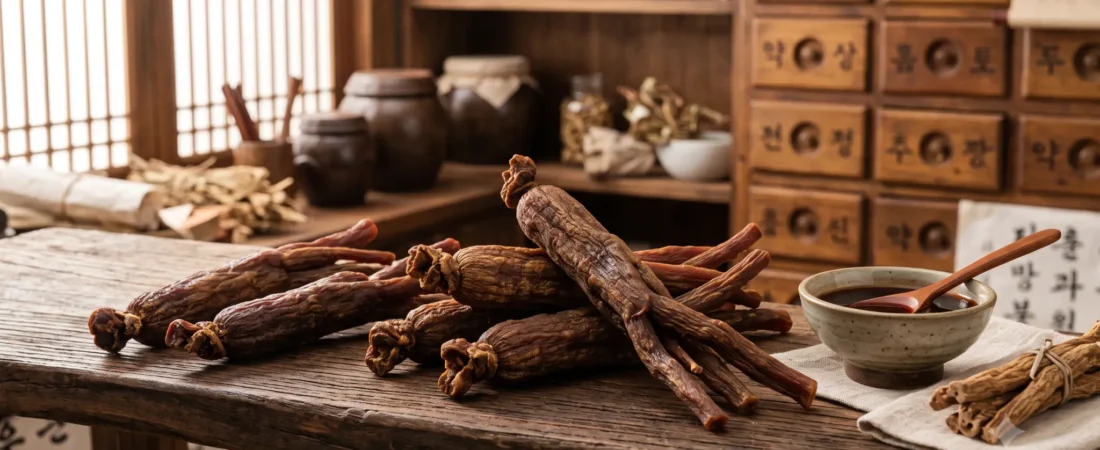
Korean red ginseng is made from the root of Panax ginseng. Fresh ginseng is steamed and then dried, giving the root its characteristic reddish-brown colour and concentrated flavour.
The steaming process changes the plant’s chemical profile, producing a different balance of ginsenosides from fresh or white ginseng. Ginsenosides are a group of naturally occurring plant compounds that have become the main focus of modern ginseng research.
Red ginseng products are available in several forms:
- Thick concentrated extract
- Individual liquid pouches
- Tea granules or powder
- Capsules and tablets
- Dried root slices
- Foods and drinks containing red ginseng
The concentration can vary considerably, so two products labelled “Korean red ginseng” may not provide the same amount of ginseng or ginsenosides.
Korean Red Ginseng vs White Ginseng
Both products come from Panax ginseng, but they are processed differently.
White ginseng is usually peeled or left unpeeled and dried without first being steamed. Red ginseng is steamed before drying, which changes its colour, flavour and ginsenoside composition.
Red ginseng normally has a deeper, more bittersweet taste. It is widely used in Korean extracts, drinks and gift sets, while white ginseng is commonly found as dried root, powder or tea.
Neither type should automatically be considered superior. Product quality, preparation, serving size and individual preference are more useful considerations than colour alone.
Can Korean Red Ginseng Support Energy?
Korean red ginseng does not supply energy in the nutritional sense because it contains few calories when taken without sugar. It is better understood as a traditional herbal product that has been studied for its possible effects on feelings of fatigue.
A review discussed by the US National Center for Complementary and Integrative Health found that Asian ginseng may have a small beneficial effect on general fatigue in some adults. However, study results have not been consistent, and different trials have used different extracts and doses.
This means that red ginseng may complement a balanced routine for some people, but it should not replace sleep, regular meals, hydration or treatment for persistent tiredness.
K-Well’s Tip: Consider red ginseng a supportive herbal supplement that complements balanced meals, quality sleep and good hydration. Together, these habits provide a stronger foundation for steady daily energy and wellbeing.
Is Red Ginseng the Same as Caffeine?
No. Red ginseng does not naturally contain caffeine and does not work in the same way as coffee or caffeinated energy drinks.
Caffeine can produce a noticeable short-term increase in alertness. Red ginseng usually has a subtler effect, if any, and research has generally examined repeated use rather than an immediate energy boost.
People who are sensitive to stimulating products may still prefer to take it in the morning or early afternoon. Some users report sleep disturbance when taking Asian ginseng, so it may not be an ideal evening drink.
How to Choose Korean Red Ginseng in the UK
Korean red ginseng is available through Korean supermarkets, East Asian grocery shops, health-food retailers and online stores in the UK. Before buying a product, check the following information.
1. Look for the Botanical Name
The label should identify the ingredient as Panax ginseng. American ginseng and Siberian ginseng are different plants and should not be treated as interchangeable products.
2. Check the Ginseng Content
Look for a clear amount of red ginseng extract per serving. Some drinks use red ginseng mainly as a flavouring and contain only a small proportion of extract.
3. Review the Ginsenoside Information
A manufacturer may list the amount of total ginsenosides or individual compounds such as Rg1, Rb1 and Rg3. This makes it easier to compare products, although a higher number does not automatically mean the product is more suitable for everyone.
4. Compare Added Sugar
Ready-to-drink pouches and sweetened teas may contain honey, syrup or added sugar to balance ginseng’s natural bitterness. Compare the nutrition labels and choose a level of sweetness that suits your diet.
5. Follow the Product Instructions
Extracts, powders and drinks can differ significantly in concentration. Use the serving directions provided for the specific product rather than applying one standard amount to every form.
Simple Ways to Enjoy Red Ginseng
Warm Red Ginseng Tea
Stir the label-recommended serving of red ginseng extract into a cup of warm water. Add a thin slice of fresh ginger or a small amount of honey if you prefer a softer flavour.
Avoid using boiling water if the product instructions recommend a lower temperature.
Red Ginseng and Jujube Tea
Combine red ginseng with sliced dried jujube for a naturally mellow, gently sweet drink. This pairing is popular for balancing the root’s earthy bitterness.
In Korean Ginseng Chicken Soup
Fresh or dried ginseng root is also used in samgyetang, a traditional chicken soup prepared with garlic, jujubes and glutinous rice. Read this Samgyetang guide for a savoury way to experience ginseng as part of a meal.
K-Well’s Serving Tip: Start with the serving stated on the label and allow the characteristic bittersweet flavour to remain part of the drink. A small amount of honey or jujube is usually enough to soften it without turning it into a heavily sweetened tonic.
Also, In Korea, red ginseng extract sticks are often enjoyed directly in a small measured serving. For a milder and more approachable flavour, choose a stick blended with traditional ingredients such as jujube, ginger or honey. These ingredients soften the characteristic bitterness while preserving the distinctive taste of red ginseng.
Who Should Take Extra Care?
Asian ginseng is generally well tolerated by many adults when used appropriately, but insomnia is one of its more commonly reported side effects. It may also interact with certain medicines, including treatments that affect blood glucose or blood clotting.
Pregnant or breastfeeding people and anyone taking regular medication should seek individual guidance before using concentrated ginseng supplements. A food containing a small amount of ginseng is also different from a concentrated extract or capsule.
FAQ
Q1. Does Korean Red Ginseng Contain Caffeine?
No. Korean red ginseng does not naturally contain caffeine. Check blended drinks and tea products, however, because they may include other caffeine-containing ingredients.
Q2. Can I Take Red Ginseng Every Day?
Some products are designed for daily use, but concentrations differ. Follow the serving instructions and recommended duration on the label rather than assuming that every extract can be used in the same way.
Q3. What Does Korean Red Ginseng Taste Like?
It has a concentrated earthy, woody and bittersweet flavour. Warm water, jujube or a small amount of honey can make it more approachable without masking its distinctive character.
K-Well’s Final Thoughts
Korean red ginseng is best appreciated as a traditional botanical with a distinctive flavour and a long place in Korean food culture. Research suggests it may offer modest fatigue support for some adults, although it does not replace the fundamentals of energy: sleep, hydration, balanced meals and appropriate medical care.
Choose a clearly labelled product, compare its ginseng and sugar content and use it according to the manufacturer’s instructions. Whether enjoyed as a warm tea, taken as a convenient extract stick, or added to traditional samgyetang, red ginseng can bring a meaningful Korean wellness ritual to your daily routine.
Read Next
- Samgyetang Benefits: Korean Ginseng Chicken Soup
- Top 3 Natural Anti-Inflammatory Foods for Post-Workout Recovery
- 7 Essential Korean Pantry Staples for Beginners in the UK
References
Zhu, J., Xu, X., Zhang, X., Zhuo, Y., Chen, S., Zhong, C., Liu, M., & Wang, Z. (2022). Efficacy of ginseng supplements on disease-related fatigue: A systematic review and meta-analysis. Medicine, 101(26), e29767.
https://pubmed.ncbi.nlm.nih.gov/35758352/
European Medicines Agency (EMA). Ginseng radix – herbal medicinal product.
https://www.ema.europa.eu/en/medicines/herbal/ginseng-radix
National Center for Complementary and Integrative Health (NCCIH). Asian Ginseng: Usefulness and Safety.
https://www.nccih.nih.gov/health/asian-ginseng