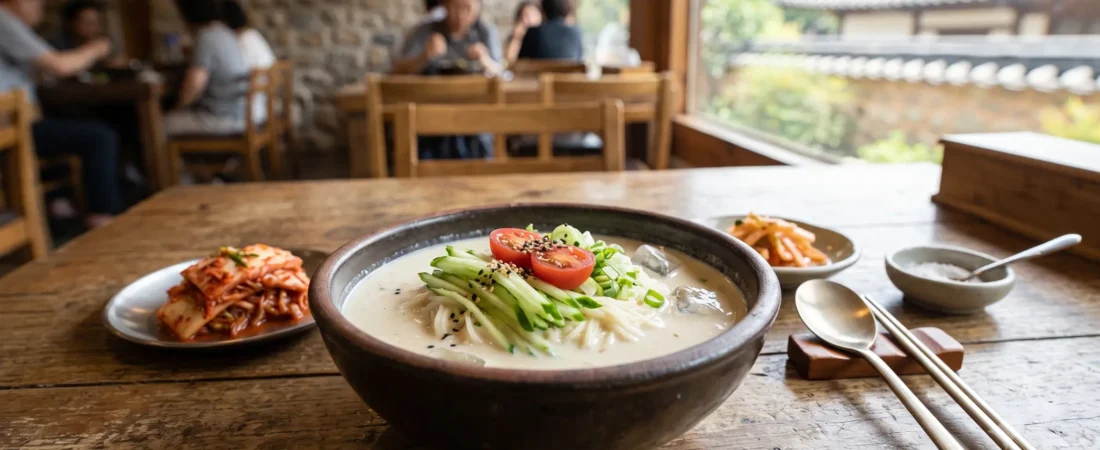
Kongguksu (콩국수) is a chilled Korean noodle dish served in a creamy broth made from cooked soybeans. Its clean, nutty flavour and cooling texture make it especially appealing on warm days when a hot meal feels too heavy.
The soybeans provide high-quality plant protein, fibre and minerals, while the noodles contribute carbohydrate for energy. Finished with crisp cucumber and sesame seeds, kongguksu becomes a simple vegan lunch that is satisfying without relying on a rich or heavily sweetened sauce.
Key Takeaways
- Plant-Based Protein: Soybeans contain all nine essential amino acids and make the broth naturally creamy without dairy.
- A Balanced Summer Meal: Soybean broth, noodles and fresh cucumber provide a practical combination of protein, carbohydrate and vegetables.
- Easy to Adapt in the UK: Dried soybeans are available from Korean and East Asian grocers, while noodles and garnishes can be found in many UK supermarkets.
What Is Kongguksu?
The name kongguksu combines kong (soybean) and guksu (noodles). Cooked soybeans are blended with water until smooth, chilled and poured over cold noodles. The dish is usually seasoned simply with salt so the natural flavour of the beans remains at the centre.
Many Korean households prepare kongguksu during summer, sometimes adding sesame seeds or nuts for a richer broth. Cucumber is the most familiar garnish, although tomato, black sesame seeds or a halved boiled egg may also be added. The egg should be omitted for a fully vegan bowl.
Unlike spicy Korean cold noodles, kongguksu is mild and savoury. Its appeal comes from the contrast between creamy soybean broth, springy noodles and crisp vegetables.
Why Soybeans Make Kongguksu Satisfying
Soy is one of the few plant foods considered a complete protein because it supplies all nine essential amino acids. Cooked soybeans also provide fibre, unsaturated fats, potassium and magnesium. Blending the whole cooked beans retains more of their natural fibre than making the broth with a strained soy drink.
The protein, fat and fibre from the beans can make a noodle meal feel more substantial. However, the nutritional balance of the finished bowl still depends on the quantity and type of noodles used. A moderate noodle portion with a generous serving of soybean broth creates a more balanced bowl than noodles served alone.
K-Well’s Tip: Blend the beans until smooth to retain more of their natural fibre while creating a thicker texture and richer, nuttier flavour.
Is Kongguksu Good After a Run?
Kongguksu can work well as a post-run lunch because it combines carbohydrate from the noodles with plant protein from the soybeans. Carbohydrate helps replenish energy used during exercise, while protein supports the maintenance and repair of muscle.
The cold soybean broth feels especially refreshing after a warm-weather run. Enjoy it with water to support hydration and complete your post-run meal.
For a light summer dessert, pair it with low-sugar Korean watermelon punch (Subak Hwachae).
What About Blood Sugar?
The soybean broth adds protein, healthy fats and fibre to the noodles, creating a balanced and satisfying meal.
Wholewheat noodles provide more fibre than standard white wheat noodles, while buckwheat-based noodles add a pleasantly earthy flavour. Adding cucumber or other fresh vegetables brings extra volume, colour and texture, and keeping the broth unsweetened allows the natural nuttiness of the soybeans to remain at the centre of the dish.
Together, these simple choices can support a steadier release of energy while keeping the bowl refreshing and enjoyable.
UK Shopping Guide
The correct beans are dried yellow or white soybeans, sometimes labelled soya beans. They are more reliably available from Korean supermarkets such as H Mart and Oseyo, East Asian grocery shops and online retailers.
Black beans and marrowfat peas are different ingredients and will not create traditional kongguksu. Korean black soybeans can be used for a darker variation, but ordinary canned black beans are not a direct substitute.
For the noodles, choose Korean wheat noodles labelled somyeon or guksu for a traditional texture. Wholewheat noodles provide a higher-fibre option, while soba adds a deeper, earthy flavour. Anyone avoiding gluten should choose noodles specifically labelled gluten-free; ordinary somyeon and many soba noodles contain wheat.
Easy Korean Kongguksu Recipe
Serves: 2
Preparation: 15 minutes, plus soaking and chilling
Cooking: Approximately 30–40 minutes
Ingredients
- 100g dried yellow or white soybeans
- 150g Korean wheat noodles, wholewheat noodles or soba
- 500–600ml cold water, plus more for soaking and cooking
- 1 tablespoon toasted sesame seeds
- ¼–½ teaspoon salt, adjusted to taste
- ½ cucumber, cut into fine matchsticks
- 1 teaspoon black sesame seeds (optional)
- 1 small tomato, sliced (optional)
- Ice cubes (optional)
Method
1. Soak the Soybeans
Rinse the dried soybeans and place them in a large bowl. Cover generously with cold water and soak for 8–12 hours or overnight. Keep the bowl in the refrigerator if your kitchen is warm.
Drain and rinse the soaked beans before cooking.
2. Cook the Soybeans Thoroughly
Place the soaked beans in a saucepan and cover with plenty of fresh water. Bring to the boil, remove any foam from the surface and reduce to a steady simmer.
Cook until the beans are completely tender, following the packet instructions where available. Depending on the beans and soaking time, this may take around 25–40 minutes. Do not use undercooked soybeans.
Drain and leave them to cool. Removing the loose skins is optional: it can produce a slightly smoother broth, but keeping them saves time and retains the whole bean.
3. Blend the Soybean Broth
Add the cooked soybeans, toasted sesame seeds and 500ml cold water to a blender. Blend until creamy and smooth, adding a little more water if the broth is too thick.
Season lightly with salt, then chill the broth in the refrigerator. The flavour should remain gently nutty rather than strongly salty.
K-Well’s Flavour Tip: Chill the broth before making the final seasoning adjustment. Cold foods can taste less salty, so taste it again just before serving and add only as much salt as needed.
4. Cook and Rinse the Noodles
Cook the noodles according to the packet instructions. Drain them immediately and rinse thoroughly under cold running water, gently rubbing the noodles to remove excess surface starch.
Drain well so the remaining water does not dilute the soybean broth.
5. Assemble the Bowls
Divide the cold noodles between two bowls and pour over the chilled soybean broth. Top with cucumber, black sesame seeds and tomato, if using. Add a few ice cubes on especially warm days and serve immediately.
Quick Version with Unsweetened Soya Milk
Traditional kongguksu develops its distinctive thickness and nutty flavour from whole cooked soybeans. When time is limited, you can make a convenient version with unsweetened soya milk.
Blend 500ml unsweetened soya milk with two tablespoons of smooth tofu, one tablespoon of toasted sesame seeds and a small pinch of salt. Chill the mixture before pouring it over the noodles. Choose an unflavoured product with no added sugar, as sweetened soya milk changes the savoury character of the dish.
This shortcut will taste lighter than the traditional recipe, but it is useful for a quick weekday lunch.
K-Well’s Tip: If you have a soya milk maker, add soaked soybeans and water according to the machine’s instructions and select the soya milk programme. Allow the freshly made soya milk to cool completely, then blend or stir in toasted sesame seeds and a small pinch of salt. Chill well before pouring it over the noodles for an easy homemade kongguksu broth.
Easy Variations
- Add a spoonful of ground sesame seeds for a deeper, toastier flavour.
- Blend in a small handful of pine nuts or cashews for a richer broth.
- Use wholewheat noodles for additional fibre.
- Add edamame or thinly sliced radish for extra colour and texture.
- Top with half a boiled egg if the meal does not need to be vegan.
- Serve kimchi on the side for a spicy and tangy contrast.
If you enjoy Korean soybean dishes, read 3 Essential Korean Fermented Foods: Kimchi, Doenjang and Gochujang for another way to use soy-based Korean pantry ingredients.
Nutritional Snapshot
One serving made with half of the recipe provides approximately 25–30g of protein, depending on the noodles and exact quantity of broth served. It also supplies fibre and unsaturated fat from the whole soybeans and sesame seeds.
The final energy, carbohydrate and sodium values will vary between noodle products and according to serving size. Check the package label if you need a more precise calculation.
Storage and Meal Preparation
Store the soybean broth and cooked noodles in separate covered containers in the refrigerator. The broth can be kept for up to two days and stirred or blended briefly if it separates.
For the best texture, cook and rinse the noodles shortly before eating. If preparing them ahead, drain thoroughly and refrigerate for no longer than one day. Add the cucumber and other garnishes immediately before serving so they remain crisp.
FAQ
Q1. Is Kongguksu Vegan?
Traditional soybean broth is naturally vegan when made with soybeans, water, sesame seeds and salt. Check the noodle label and avoid egg garnishes if you want the complete dish to remain vegan.
Q2. Can I Use Soya Milk Instead of Whole Soybeans?
Yes. Unsweetened soya milk makes a convenient shortcut, especially when blended with a little tofu and toasted sesame. Whole soybeans create a thicker, nuttier and more traditional broth.
Q3. Can I Use Canned Soybeans?
Yes, provided they are fully cooked plain soybeans without a strongly flavoured sauce. Rinse them thoroughly before blending. The flavour and texture may be lighter than a broth made from dried soybeans.
Q4. Is Kongguksu Gluten-Free?
The soybean broth can be gluten-free, but standard Korean wheat noodles are not. Choose certified gluten-free buckwheat, rice or other suitable noodles and check every packaged ingredient.
K-Well’s Final Thoughts
Kongguksu turns simple soybeans into a cooling, creamy meal with high-quality plant protein and a naturally satisfying texture. Paired with a sensible portion of noodles and plenty of cucumber, it offers an appealing balance of comfort and freshness for summer.
Prepare the broth ahead, keep it chilled and adjust the thickness to your taste. Whether you follow the traditional whole-bean method or use the quick soya-milk version, kongguksu is an easy way to bring a nourishing Korean summer dish into a UK kitchen.
Read Next
- Healthy Korean Watermelon Punch: Low-Sugar Subak Hwachae
- Hydrating After Morning Yoga: Korean Roasted Barley Tea
- 3 Essential Korean Fermented Foods: Kimchi, Doenjang and Gochujang
References
- British Dietetic Association (BDA). Sport and Exercise. https://www.bda.uk.com/resource/sport-exercise-nutrition.html
- British Nutrition Foundation. Sport and Exercise. https://www.nutrition.org.uk/creating-a-healthy-diet/sport-and-exercise/
- Harvard T.H. Chan School of Public Health. Straight Talk About Soy. https://nutritionsource.hsph.harvard.edu/soy/
- U.S. Department of Agriculture (USDA), Agricultural Research Service. FoodData Central.