
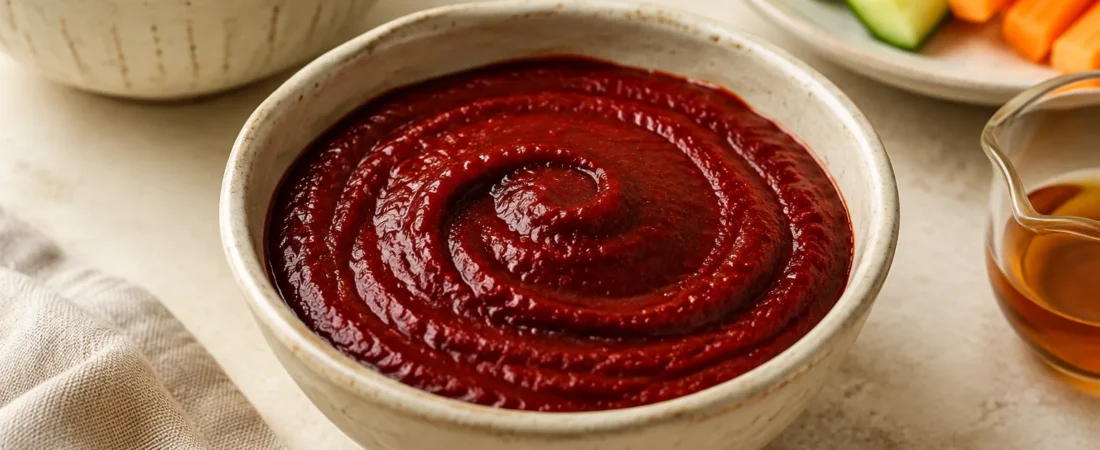
You bought a tub of gochujang for one recipe. Now it is sitting in the fridge, waiting for its next outing.
The good news is that you do not need an entirely new shopping list to use it again. Rice, noodles, tofu and a few vegetables offer plenty of possibilities. What changes from one meal to another is how you use the paste: mixed into a dressing, simmered into a sauce or spooned into a wrap.
In everyday Korean cooking, gochujang brings more than heat. Its sweet, savoury character helps connect mild ingredients with stronger flavours. Learning how to adjust its consistency and seasoning makes it easier to turn that familiar red tub into several satisfying meals.
🌟 Key Takeaways
- One paste, different uses: Gochujang can season mixed rice, dress cold noodles, flavour simmered rice cakes and accompany lettuce wraps.
- Adjust the texture first: A noodle dressing should coat easily, a glaze should cling, and a wrap condiment should stay thick.
- Build on familiar ingredients: Rice, tofu, eggs and vegetables make approachable starting points for Korean-inspired everyday cooking.
Understanding Gochujang’s Role
Gochujang (고추장) is a fermented Korean chilli paste made with ingredients that typically include chilli powder, grain, soybean ingredients and salt. Recipes vary, but the result combines chilli warmth with sweetness and fermented depth.
Gochujang brings flavour to everyday Korean meals in different ways. Mixed into bibimbap, it brings the rice and toppings together; added to a lettuce wrap, a small dab gives each bite a spicy, sweet and savoury finish.
For the home cook, the most useful starting point is to think about the finished dish.
Do you want a sauce that spreads through rice? A dressing that reaches every noodle? Or a glossy coating that stays on the outside of tofu?
The answer helps you decide what to add to the paste.
1. Mix It into Bibimbap and Rice Bowls
Bibimbap (비빔밥) combines rice, vegetables and other toppings in one colourful bowl. Gochujang adds a spicy-sweet depth, while some variations use doenjang or soy sauce for a different savoury flavour.
For an everyday bowl, begin with warm rice, a protein such as tofu or an egg, and vegetables with contrasting textures. Cooked mushrooms, spinach and shredded carrot make a useful combination.
If the gochujang is particularly thick, loosen it with a little water before adding it. Toasted sesame oil brings a nutty aroma, while a small amount of rice vinegar can add brightness.
Mix before adding more. A spoonful of sauce tastes much stronger on its own than it does once distributed through rice and vegetables.
A bowl assembled from what you have at home does not need to reproduce a particular regional bibimbap. The practical idea is to bring the ingredients together so that each bite has rice, toppings and seasoning.
💡 K-Well’s Tip: Make It Your Own
There is no fixed rule for your everyday bowl—adjust the sauce to your taste. Add toasted sesame oil for a nutty aroma, a splash of rice vinegar for brightness, or a little water for a thinner consistency. Mix everything together, taste and adjust until it suits you.
For a gluten-free option, try this Gluten-Free Bibimbap Sauce Recipe.
2. Make a Tangy Dressing for Cold Noodles
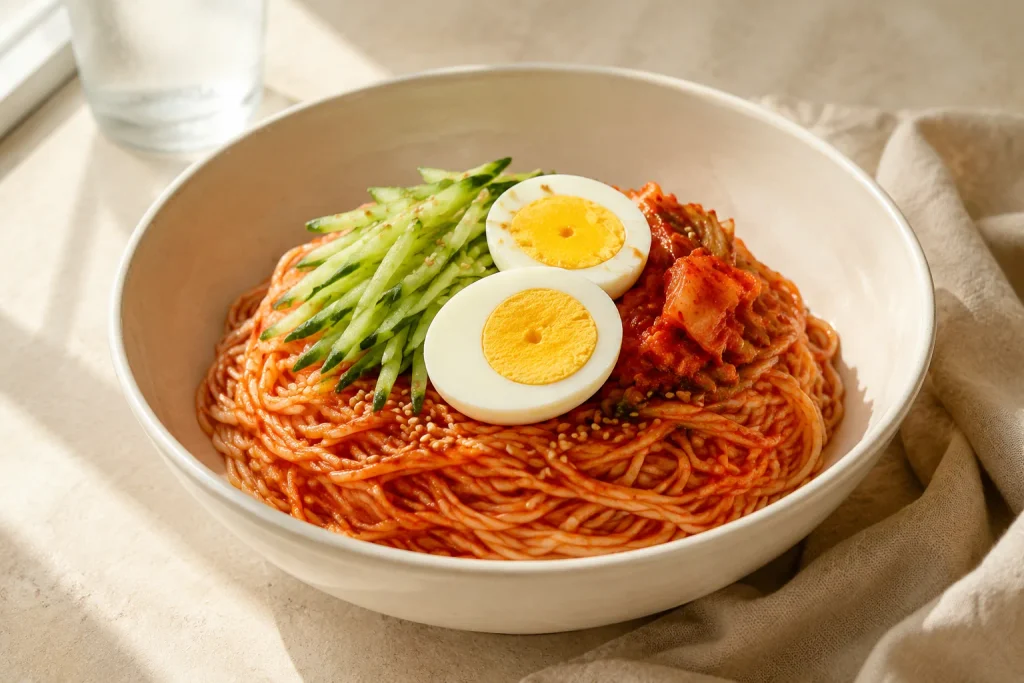
Bibim guksu (비빔국수) offers a cooler, brighter way to enjoy gochujang.
For bibim guksu, gochujang is mixed with vinegar, toasted sesame oil, garlic and a little sweetness to create a tangy, spicy dressing. The cooked noodles are rinsed under cold water, drained and tossed with the sauce, then topped with cucumber, chopped kimchi and a boiled egg.
The appeal comes from contrast: cool noodles, crisp vegetables and a lively sauce.
At home, prepare the dressing while the noodles cook. Rinse the noodles thoroughly and drain well before mixing, so that leftover rinse water does not dilute the flavour.
Aim for an even coating rather than a puddle of sauce. Toss thoroughly, taste a mouthful with the toppings, and adjust from there.
Cucumber is a simple starting point. Shredded cabbage or carrot can add more crunch, while chopped kimchi brings extra texture and a tangy kick that complements the spicy dressing. Add an egg or tofu to turn the noodles into a more substantial lunch.
Thin Korean wheat noodles, often labelled somyeon, are a natural choice. If you use another type of noodle, expect a different texture and follow its cooking instructions.
3. Simmer It into Tteokbokki Sauce
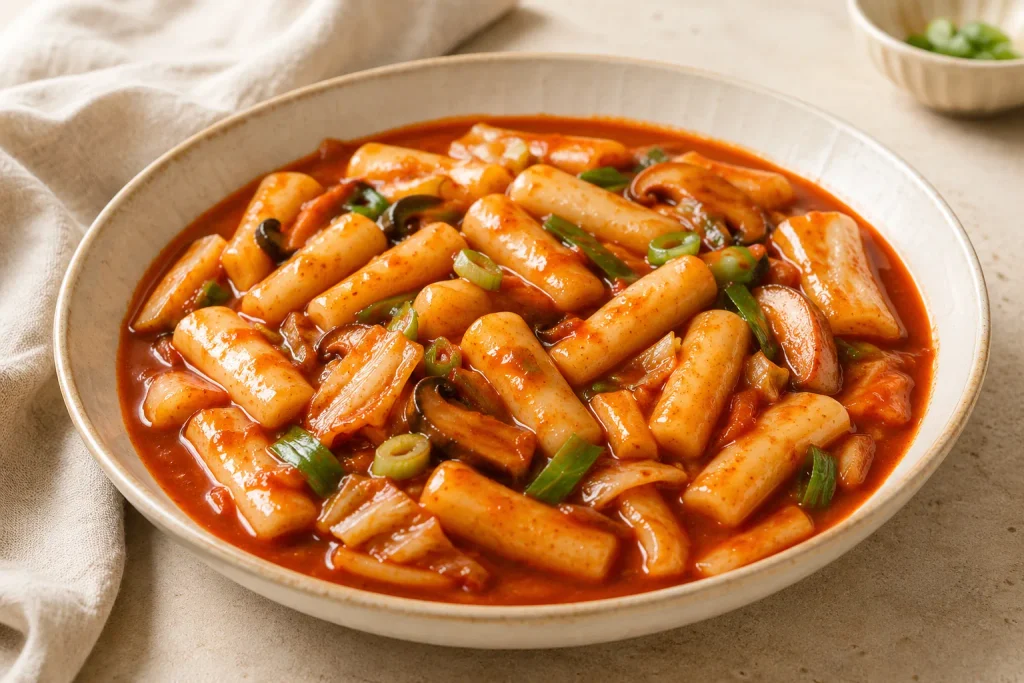
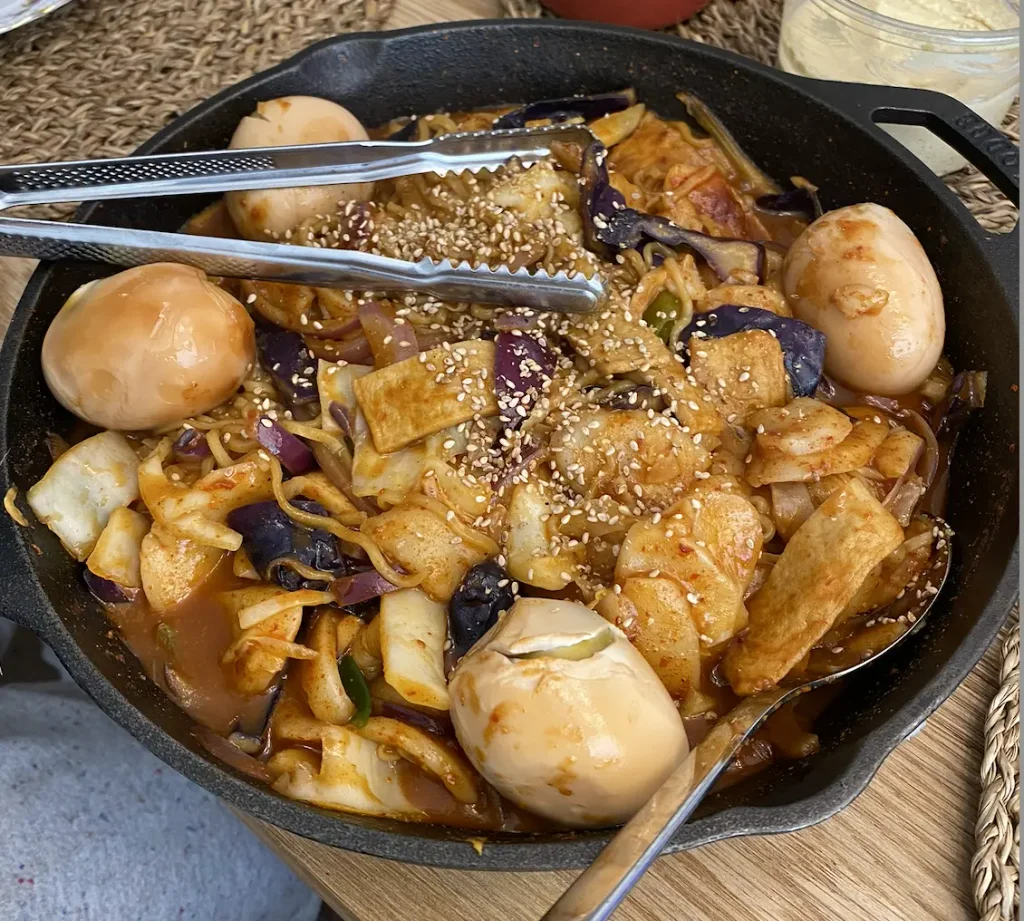
Tteokbokki (떡볶이) shows what happens when gochujang becomes part of the cooking liquid. One of Korea’s most popular street foods, its familiar spicy version features chewy rice cakes simmered in a gochujang-based sauce that thickens into a sweet, savoury coating.
Unlike a cold noodle dressing, this sauce develops as the ingredients cook.
For home cooking, dissolve the paste into the liquid before adding the rice cakes. Follow the packet’s preparation instructions, since different rice cakes may need soaking or different cooking times.
Leave room for the sauce to thicken. As the rice cakes cook and release starch, the liquid becomes more substantial. Stir gently and add a little more water if it thickens before the rice cakes are tender.
Cabbage, mushrooms and spring onions can add variety to the pan. Serve while the rice cakes are pleasantly chewy and the sauce is still loose enough to coat them.
For a vegetable-forward variation, try this Vegan Tteokbokki with Cabbage.
4. Add a Small Amount to Lettuce Wraps
Not every use of gochujang needs a pan.
Lettuce wraps, or ssam (쌈), bring rice, protein and vegetables together in a fresh, crisp leaf. A little gochujang adds a spicy-sweet flavour that complements the fillings.
For a simple meal, set out lettuce leaves, warm rice, cooked tofu or meat, and sliced vegetables. Let everyone assemble their own wraps, adding gochujang to taste.
Build a balanced bite. Start with a little rice, add your chosen protein and vegetables, then finish with the paste before folding the leaf around the filling.
For a Korean-inspired plant-based option, try pan-fried tofu, mushrooms and cucumber for a mix of savoury flavour and fresh crunch.
For more filling ideas and assembly tips, see How to Make a Balanced Korean BBQ Ssam.
5. Try a Korean-Inspired Glaze for Tofu
Once you are comfortable mixing and simmering gochujang sauces, a tofu glaze is an easy next step.
This is a flexible Korean-inspired meal idea rather than a claim that every tofu rice bowl is a traditional Korean dish.
Begin with firm or extra-firm tofu. Pat the surface dry, cut it into manageable pieces and pan-fry until golden. Separately, mix gochujang with a little water, rice vinegar, garlic and toasted sesame oil.
Lower the heat before adding the glaze. Turn the tofu gently so that the sauce coats the pieces without catching on the pan.
Brown first, glaze second. This separates the job of developing colour from the job of coating the tofu.
Taste the glaze before adding maple syrup or another sweetener. Depending on your gochujang, its existing sweetness may be enough.
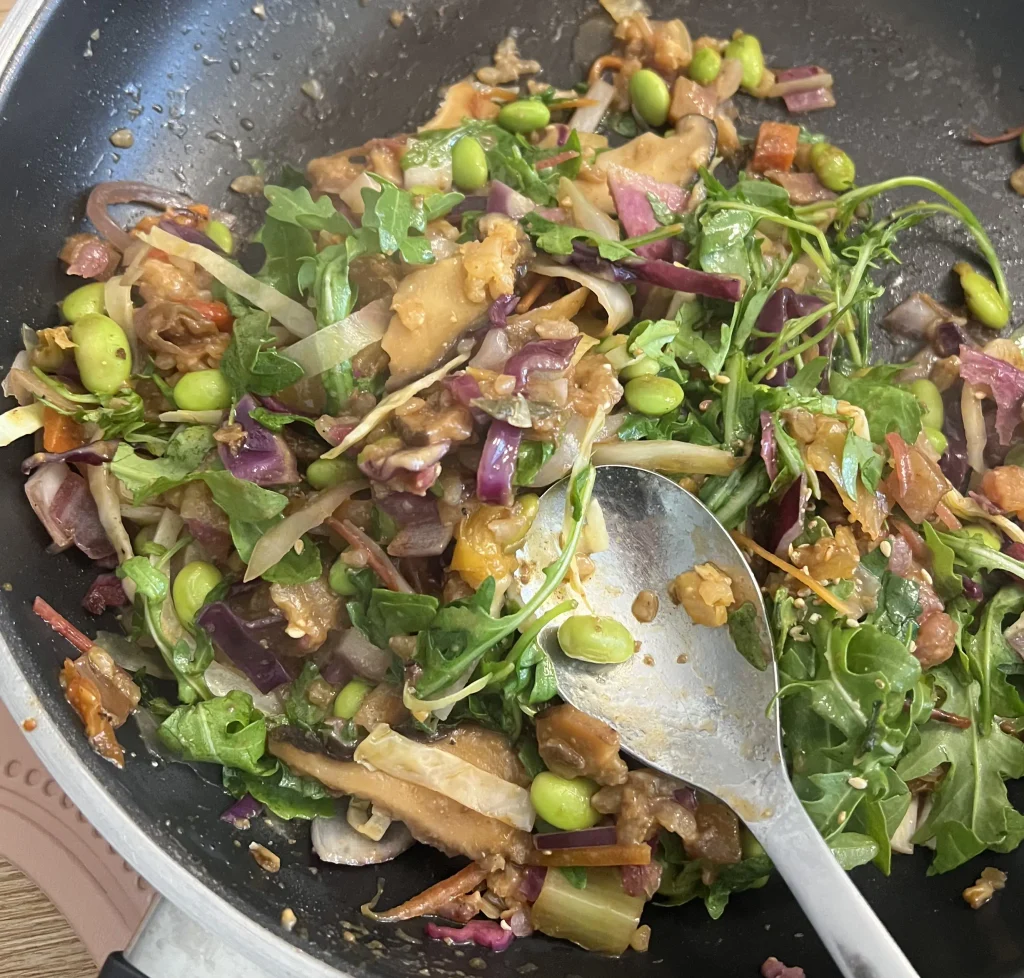
Serve with brown rice, broccoli and edamame for an easy one-bowl meal. The vegetables do not need their own strong sauce when the tofu already supplies plenty of flavour.
For the complete recipe, try the 15-Minute Gochujang Tofu Rice Bowl.
How to Adjust Gochujang for Different Meals
You do not need one all-purpose sauce for every dish. Small adjustments make the paste more useful.
| Ingredient | What it contributes | When it is useful |
| Water | Loosens the paste without adding another strong flavour | Rice-bowl sauces and tofu glazes |
| Rice vinegar | Acidity and a brighter finish | Cold noodles and dressings |
| Toasted sesame oil | A nutty aroma | Mixed rice, noodles and finishing sauces |
| Garlic | A more aromatic, savoury flavour | Glazes and cooked sauces |
| Sugar or Maple syrup | Additional sweetness when needed | Balancing a particular sauce after tasting |
| Soy sauce | Extra salty, savoury seasoning | When the complete mixture needs it |
Add ingredients according to the meal, not simply because they appear in another recipe.
For cold noodles, you may want a noticeable vinegar tang.
For a tofu glaze, you may prefer a rounder flavour with less acidity.
For lettuce wraps, the paste can stay concentrated.
💡 K-Well’s Tip: Use the Same Ingredients in Different Ways
You can explore several gochujang meals without buying a different set of vegetables each time.
Use cucumber and carrot in a cold noodle bowl. Pair carrots and cooked greens with rice and tofu. Set out the remaining cucumber with lettuce wraps.
Changing the temperature, texture and sauce creates variety while keeping shopping manageable.
For a guide to the seasonings that work alongside gochujang, see 7 Essential Korean Pantry Staples for Beginners in the UK.
FAQ
Q1. Can I Use Gochujang Without Cooking It?
Yes. Gochujang can be used in uncooked dressings and as a condiment. Mix or loosen it to suit the dish, and follow the product’s storage instructions after opening.
Q2. Is Gochujang the Same as Gochugaru?
No. Gochujang is a fermented seasoning paste, while gochugaru is chilli powder or flakes. Replacing one with the other changes the consistency and seasoning, so they are not direct substitutes.
Q3. How Can I Make a Gochujang Meal Less Spicy?
Start with less paste and keep some sauce separate for anyone who wants more. Pair it with rice, vegetables and protein so that the seasoning is spread across the meal. Adding water thins a sauce but does not remove the chilli already in it.
Q4. Do I Need to Add Sugar and Soy Sauce?
Not always. Gochujang already contributes sweetness and salt. Taste it with the other sauce ingredients before deciding whether either addition would improve the balance.
🌿 K-Well’s Everyday Kitchen Notes
The easiest way to become comfortable with gochujang is to use it in more than one form.
Mix it through rice, brighten it with vinegar for noodles, simmer it with rice cakes or add a small amount to a lettuce wrap. Then use those ideas as a starting point for your own Korean-inspired meals.
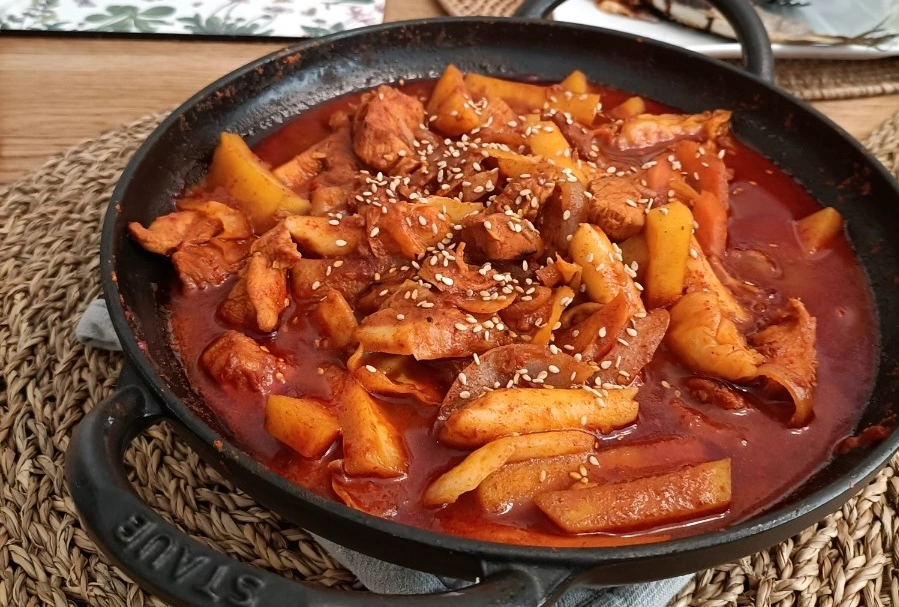
When I am craving something spicy, I often reach for gochujang to make familiar Korean dishes such as bibimbap, dakgalbi and tteokbokki. Each uses gochujang differently, from mixing it into rice and vegetables to building a rich sauce for chicken or rice cakes.
You do not need a complicated recipe every time. Familiar ingredients, a little attention to sauce consistency and a final taste before serving can take that tub of gochujang a long way.
Read Next
- 15-Minute Gochujang Tofu Rice Bowl
- 7 Essential Korean Pantry Staples for Beginners in the UK
- Is Gochujang Healthy for Weight Loss? Sugar, Portions and Smart Ways to Use It
References
- Korean Food Promotion Institute (KFPI). Gochujang, a “Korean Sauce” That Is Taking the World by Storm with Its Sweet Spiciness. https://www.hansik.or.kr/magazines/list/magazineDetail/60/3390?menuSn=429
- Korean Food Promotion Institute (KFPI). Bibimbap (Mixed Rice Dish), Our Dish Created with the Aesthetics of Harmony. https://www.hansik.or.kr/magazines/list/magazineDetail/38/3110?menuSn=429
- Korean Food Promotion Institute (KFPI). 봄철 잃은 입맛 돌아오게 하는 비빔국수 레시피 [Bibim Guksu Recipes to Revive Your Spring Appetite; Korean-language resource]. https://www.hansik.or.kr/magazines/list/magazineDetail/49/3222?menuSn=429
- Ministry of Culture, Sports and Tourism (MCST). KOREA Webzine, February 2025: The Origin—Gochujang. https://www.korean-culture.org/eng/webzine/202502/sub05.html