
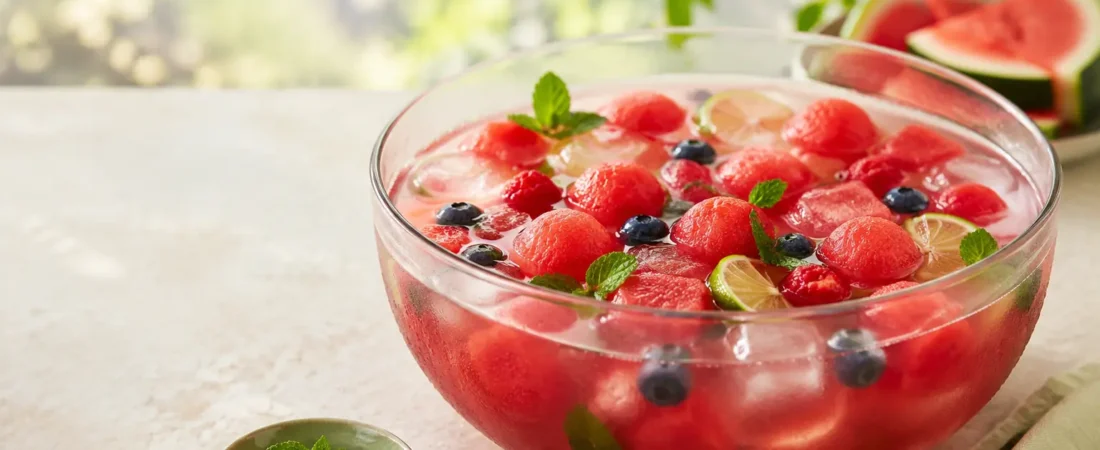
Subak hwachae (수박화채) is a colourful Korean watermelon punch enjoyed during warm weather. Chilled fruit is served in a lightly sweet liquid, creating a dessert that feels somewhere between fruit salad and punch.
Recipes vary between households. Some use milk, fruit juice or lemon-lime fizzy drinks, while modern versions may add condensed milk, canned fruit and flavoured syrup. This lighter adaptation combines watermelon, fresh berries, lime and coconut water with no added sugar.
The phrase lower-added-sugar describes the recipe more accurately than sugar-free. Watermelon, berries and coconut water contain naturally occurring sugars, but the bowl does not rely on condensed milk or sweetened fizzy drinks. The result is fresh, bright and easy to prepare with ingredients available from major UK supermarkets.
Key Takeaways
- Naturally Refreshing: Watermelon provides a high proportion of water along with carbohydrate, potassium, vitamin C, lycopene and naturally occurring L-citrulline.
- Lower in Added Sugar: Coconut water with no added sugar or sparkling water creates a lighter base than condensed milk, syrup or regular lemon-lime fizzy drinks.
- Ready in Five Minutes: Watermelon, berries, lime and mint turn into an easy Korean summer dessert with no specialist shopping required.
What Is Subak Hwachae?
Hwachae refers to a family of traditional Korean fruit punches, and subak means watermelon. The exact ingredients and presentation can change with the season and personal preference.
Watermelon is usually cut into cubes or scooped into balls, then combined with a chilled liquid and other fruit. The playful shapes and vivid colours make the dish especially popular for summer gatherings.
Traditional and contemporary recipes are both flexible. Rather than defining one version as the only authentic method, it is more useful to preserve the key experience: cold watermelon, plenty of fruit and a refreshing liquid base served with a spoon.
Why Watermelon Works So Well
Watermelon is well suited to a chilled punch because water makes up most of its weight. Serving the fruit whole also retains its natural texture and fibre, unlike a strained juice.
Its red colour comes mainly from lycopene, a carotenoid also found in tomatoes and pink grapefruit. Watermelon additionally supplies vitamin C and some potassium, although the precise amount varies with the portion and variety.
Watermelon also contains L-citrulline, an amino acid involved in the body’s nitric oxide pathway. A small exercise study has explored watermelon juice in relation to muscle soreness, but the amount and format used in research differ from a dessert bowl. In this recipe, watermelon’s most immediate advantages are its refreshing taste, fluid content and ability to provide carbohydrates after activity.
Nutritional Snapshot
- Water and carbohydrate: Make watermelon refreshing and provide accessible energy.
- Lycopene: Gives red watermelon much of its characteristic colour.
- Vitamin C: Contributes to normal collagen formation and antioxidant protection.
- Potassium: Supports normal muscle and nervous-system function.
- L-citrulline: A naturally occurring amino acid found in watermelon.
Smart Ingredient Swaps for a Lighter Bowl
The main ingredients are available from Tesco, Sainsbury’s, M&S, Waitrose, Aldi and Lidl. The liquid base is the most useful place to adjust sweetness.
| Common modern ingredient | Lighter alternative | How it changes the bowl |
| Regular Sprite or 7UP | Sparkling water or coconut water with no added sugar | Keeps the liquid light and refreshing |
| Sweetened condensed milk | Unsweetened plant milk | Creates creaminess with less added sugar |
| Canned fruit in syrup | Fresh berries or sliced stone fruit | Adds colour, flavour and whole-fruit texture |
| Flavoured syrup | Lime juice and fresh mint | Adds brightness and aroma |
Check the coconut water label and choose a product with no added sugar. It will still contain natural sugar from coconut.
K-Well’s Shopping Tip: Seedless watermelon is the quickest option, but a regular watermelon works just as well. Remove the seeds while cutting and keep any juice released on the chopping board for the punch.
Five-Minute Subak Hwachae Recipe
Serves: 4
Preparation: 5 minutes
Dietary notes: Vegan and gluten-free when all ingredients are suitable
Ingredients
- 600g chilled watermelon
- 100g strawberries, raspberries or blueberries
- 250ml chilled coconut water with no added sugar or sparkling water
- 1 tablespoon fresh lime juice
- A small handful of fresh mint leaves (optional)
- Ice cubes (optional)
Method
1. Prepare the Fruit
Cut the watermelon into bite-sized cubes or use a melon baller to create round pieces. Keep any juice released while cutting.
Hull and slice the strawberries, if using. Raspberries and blueberries can remain whole. Place all the fruit in a chilled serving bowl.
2. Add the Liquid Base
Mix the coconut water or sparkling water with the lime juice and any reserved watermelon juice. Pour it over the fruit and stir gently.
3. Finish and Serve
Lightly press the mint leaves between your fingers to release their aroma, then add them to the bowl. Finish with ice cubes, if using, and serve immediately with long spoons.
K-Well’s Flavour Tip: Taste the ripe watermelon before assembling the punch. Sweet, in-season fruit usually provides enough flavour without honey, syrup or another sweetener.
Easy Variations
Creamy Hwachae
Replace the coconut water with 250ml unsweetened soya, almond or coconut milk drink. Omit the lime juice because acidity can cause some plant drinks to separate. Add the milk immediately before serving.
Sparkling Hwachae
Use chilled sparkling water and add it at the last moment so the punch retains its bubbles. A few extra berries can provide colour and gentle sweetness.
Tropical Hwachae
Replace half the berries with fresh peach, nectarine, mango or pineapple. Keep watermelon as the main fruit so the bowl retains its recognisable subak hwachae character.
When to Enjoy Subak Hwachae
As a Summer Dessert
Serve a small bowl after a barbecue, picnic or Korean-inspired meal. The cold fruit and light liquid base provide a colourful finish without requiring baking or lengthy preparation.
After Yoga or a Short Run
Subak hwachae provides fluid and carbohydrate and can be a refreshing snack after light exercise. Pair it with plain yoghurt, soy yoghurt, nuts or seeds when you would like additional protein and a more satisfying snack.
After a Long or Demanding Run
Make it part of a larger recovery meal by serving it after tofu, eggs, chicken, fish or a soybean-based dish. This combines the fruit’s carbohydrate and fluid with a substantial protein source and a normally seasoned meal.
For a Korean summer pairing, serve it after Kongguksu: Korean Soybean Noodle Soup.
As an Afternoon Snack
Divide the recipe into smaller bowls and serve it with a small handful of unsalted nuts or roasted seeds on the side. This adds texture and makes the snack more satisfying while keeping the Hwachae fresh and light.
Make-Ahead and Storage Tips
Cut the watermelon a few hours in advance and store it in a covered container in the refrigerator. Keep delicate berries separate so they retain their shape.
Add the liquid, lime, mint and ice shortly before serving. This prevents the fruit from becoming too soft and stops melting ice from diluting the flavour.
Store any leftover punch promptly in a covered container in the refrigerator and enjoy it by the following day. The fruit will gradually release more juice, so stir gently before serving.
Is Coconut Water Essential?
No. Coconut water adds a lightly sweet flavour and some potassium, but sparkling water produces an equally refreshing bowl with less natural sugar. Cold still water also works when you want the watermelon flavour to remain dominant.
Choose the base according to the meal and fruit. Very sweet watermelon pairs well with sparkling or still water, while less ripe fruit may benefit from the gentle sweetness of coconut water.
For another caffeine-free Korean hydration option, read Why Koreans Drink Roasted Barley Tea.
FAQ
Q1. Is This Subak Hwachae Sugar-Free?
No. The fruit and coconut water contain naturally occurring sugars. It is lower in added sugar than versions made with regular fizzy drinks, condensed milk or syrup. Use sparkling water when you want the lowest-sugar liquid option.
Q2. Can I Prepare It in Advance?
Prepare and chill the watermelon a few hours ahead, but add the berries, liquid, lime, mint and ice shortly before serving. This gives the punch its freshest texture and flavour.
Q3. Can I Use Frozen Watermelon?
Yes. Frozen watermelon creates a colder, slightly slushy punch. Allow it to soften for a few minutes before serving so the pieces are comfortable to eat with a spoon.
Q4. What Protein Can I Serve with Hwachae After Exercise?
Plain Greek yoghurt, unsweetened soy yoghurt, tofu, eggs, chicken and fish are practical options. Choose one that suits the meal and your dietary preferences.
K-Well’s Final Thoughts
Subak hwachae celebrates the simplest strengths of summer fruit: colour, sweetness and refreshment. Watermelon, berries, lime and mint need very little added to become a lively Korean dessert.
Use coconut water for gentle sweetness, sparkling water for a lighter base or unsweetened plant milk for a creamy variation. Served on its own or alongside a protein-rich meal after activity, this five-minute bowl is an easy addition to a warm-weather K-wellness routine.
Read Next
References
- British Dietetic Association (BDA). Sport and Exercise Nutrition. https://www.bda.uk.com/resource/sport-exercise-nutrition.html
- National Health Service (NHS). Dehydration. https://www.nhs.uk/conditions/dehydration/
- Tarazona-Díaz, M. P., Alacid, F., Carrasco, M., Martínez, I. and Aguayo, E. (2013). Watermelon juice: Potential functional drink for sore muscle relief in athletes. Journal of Agricultural and Food Chemistry, 61(31), 7522–7528. https://doi.org/10.1021/jf400964r
- U.S. Department of Agriculture (USDA), Agricultural Research Service. FoodData Central. https://fdc.nal.usda.gov/