
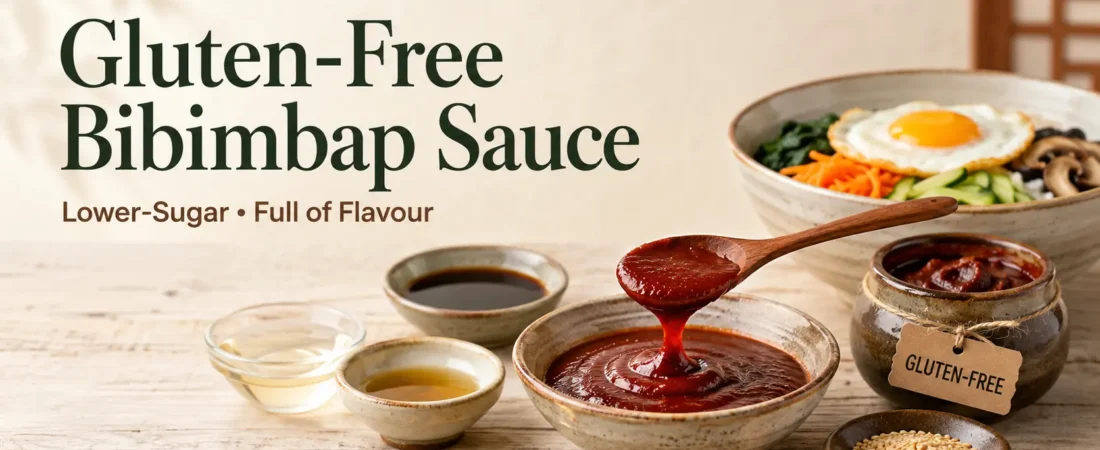
Make a gluten-free bibimbap sauce with certified gluten-free gochujang, less added sugar and an easy five-minute method.
Key Takeaways
- Check the gochujang: Rice is naturally gluten-free, but some gochujang products contain wheat or carry cross-contamination warnings. Choose one clearly labelled gluten-free.
- Use less added sweetness: This recipe uses only one teaspoon of maple syrup for the whole batch, and you can omit it when your gochujang is already sweet.
- Build flavour in layers: Rice vinegar adds brightness, toasted sesame oil brings aroma, and a little certified gluten-free tamari deepens the savoury finish.
The Sauce That Brings the Whole Bowl Together
You have cooked the rice, prepared the vegetables and added tofu, beef or a perfectly fried egg. The final spoonful of sauce decides whether the bowl tastes like a collection of separate ingredients or a proper bibimbap.
Classic bibimbap is commonly served with gochujang, the Korean fermented chilli paste that contributes heat, sweetness and savoury depth. A simple sauce loosens that concentrated paste with vinegar, sesame oil and a small amount of sweetness, allowing it to coat the rice and vegetables evenly.
For anyone following a gluten-free diet, the challenge is not bibimbap itself but the packaged condiments. Gochujang and soy sauce formulations vary, and wheat may appear in the ingredients. This recipe begins with products explicitly labelled gluten-free and turns them into a balanced sauce in about five minutes.
The result is spicy, tangy, gently sweet and nutty—without the large quantity of syrup used in some restaurant-style sauces. Here, lower-sugar means lower in added sugar than recipes made with several tablespoons of sugar, honey or corn syrup. The total sugar content will still depend on the gochujang you choose.
Is Gochujang Gluten-Free?
Not every gochujang is gluten-free. Traditional and commercial recipes can use different grains, and some modern products include wheat. Glutinous rice, despite its confusing English name, does not contain gluten; the word “glutinous” describes its sticky texture. However, the presence of rice does not guarantee that the entire product is suitable for a gluten-free diet.
In the UK, Coeliac UK explains that only foods containing no more than 20 parts per million of gluten can be labelled gluten-free. If you have coeliac disease or require strict avoidance, do not rely only on a short ingredient list or a front label that says “rice gochujang”. Look for a recognised gluten-free statement and read the allergen and precautionary information each time you buy the product.
The same rule applies to tamari. Although tamari is often made with little or no wheat, the name alone is not a gluten-free guarantee. Select a bottle that is specifically labelled gluten-free.
Your Gluten-Free Sauce Checklist
| Ingredient | What to check |
| Gochujang | A clear gluten-free label; no unsuitable wheat, barley or rye ingredients |
| Tamari | Specifically labelled gluten-free |
| Rice vinegar | Plain, unseasoned vinegar with no unexpected additives |
| Sesame oil and seeds | Allergen information and cross-contamination advice |
| Maple syrup | Pure maple syrup rather than a flavoured table syrup |
If you are cooking for another person, keep packaging available so they can check the ingredients themselves. Use clean utensils and a preparation surface free from crumbs, ordinary soy sauce or other gluten-containing foods.
What Makes This Bibimbap Sauce Lower in Added Sugar?
Many bibimbap sauce recipes balance gochujang’s salt and heat with sugar, honey, rice syrup or corn syrup. Sweetness is part of the familiar flavour profile, but it does not need to dominate the sauce.
This version uses one teaspoon of maple syrup across approximately eight one-tablespoon servings. That works out to only a small amount of added sweetener in each serving. Because commercial gochujang already varies considerably in sweetness, taste the paste before adding the maple syrup.
You have three useful options:
- Balanced version: Add the full one teaspoon for a gently rounded flavour.
- Less-sweet version: Begin with half a teaspoon, then taste.
- No-added-sweetener version: Omit the maple syrup when the gochujang already tastes sweet enough.
Honey and syrups both count as free sugars, so the most useful change is to measure a smaller amount rather than simply exchanging one sweetener for another.
Gluten-Free Bibimbap Sauce Recipe
Preparation time: 5 minutes
Cooking time: None
Yield: Approximately 120 ml
Servings: About 8 tablespoons
Suggested serving: 1 tablespoon per bowl, then adjust to taste
Ingredients
- 4 tablespoons certified gluten-free gochujang
- 1 tablespoon plain rice vinegar or brown rice vinegar
- 2 teaspoons toasted sesame oil
- 1 teaspoon pure maple syrup (optional)
- 1 teaspoon certified gluten-free tamari
- 1 small garlic clove, finely grated, or ½ teaspoon minced garlic
- 1 teaspoon toasted sesame seeds
- 1–2 tablespoons warm water, as needed
Ingredient Notes
Certified Gluten-Free Gochujang
Gochujang is the central flavour, so this recipe uses the real paste rather than trying to recreate it with doenjang and chilli flakes. Brands differ in heat, salt and sweetness. Start with the recipe measurements, then make small adjustments after tasting.
Rice Vinegar
Plain rice vinegar has a mild acidity that works naturally with gochujang and sesame oil. Brown rice vinegar is equally suitable. Apple cider vinegar can be used in an emergency, but its fruitier aroma will be more noticeable.
Avoid confusing plain rice vinegar with seasoned rice vinegar, which commonly contains added sugar and salt. If seasoned vinegar is all you have, omit the maple syrup initially and taste before adding tamari.
Toasted Sesame Oil
Use toasted sesame oil for its deep, nutty aroma. It is a finishing ingredient, so two teaspoons are enough to flavour the batch without making the sauce oily.
Gluten-Free Tamari
A teaspoon of tamari gives the sauce a fuller savoury finish. It is optional if your gochujang is already salty. Always confirm the gluten-free label rather than assuming all tamari is suitable.
Step-by-Step Method
- Loosen the gochujang. Place the gluten-free gochujang and rice vinegar in a small bowl. Whisk until the vinegar is fully incorporated and the paste becomes smoother.
- Add the seasonings. Whisk in the toasted sesame oil, maple syrup, gluten-free tamari and garlic.
- Adjust the consistency. Add warm water one teaspoon at a time until the sauce falls slowly from a spoon. For bibimbap, it should be loose enough to mix through rice without becoming watery.
- Finish with sesame seeds. Stir in the toasted sesame seeds.
- Taste in context. Try a small amount with rice or cucumber rather than tasting only from the spoon. Add a little more vinegar for brightness, water for a milder sauce or maple syrup for sweetness.
K-Well’s Tip: Toss sliced cucumber and thinly sliced onion with the gochugaru dressing just before serving. Spoon the mixture over warm rice and finish with a fried egg for a quick, satisfying gochugaru cucumber rice bowl. The runny yolk softens the chilli heat and brings the rice, crisp vegetables and savoury dressing together. Because cucumber gradually releases water, dress only the amount you plan to eat straight away.
Do not pour the full batch over one bowl. Start with one tablespoon, mix thoroughly and add more only if needed. Gochujang becomes more evenly distributed as the warm rice is stirred, so a modest amount can flavour the entire meal.
How to Adjust the Sauce Without Losing Balance
Homemade sauce is useful because you can adapt it to the particular gochujang in your fridge.
| If the sauce tastes… | Add… |
| Too spicy | 1–2 teaspoons warm water and a little more sesame oil |
| Too salty | Water and a small splash of rice vinegar |
| Too sharp | ¼ teaspoon maple syrup |
| Too sweet | Rice vinegar or more gochujang |
| Too thick | Warm water, one teaspoon at a time |
| Too thin | A little more gochujang |
Make adjustments gradually. It is much easier to add sweetness or salt than to remove it.
Three Ways to Use the Sauce
1. Classic Bibimbap Bowl
Add warm rice to a bowl and arrange cooked spinach, carrots, mushrooms, courgette and bean sprouts on top. Finish with an egg, tofu or lean beef and one tablespoon of sauce. Mix everything thoroughly before deciding whether you need more.
The sauce provides flavour, while the rice, vegetables and protein make the bowl a complete meal. This distinction is especially useful after running or yoga: the condiment enhances the recovery meal, but the carbohydrate, protein, fluids and total energy come from the bowl as a whole.
2. Tofu and Vegetable Lunch Bowl
Serve pan-seared tofu with brown rice, cucumber, shredded cabbage and lightly steamed broccoli. Thin one tablespoon of bibimbap sauce with a teaspoon of water and drizzle it over the bowl. This creates an even coating without requiring a large amount.
3. Spicy Cucumber or Cabbage Slaw Dressing
Mix one tablespoon of bibimbap sauce with one tablespoon of rice vinegar and one tablespoon of water. Toss it with sliced cucumber or shredded cabbage shortly before serving. This lighter dressing also works as a side dish for grilled fish, tofu or chicken.
Can I Make Bibimbap Sauce Without Gochujang?
If certified gluten-free gochujang is unavailable, you can make a spicy dressing with fine gochugaru, gluten-free tamari, rice vinegar, sesame oil and a little maple syrup. It can complement a rice bowl, but it will not reproduce gochujang’s fermented depth or thick texture.
For that reason, it is better described as a gochugaru rice-bowl dressing, not homemade gochujang. This keeps the recipe culturally clear while still giving gluten-free cooks a useful alternative.
Quick Gochugaru Dressing
- 1 tablespoon fine gochugaru
- 1 tablespoon certified gluten-free tamari
- 1 tablespoon rice vinegar
- 2 teaspoons toasted sesame oil
- 1 teaspoon maple syrup, optional
- 1–2 tablespoons water
- ½ teaspoon finely grated garlic
Whisk everything together and let it stand for five minutes so the chilli flakes soften. This version will be thinner and brighter than a gochujang-based sauce.
K-Well’s Tip: Turn It into a Quick Gochugaru Cucumber Rice Bowl
Toss sliced cucumber and thinly sliced onion with the gochugaru dressing just before serving. Spoon the mixture over warm rice and finish with a fried egg for a quick, satisfying gochugaru cucumber rice bowl. The runny yolk softens the chilli heat and brings the rice, crisp vegetables and savoury dressing together. Because cucumber gradually releases water, dress only the amount you plan to eat straight away.
Storage and Meal Prep
Transfer the finished sauce to a clean, airtight container and refrigerate it promptly. Because this homemade version contains fresh garlic and added water, make a small batch and use it within five days. Stir before serving, as the sesame oil may separate slightly.
Always use a clean spoon rather than dipping in a utensil that has touched rice, eggs or other food. Discard the sauce sooner if its smell, colour or texture changes unexpectedly.
For easier meal prep, portion the sauce into small containers while preparing lunches. Keeping the condiment separate prevents vegetables from becoming watery and lets you control the amount added to each bowl.
Common Mistakes to Avoid
Assuming Every Gochujang Is Gluten-Free
Recipes and manufacturing methods vary. Check the current package even when you have bought the same brand before.
Using Ordinary Soy Sauce
Standard soy sauce commonly contains wheat. Use certified gluten-free tamari or another clearly labelled gluten-free soy sauce.
Adding Sweetener Before Tasting
Some gochujang products are already noticeably sweet. Taste first and treat the maple syrup as an adjustable ingredient.
Making the Sauce Too Thin
Add water gradually. A bibimbap sauce should mix easily but still cling to the rice and vegetables.
Storing It for Several Weeks
Fresh garlic and added water make this different from an unopened commercial condiment. A small, fresh batch gives better flavour and simpler food safety.
FAQ
Q1. Is glutinous rice gluten-free?
Yes. Glutinous rice is naturally gluten-free; its name refers to its sticky texture. A gochujang containing glutinous rice may still include wheat or face cross-contamination, so check the complete label.
Q2. Is all tamari gluten-free?
No. Tamari is often wheat-free, but formulations vary. Choose a product explicitly labelled gluten-free when strict avoidance is required.
Q3. Can I make the sauce without added sweetener?
Yes. Omit the maple syrup and taste the finished mixture with rice. Many gochujang products already provide enough sweetness for a balanced sauce.
Q4. How long does homemade bibimbap sauce last?
Store it in a clean, airtight container in the refrigerator and use it within five days. Stir before serving and always use a clean spoon.
K-Well’s Final Thoughts
A good bibimbap sauce does not need a long ingredient list or a large amount of sugar. The essential step is choosing a genuinely gluten-free gochujang, then balancing its concentrated flavour with mild vinegar, toasted sesame oil and just enough water to help it move through the bowl.
This five-minute version keeps the familiar spicy-sweet character while giving you control over sweetness, heat and consistency. Prepare a small batch, begin with one tablespoon per bowl and let the vegetables, rice and protein remain the centre of the meal.
Try it first with a simple combination of warm rice, spinach, mushrooms, cucumber and tofu or egg—then adjust the sauce to your own gochujang and preferred heat level.
Read Next
- 7 Essential Korean Pantry Staples for Beginners in the UK
- Best Tofu Brands at Sainsbury’s for Doenjang Jjigae
- Korean Roasted Seaweed (Gim): Portion-Smart Snack and Meal Ideas
References
- Coeliac UK. Gluten-free food labelling law explained. https://www.coeliac.org.uk/about-coeliac-disease/gluten-and-the-law/
- Coeliac UK. How to read food labels. https://www.coeliac.org.uk/living-with-coeliac-disease/food-and-drink/food-and-drink-information/how-to-read-food-labels/
- Food Standards Agency (FSA). Food allergen labelling and information requirements: Technical guidance. https://www.food.gov.uk/business-guidance/food-allergen-labelling-and-information-requirements-technical-guidance-summary
- Korean Culture and Information Service (KOCIS). The Origin: Gochujang. https://www.korean-culture.org/eng/webzine/202502/sub05.html
- National Health Service (NHS). How to cut down on sugar in your diet. https://www.nhs.uk/live-well/eat-well/how-to-eat-a-balanced-diet/how-to-cut-down-on-sugar-in-your-diet/