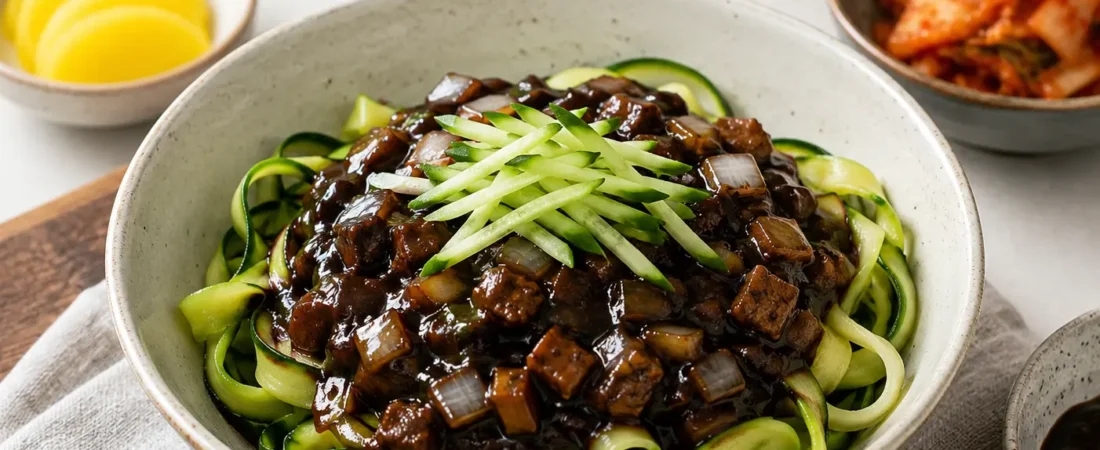
Jajangmyeon (짜장면) is a Korean comfort dish known for its glossy black bean sauce, sweet onion and satisfying noodles. This lighter version replaces the usual wheat noodles with fresh zucchini ribbons while keeping the rich, savoury character of chunjang at the centre.
Zucchini contains far less carbohydrate than a standard portion of wheat noodles and adds colour, freshness and volume. Lean pork or firm tofu makes the bowl more substantial, while onion and cabbage bring enough natural sweetness to reduce the need for a heavily sweetened sauce.
The result is best described as a lower-carbohydrate jajangmyeon-inspired bowl rather than an exact replacement for traditional noodles. It offers a lighter texture while preserving the familiar combination of black bean sauce, vegetables and crisp cucumber.
Key Takeaways
- Lower-Carbohydrate Base: Zucchini ribbons replace wheat noodles, creating a lighter bowl with more vegetables and considerably less carbohydrate.
- Balanced Sauce: Onion and cabbage add gentle sweetness, while a measured amount of chunjang provides the distinctive savoury flavour.
- Flexible Protein: Lean pork creates a familiar jajangmyeon-style sauce, while firm tofu offers a simple plant-based alternative.
What Is Jajangmyeon?
Jajangmyeon is a popular Korean noodle dish served with a rich black bean sauce made from chunjang, a dark fermented paste typically containing soya beans and wheat. The sauce is usually cooked with diced onion, cabbage and pork, then thickened and spooned over wheat noodles.
Chunjang has a concentrated salty, earthy and slightly bitter flavour. Cooking it briefly in oil mellows the bitterness and gives the sauce a smoother finish. Some products are already roasted, so check the label before cooking.
Traditional jajangmyeon remains a much-loved comfort food. This recipe keeps its main flavour profile but uses zucchini ribbons for readers who want a vegetable-forward alternative.
Why Zucchini Ribbons Work
Zucchini is widely available in UK supermarkets and is easy to cut into long ribbons with a spiraliser, julienne peeler or ordinary vegetable peeler. Its mild flavour allows the chunjang sauce to remain dominant.
Diabetes UK lists zucchini as a low-carbohydrate vegetable, with approximately 2g of carbohydrate per 100g. Replacing a serving of wheat noodles with zucchini therefore reduces the overall carbohydrate content of the bowl.
The ribbons will not have the chew of traditional jajangmyeon noodles. Instead, they provide a light, slightly crisp texture that contrasts well with the warm, thick sauce.
K-Well’s Tip: Use a vegetable peeler to make wide zucchini ribbons if you do not own a spiraliser. Stop when you reach the soft, seedy centre and dice that remaining section for the sauce.
A More Balanced Black Bean Sauce
The sauce in this recipe uses onion, cabbage and diced zucchini to build volume and natural sweetness. A small portion of pork or tofu adds protein, helping turn the zucchini ribbons into a more complete meal.
Only one tablespoon of oil is used to cook the chunjang and vegetables. A teaspoon of cornflour creates the familiar glossy consistency and adds only a small amount of starch across two servings.
Taste the sauce near the end. Depending on the chunjang brand and the sweetness of the vegetables, you may not need any added sweetener. If the sauce still tastes noticeably bitter, add half a teaspoon of sugar or maple syrup rather than a large spoonful.
UK Shopping Guide
Zucchini, white cabbage, onions, cucumber, lean diced pork and firm tofu are available from major UK supermarkets such as Tesco, Sainsbury’s, M&S and Waitrose.
Chunjang is a specialist Korean ingredient and is more reliably found at H Mart, Oseyo, Korea Foods and other East Asian grocery shops or online. Look specifically for Korean chunjang or jajang paste; Chinese black bean garlic sauce has a different flavour and is not a direct substitute.
Check the chunjang label for cooking directions, added sugar, salt and allergens. Most conventional products contain wheat, so they are not suitable for a gluten-free diet unless clearly labelled otherwise.
If Korean seasonings are new to you, 7 Essential Korean Pantry Staples for Beginners in the UK explains how to build a practical starter pantry.
Easy Lower-Carb Jajangmyeon Recipe
Serves: 2
Preparation: 15 minutes
Cooking: 15 minutes
Ingredients
- 2 large zucchini
- 2 tablespoons Korean chunjang
- 1 tablespoon neutral cooking oil
- 150g lean diced pork or 180g firm tofu, cut into small cubes
- 1 medium onion, diced
- 150g white or sweetheart cabbage, chopped
- 1 garlic clove, minced (optional)
- 180ml water
- 1 teaspoon cornflour mixed with 1 tablespoon cold water
- ½ teaspoon sugar or maple syrup (optional)
- ¼ cucumber, cut into fine matchsticks
- 1 spring onion, finely sliced (optional)
Method
1. Prepare the Zucchini
Turn one and a half zucchini into ribbons using a spiraliser, julienne peeler or vegetable peeler. Dice the remaining half zucchini for the sauce.
Place the ribbons in two serving bowls. They can be served raw so the hot sauce softens them slightly. For a warmer, softer texture, heat them in a dry non-stick pan for one minute, then divide them between the bowls.
2. Cook the Chunjang
Heat the oil in a wide frying pan over medium heat. Add the chunjang and cook for one to two minutes, stirring constantly, until it becomes glossy and aromatic.
If your product is labelled roasted or pre-fried, follow its packet instructions; it may need only a brief stir with the other ingredients.
Transfer the cooked paste to a small bowl while you prepare the vegetables.
3. Cook the Protein and Vegetables
Add the pork to the same pan and cook until lightly browned. If using tofu, add the cubes and cook gently for three to four minutes so the edges become lightly golden.
Add the onion, cabbage and diced zucchini. Cook for four to five minutes, stirring regularly, until the onion softens and the cabbage begins to reduce. Add the garlic during the final 30 seconds if using.
4. Simmer the Sauce
Return the chunjang to the pan and stir until the vegetables and protein are evenly coated. Pour in the water and simmer for three minutes.
Stir the cornflour mixture again, then pour it gradually into the bubbling sauce. Cook for another one to two minutes until glossy and lightly thickened.
Taste the sauce. Add the sugar or maple syrup, if using, only when the vegetables have not provided enough sweetness to balance the chunjang.
K-Well’s Sauce Tip: Chunjang brands vary in saltiness, bitterness and sweetness. Add extra seasoning only after the sauce has simmered with the onion and cabbage.
5. Assemble the Bowls
Spoon the hot jajang sauce over the zucchini ribbons. Finish with cucumber matchsticks and spring onion, then serve immediately.
Use kitchen scissors to shorten very long ribbons if they are difficult to mix with the chunky sauce.
Pork or Tofu: Which Works Best?
Lean pork provides a savoury flavour and texture similar to familiar jajangmyeon sauces. Choose small pieces so they cook quickly and distribute evenly through the vegetables.
Firm tofu offers a mild plant-based option and absorbs some of the sauce on its surface. Drain the packing liquid and cut it into small cubes; heavy pressing is not necessary for this dish.
For a fully vegan version, use tofu and check that the chunjang is labelled suitable for vegans. Water provides enough liquid, so commercial stock is not essential.
Easy Noodle Alternatives
Shirataki or Konjac Noodles
Rinse the noodles thoroughly according to the packet instructions, drain them and heat them in a dry frying pan for two to three minutes before adding the sauce. Their springy texture is firmer than zucchini ribbons.
Edamame or Soybean Noodles
These provide more protein and a more conventional noodle shape. Their carbohydrate content varies between products, so check the label and cook according to the packet instructions.
Wholewheat Noodles
Wholewheat noodles are not low in carbohydrate, but they provide more fiber than standard white wheat noodles and preserve the familiar noodle texture. They are useful when your priority is a balanced bowl rather than a strict lower-carb swap.
Make It a More Substantial Meal
The sauce already contains protein and several vegetables, but you can adapt the bowl to your appetite.
- Add shelled edamame to the sauce.
- Increase the tofu and reduce the quantity of chunjang slightly if needed.
- Serve with a fresh cucumber and radish side.
- Top with a fried egg for a non-vegan variation.
- Combine half zucchini ribbons with half noodles for a gradual transition.
For another adaptable Korean noodle meal, read How to Make Instant Korean Ramyun Healthier.
Nutritional Snapshot
Replacing wheat noodles with zucchini ribbons substantially reduces the carbohydrate and energy supplied by the noodle base. Zucchini also contributes water, fibre and nutrients including vitamin C and potassium.
The pork version supplies protein, while tofu contributes high-quality plant protein and unsaturated fat. The exact nutritional profile depends on the chunjang, protein choice, portion size and any added sweetener.
Chunjang is a concentrated seasoning, so a measured amount can flavour plenty of vegetables. Compare labels when salt or sugar intake is a priority.
Storage and Meal Preparation
Store leftover sauce in a covered container in the refrigerator and use it within two days. Reheat in a saucepan or microwave until steaming hot throughout, adding a small splash of water if it has thickened.
Prepare fresh zucchini ribbons shortly before serving for the best texture. Store the sauce and ribbons separately so the vegetables remain crisp and do not release extra water into the sauce.
FAQ
Q1. Is This Jajangmyeon Completely Carb-Free?
No. Zucchini contains a small amount of carbohydrate, and chunjang, vegetables and cornflour also contribute some. It is lower in carbohydrate than a comparable bowl made with wheat noodles.
Q2. How Do I Stop Zucchini Ribbons from Becoming Watery?
Do not boil them. Serve the ribbons raw beneath the hot sauce or heat them briefly in a dry pan for one minute. Add the sauce immediately before eating.
Q3. Is Chunjang Gluten-Free?
Most traditional chunjang contains wheat. Check the allergen label and choose a certified gluten-free product if required. A generic Chinese black bean sauce will produce a different flavour.
Q4. Do I Have to Fry Chunjang First?
Regular chunjang benefits from one to two minutes of cooking in oil to mellow its bitterness. Products labelled roasted or pre-fried may require less preparation, so follow the instructions on the pack.
K-Well’s Final Thoughts
Zucchini ribbons give jajangmyeon a fresh, light texture while allowing the glossy chunjang sauce to remain the main attraction. Onion, cabbage and a flexible protein choice make the bowl colourful and satisfying without relying on a large serving of noodles or added sweetener.
Keep the method simple: cook the chunjang according to its label, add sweetness only after tasting and pour the sauce over the ribbons just before serving. It is an easy way to enjoy familiar Korean black bean flavours with everyday UK vegetables.
Read Next
- How to Make Instant Korean Ramyun Healthier
- 7 Essential Korean Pantry Staples for Beginners in the UK
- Healthy Tesco Bibimbap Bowl: Easy Korean-Inspired UK Recipe
References
- Diabetes UK. What’s in Season: Zucchini. https://www.diabetes.org.uk/guide-to-diabetes/enjoy-food/cooking-for-people-with-diabetes/seasonal-cooking/whats-in-season-courgettes
- Harvard T.H. Chan School of Public Health. Carbohydrates. https://nutritionsource.hsph.harvard.edu/carbohydrates/
- Harvard T.H. Chan School of Public Health. Fiber. https://nutritionsource.hsph.harvard.edu/carbohydrates/fiber/
- U.S. Department of Agriculture (USDA), Agricultural Research Service. FoodData Central. https://fdc.nal.usda.gov/