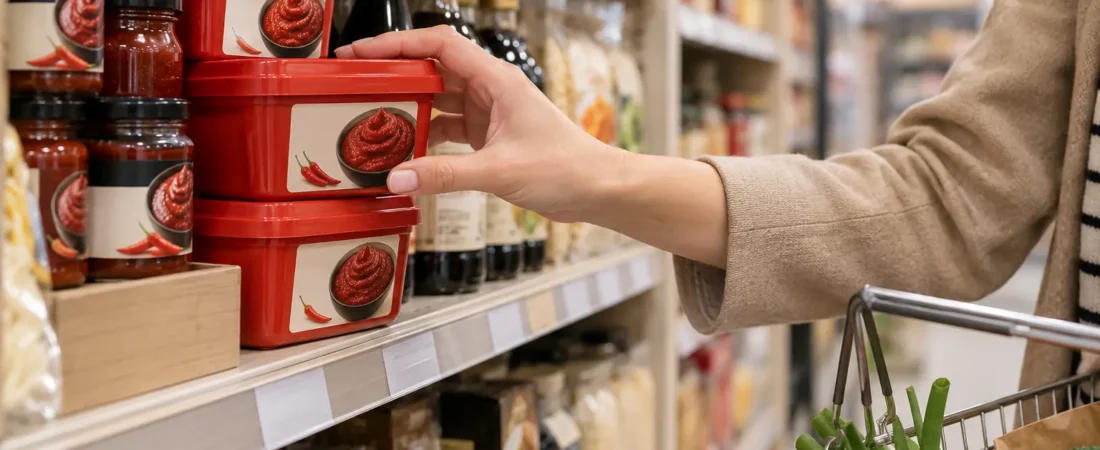
Gochujang is now available in many UK supermarkets, but the products beside one another can be surprisingly different. One may be a concentrated Korean fermented paste, another a milder blended cooking paste, and another a ready-to-use sauce.
The best choice depends less on the front-label design and more on how you plan to use it. A quick check of the product name, ingredients, allergens, nutrition panel and pack size will usually tell you what you need to know.
🌟 Key Takeaways
- Choose the right format: Concentrated gochujang paste is the most flexible option for cooking, while gochujang sauces and mayonnaises are designed for drizzling or dipping.
- Compare the full label: Look beyond the heat rating and compare the first few ingredients, allergens, sugar and salt per 100g.
- Match the pack to your kitchen: A small jar suits occasional cooking, while a larger Korean tub makes more sense if gochujang appears regularly in your meals.
Start with the Product Name: Paste or Sauce?
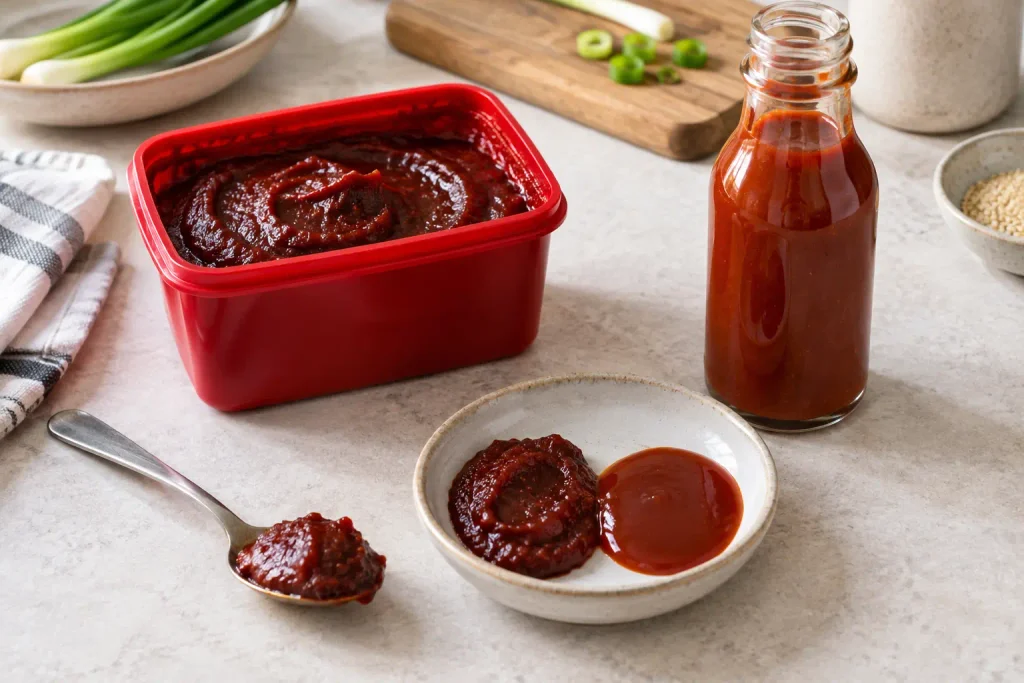
The word gochujang (고추장) can appear on several types of supermarket products. Before comparing brands, check what the product actually is.
| Product type | What to expect | Best suited to |
| Concentrated gochujang paste | Thick, fermented and strongly seasoned; normally used a spoonful at a time | Marinades, stews, stir-fries, rice bowls and homemade sauces |
| Korean-style cooking paste | Often blended with vinegar, miso, garlic, onion or other seasonings | Convenient everyday cooking with fewer additions |
| Gochujang sauce | Thinner and usually ready to pour | Drizzling over bowls, fried foods or roasted vegetables |
| Gochujang mayonnaise or dressing | Creamy, diluted and ready to serve | Sandwiches, salads and dipping |
If a recipe asks for gochujang, it usually means the concentrated paste unless it specifically names a sauce or dressing. A ready-made sauce contains additional liquid and seasoning, so it will not produce the same result when exchanged spoon for spoon.
For ideas on using a tub once you bring it home, see How Gochujang Is Used in Everyday Korean Cooking.
Korean Gochujang and Korean-Style Supermarket Pastes
Both formats can be useful, but they offer different levels of control in the kitchen.
A Korean-made gochujang is commonly sold as a dense paste in a tub or jar. Its seasoning is concentrated, allowing you to add your own vinegar, sesame oil, garlic, sweetener or water according to the dish.
A product labelled Korean-style gochujang paste may already contain several of those flavours. For example, some UK supermarket versions use white miso or yellow bean paste alongside chilli, vinegar and aromatics. This can be convenient when you want a quick cooking paste with a ready-balanced flavour.
Check the country of origin if buying a Korean-made product matters to you. Korean lettering or a red tub can help you spot the category, but the origin statement and ingredients provide clearer information than the packaging style alone.
How to Read the Ingredients List
In the UK, ingredients are listed in descending order by weight. This makes the first four or five ingredients a useful snapshot of the product.
Gochujang formulas vary, but a concentrated paste will generally combine a grain or starch component, chilli pepper, a fermented soya component, salt and some sweetness. Commercial versions may also contain corn syrup, wheat flour, alcohol, flavour enhancers or additional seasonings.
Rather than looking for the shortest possible list, ask three practical questions:
- Is this a concentrated paste or a pre-seasoned blend? Vinegar, garlic and onion high on the list often indicate that more of the final flavour has already been built in.
- Does the chilli appear prominently? The percentage may be stated on some packs, making similar products easier to compare.
- Are there ingredients relevant to my diet? Wheat and soya are particularly important to check.
The best list is the one that fits the dish you want to cook and any dietary requirements you need to follow.
How Spicy Is It?
Gochujang combines chilli heat with savoury, sweet and fermented flavours. A supermarket chilli scale can help you compare products within that retailer, but it is not a universal measure across every brand.
Sweetness, acidity and concentration also change how hot the paste tastes. A darker colour does not automatically mean a hotter product, and two pastes with the same chilli rating may feel different once mixed into food.
For a first tub, choose a mild or medium option if the label provides a heat level. Start with a smaller amount in the dish, taste, and add more as needed. This gives you more control than trying to soften an overly spicy sauce at the end.
Compare Sugar and Salt on the Same Basis
Gochujang is a seasoning paste, so both the recipe and the amount used matter. When comparing two packs, use the per 100g figures rather than the stated serving figures, as brands may define a serving differently.
Current UK supermarket examples show considerable variation. Some blended pastes contain less salt but have vinegar and aromatics already added; some concentrated Korean pastes carry more salt or sugar per 100g but may be used in smaller quantities. Compare products of the same type whenever possible.
If sugar or salt is one of your main considerations, choose the paste that gives you room to season the rest of the dish yourself. You can explore this topic further in Is Gochujang Healthy for Weight Loss? Sugar, Portions and Smart Ways to Use It.
Check Wheat, Gluten, Soya and Vegan Labelling
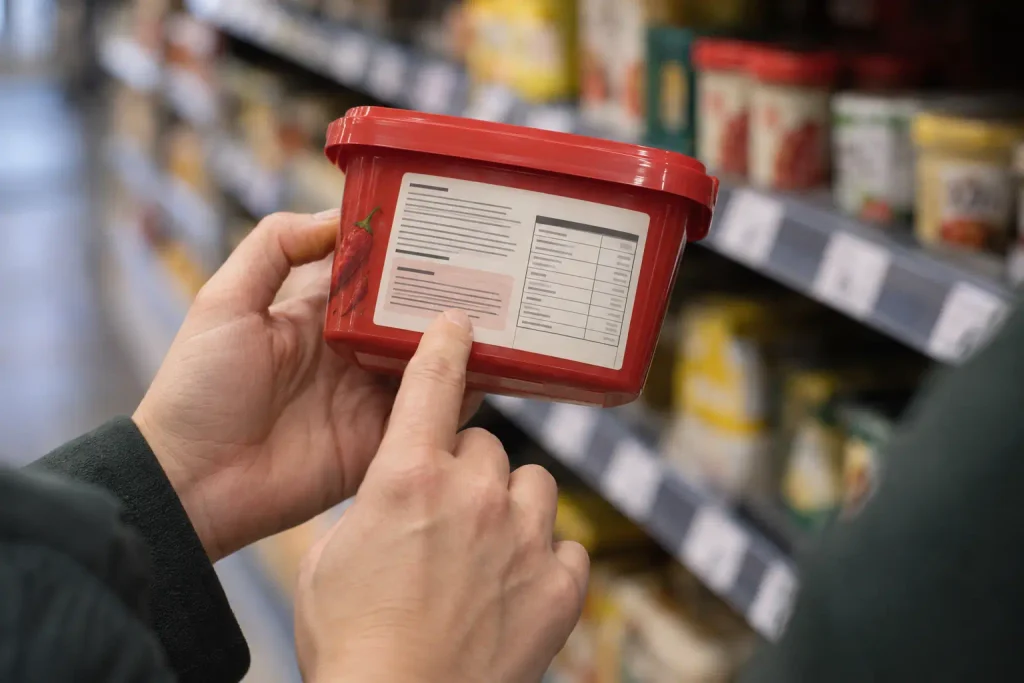
Many standard gochujang products contain wheat, and soya is also common. UK labels must emphasise regulated allergens in the ingredients list, but recipes can change, so check the pack each time you buy it.
For coeliac disease or strict gluten avoidance, choose a product that is explicitly labelled gluten-free rather than relying on the general appearance of the ingredient list. Gluten-free gochujang is available from some UK retailers, although it may be stocked online or in a larger international-food range rather than every branch.
The word glutinous in glutinous rice describes sticky rice and does not itself mean that the rice contains gluten. However, a gochujang recipe may still contain wheat elsewhere, which is why the complete label matters.
Also remember that:
- Vegan does not mean gluten-free. These are separate labels.
- Gluten-free does not mean soya-free. Many gluten-free pastes still contain soya.
- Halal suitability should be confirmed on the pack. Do not infer it from a vegan label.
For a sauce made with certified gluten-free gochujang, see Gluten-Free Bibimbap Sauce: Low Sugar, High Flavour.
Which Pack Size Should You Buy?
UK supermarkets currently sell everything from small jars of about 90–170g to Korean tubs of 250–500g or more.
- Choose 90–170g if you are trying gochujang for the first time or cook with it only occasionally.
- Choose 250g if you want a useful middle size for regular bowls, sauces and marinades.
- Choose 500g or more if gochujang is already a dependable part of your weekly cooking.
A large tub may cost less per 100g, but it is only better value if you use it while its flavour and quality are at their best.
UK Supermarket Examples at a Glance
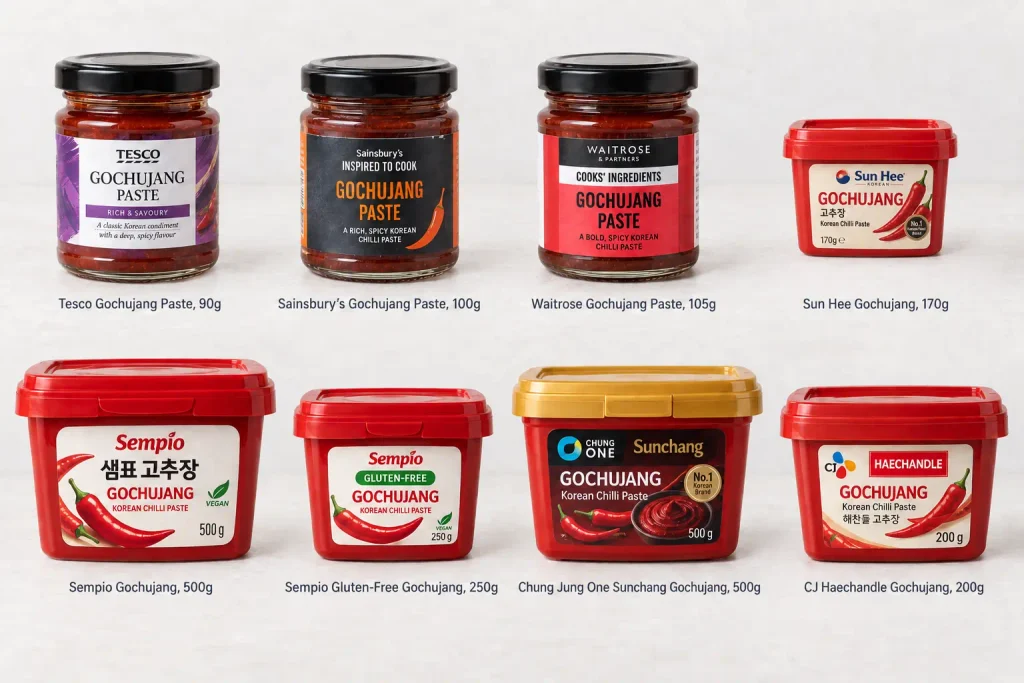
The following examples show how much products can differ even when they share the word gochujang. They are shopping examples rather than rankings, and availability varies by branch and online stock. The first products are available through major UK grocery retailers, while Chung Jung One Sunchang and CJ Haechandle are examples commonly found through UK Asian supermarkets and specialist online grocers.
| Product example | What the current label shows | A practical reason to choose it |
| Tesco Gochujang Paste, 90g | A small seasoned blend with yellow bean paste, dark soy sauce, vinegar and chilli | Occasional use or trying the flavour without buying a large tub |
| Sainsbury’s Inspired to Cook Gochujang Paste, 100g | A UK-packed vegan blend made with white miso, red pepper, sugar, vinegar and chilli | A small, ready-seasoned cooking paste |
| Waitrose Cooks’ Ingredients Gochujang Paste, 105g | Labelled Korean-style; contains wheat and soya and is suitable for vegans | A compact sweet-and-spicy supermarket paste |
| Sun Hee Gochujang, 170g | Produced in Korea; a concentrated fermented paste containing wheat | A smaller introduction to Korean-made gochujang |
| Sempio Gochujang, 500g | A Korean-made tub containing rice, chilli, soybean and wheat-derived ingredients | Frequent cooking and greater recipe flexibility |
| Sempio Gluten-Free Gochujang, 250g | Explicitly labelled gluten-free and vegan; contains soya | Shoppers who need a clearly labelled gluten-free option |
| Chung Jung One Sunchang Gochujang, 500g | Made at Daesang’s Sunchang plant in Korea; a rice-based paste containing fermented soya | Shoppers who prefer one of Korea’s widely recognised gochujang brands and a versatile rice-based paste |
| CJ Haechandle Gochujang, 200g | Made in Korea with red pepper paste, wheat flour, rice powder, soya and koji | Trying a well-known Korean brand in a smaller pack before buying a larger tub |
Product recipes, pack sizes and storage instructions can change. Treat retailer pages as a useful preview and read the current pack before purchasing or serving.
Where to Find Gochujang in a UK Supermarket
Look first in the world foods, East Asian foods or cooking sauces and pastes aisle. A larger shop may stock a Korean brand as well as its own smaller gochujang-style product, while a compact branch may offer only one.
Online grocery searches often reveal more sizes than a local shelf. Korean and wider Asian supermarkets are especially useful when you want a larger tub, several heat levels or an explicitly gluten-free version.
If you are building your Korean cupboard beyond gochujang, 7 Essential Korean Pantry Staples for Beginners in the UK explains which ingredients are worth buying first.
Storage Instructions Matter
Check both the unopened storage guidance and the directions after opening. The current products reviewed for this guide generally instruct shoppers to refrigerate the paste once opened, but the recommended period of use is not identical across brands.
Keep the rim clean, close the lid securely and use a clean, dry spoon. Always follow the label on your own pack instead of applying one storage period to every gochujang.
A Quick Gochujang Buying Checklist
Before placing a pack in your basket, check:
- Does it say paste, sauce, dressing or mayonnaise?
- Is it concentrated or already blended with vinegar and aromatics?
- Is the heat level comfortable for your household?
- What are the first four or five ingredients?
- Are wheat, soya or other allergens highlighted?
- Does it carry any gluten-free, vegan or halal label you require?
- How do sugar and salt compare per 100g with a similar product?
- Is the pack size realistic for how often you will use it?
- What does the label say about refrigeration and use after opening?
💡 K-Well’s Tip
For your first purchase, a 170–250g concentrated paste is a practical middle ground: it is versatile enough for Korean cooking without committing you to a very large tub. Compare two options using just four details—the product type, first five ingredients, allergens, and sugar and salt per 100g—then choose the one that best fits your usual meals.
If you cook with gochujang only occasionally, a smaller jar may be the smarter choice even when its price per 100g is higher.
FAQ
Q1. Is gochujang sauce the same as gochujang paste?
No. Gochujang paste is thick and concentrated, while gochujang sauce is usually diluted and pre-seasoned for pouring or dipping. If a recipe asks simply for gochujang, concentrated paste is normally the intended ingredient.
Q2. Is all gochujang gluten-free?
No. Many products contain wheat, although explicitly labelled gluten-free versions are available. Anyone with coeliac disease or strict gluten avoidance should check the current pack and choose a product carrying a clear gluten-free statement.
Q3. Which gochujang is best for a beginner?
A mild or medium concentrated paste in a 170–250g pack is a flexible starting point. Choose a product that meets your dietary requirements and begin with a small amount when cooking.
Q4. Does gochujang need to be refrigerated?
Many supermarket products direct you to refrigerate them after opening, but storage periods vary. Follow the instructions on the individual pack and keep it sealed and clean between uses.
🌿 K-Well’s Everyday Kitchen Notes
Choosing gochujang becomes much easier once you identify the product type first. A concentrated paste gives you the greatest control, while a seasoned supermarket blend can make quick everyday cooking simpler.
Read the label with your own kitchen in mind: the meals you cook, the heat you enjoy, any allergens you avoid and how quickly you will finish the pack. The best gochujang is the one whose format, flavour and size make it easy for you to use regularly.
Personally, I usually choose a 500g tub of Sunchang gochujang from a Korean supermarket. I like having a traditional Korean-style gochujang paste on hand because it is versatile enough to use on its own or combine with other seasonings and sauces. A single tub can become the base for a variety of everyday dishes, from simple rice bowls and tofu to fish, vegetables and dipping sauces.
For me, that versatility is one of the main reasons I prefer a standard Korean gochujang paste rather than buying several ready-made sauces. One familiar staple can be adapted into many different flavours depending on what I am cooking.
Read Next
- How Gochujang Is Used in Everyday Korean Cooking
- 7 Essential Korean Pantry Staples for Beginners in the UK
- Gluten-Free Bibimbap Sauce: Low Sugar, High Flavour
References
- Coeliac UK. How to Read Food Labels. https://www.coeliac.org.uk/living-with-coeliac-disease/food-and-drink/food-and-drink-information/how-to-read-food-labels/
- Food Standards Agency (FSA). Food Allergen Labelling and Information Requirements: Technical Guidance. https://www.gov.uk/government/publications/food-allergen-labelling-and-information-requirements-technical-guidance
- GOV.UK. Food Labelling and Packaging: Ingredients List. https://www.gov.uk/food-labelling-and-packaging/ingredients-list
- Ministry of Agriculture, Food and Rural Affairs (MAFRA). Spiciness of Korean Food, in Global Standards. https://www.mafra.go.kr/bbs/english/25/325621/artclView.do