
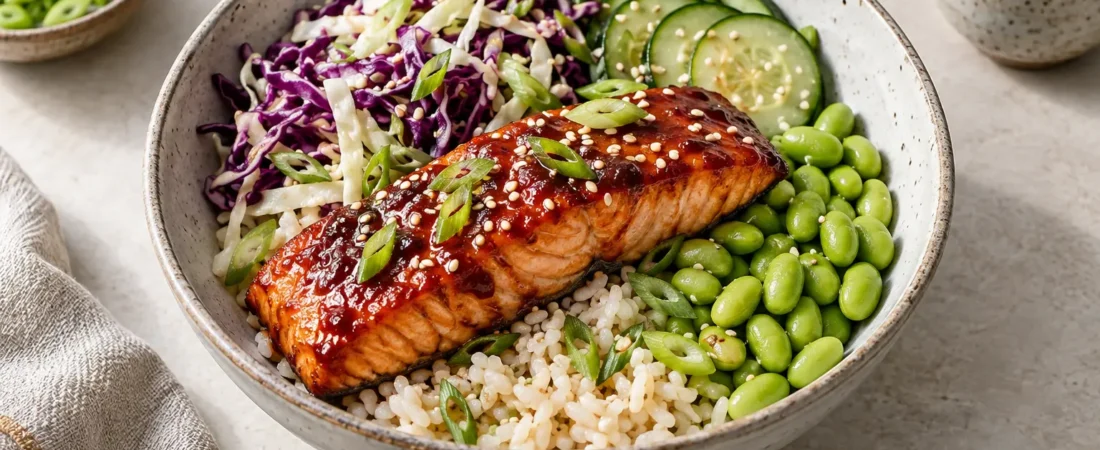
This gochujang salmon rice bowl brings together flaky baked salmon, warm rice, edamame and crisp vegetables in an easy weeknight meal. A measured glaze of Korean chilli paste, rice vinegar, garlic and toasted sesame oil gives the salmon a spicy, savoury and gently sweet finish.
Adding the glaze towards the end of cooking helps it cling to the fish without scorching. While the salmon bakes, you can heat the rice and prepare the cucumber and cabbage, bringing the complete bowl to the table in about 25 minutes.
🌟 Key Takeaways
- Glaze late for better colour: Partially cook the salmon before brushing on the gochujang mixture, so the sauce becomes glossy without burning.
- Build contrast in one bowl: Warm salmon and rice pair well with cool cucumber, crisp cabbage and tender edamame.
- Keep the seasoning flexible: Gochujang brands vary in heat, salt and sweetness, so taste the glaze before adding maple syrup or extra seasoning.
Why This Gochujang Salmon Bowl Works
Salmon has enough richness to carry the concentrated chilli and fermented flavour of gochujang. Rice softens the heat, while cucumber and cabbage add a clean, crunchy contrast. Edamame brings another texture and helps make the bowl more substantial.
The salmon cooks on a lined tray while you prepare the vegetables and rice. This Korean-inspired bowl uses gochujang in a practical glaze and combines rice, protein and vegetables without several separately cooked toppings.
For more ways to adjust this Korean chilli paste for different meals, see How Gochujang Is Used in Everyday Korean Cooking.
Ingredients and Why They Work
Salmon
Use two similarly sized, skin-on or skinless salmon fillets so they finish cooking together. Place skin-on fillets with the skin against the tray.
Salmon is an oily fish and supplies protein and long-chain omega-3 fats. The NHS recommends at least two portions of fish a week, including one portion of oily fish; maximum recommendations apply to some groups.
Gochujang
Gochujang gives the glaze chilli warmth, savoury depth and gentle sweetness. Choose paste rather than a ready-made sauce so you can control the acidity, sweetness and consistency. Brands differ in salt, sugar, heat and allergens; some contain wheat. The Korean pantry staples guide explains how to identify the paste.
Rice
A 250g pouch of ready-cooked rice provides two convenient 125g portions. Brown or multigrain rice adds a firmer texture; white rice gives the bowl a softer, more neutral base.
Edamame, Cucumber and Cabbage
Frozen shelled edamame adds a tender bite. Cucumber cools the chilli heat, while finely shredded cabbage stays crisp beneath the warm salmon. Carrot, radish or lightly steamed broccoli also work.
UK Shopping Notes
Most large UK supermarkets stock salmon, ready-cooked rice and frozen edamame, sometimes labelled soya beans. Look for a tub or jar labelled gochujang or 고추장 in the world-food aisle or at a Korean or East Asian grocer. Choose plain rice vinegar; seasoned versions may already contain sugar and salt.
Gochujang Salmon Rice Bowl Recipe
Preparation time: 10 minutes
Cooking time: 12–15 minutes
Total time: 25 minutes
Servings: 2
Advance preparation: None when using ready-cooked rice; thaw frozen salmon fully in the fridge before cooking
Dietary notes: Dairy-free; gluten-free only when the gochujang and soy sauce are specifically labelled gluten-free
Allergens: Fish, soya and sesame; some gochujang and soy sauce contain wheat
Ingredients
For the Bowl
- 2 salmon fillets, about 260–280g total raw weight
- 250g ready-cooked rice
- 100g frozen shelled edamame
- 150g cucumber, thinly sliced or cut into half-moons
- 100g red or white cabbage, finely shredded
- 2 spring onions (green onions), thinly sliced
- 1 teaspoon sesame seeds (optional)
For the Gochujang Glaze
- 1 tablespoon gochujang paste
- 2 teaspoons plain rice vinegar
- 2 teaspoons water
- 1 teaspoon toasted sesame oil
- 1 small garlic clove, finely grated
- 1 teaspoon maple syrup or honey (optional)
- 1 teaspoon reduced-salt soy sauce (optional and only after tasting)
Step-by-Step Method
1. Heat the Oven and Prepare the Salmon
Heat the oven to 200°C, 180°C fan or gas 6. Line a small baking tray with baking paper or foil.
Pat the salmon dry and place it on the tray, skin-side down if it has skin. Drying the surface helps the glaze sit on the fish instead of becoming diluted.
2. Mix and Taste the Glaze
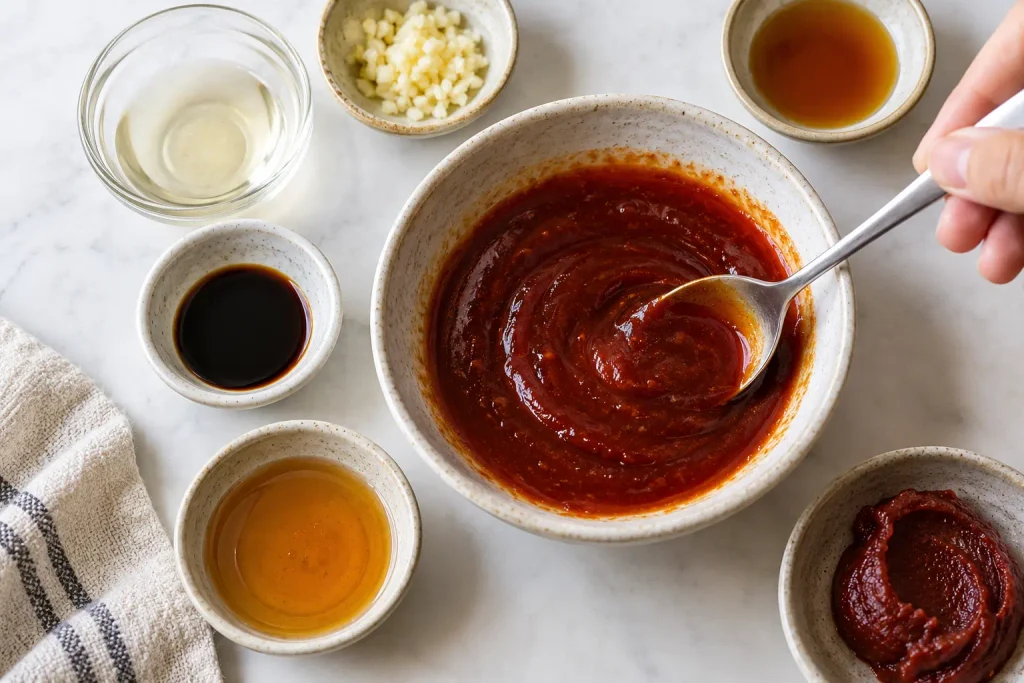
Stir together the gochujang, rice vinegar, water, toasted sesame oil and garlic. Taste a small amount before adding the optional maple syrup or honey. If your gochujang is already distinctly sweet, leave it out.
The glaze should spread easily but remain thick enough to stay on the salmon. Add another teaspoon of water if necessary. Taste again before deciding whether it needs the optional soy sauce.
3. Begin Baking the Salmon
Bake the unglazed salmon for 6 minutes. This gives the fish a head start and shortens the time that the gochujang is exposed to direct oven heat.
Remove the tray carefully and brush the glaze over the top and sides of both fillets. Keep the layer even rather than piling a thick coating on top.
4. Finish Cooking
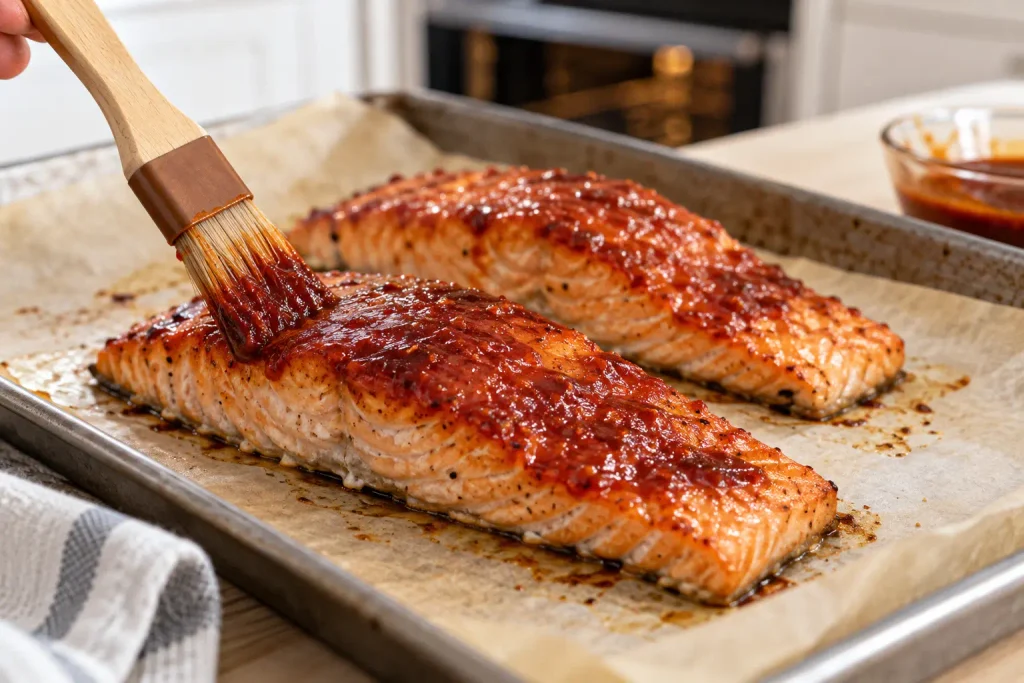
Return the salmon to the oven for another 6–9 minutes, depending on the thickness of the fillets. The salmon should be opaque through the thickest part and flake easily. The Food Standards Agency advises cooking food thoroughly; if using a food thermometer, its general safe combinations include 70°C for 2 minutes or 75°C for 30 seconds at the centre.
If the glaze is colouring too quickly before the fish is ready, loosely cover it with foil. Avoid moving the tray directly beneath a powerful grill, as the concentrated paste and optional sweetener can catch quickly.
5. Prepare the Rice and Vegetables
While the salmon cooks, heat the rice and edamame according to their packet instructions. Divide the rice between two bowls, then arrange the edamame, cucumber and shredded cabbage around it.
6. Assemble the Bowls
Place one cooked salmon fillet in each bowl. Finish with spring onions and sesame seeds, if using.
Serve immediately, mixing a little salmon and glaze through the rice with each bite.
💡 K-Well’s Tip: Protect the Gochujang Glaze
The most common problem is a dark glaze paired with salmon that is not yet cooked through. Bake first and glaze second: the salmon begins cooking before the gochujang reaches the oven, giving the sauce enough time to become glossy without prolonged exposure to high heat.
Fillet thickness matters more than exact weight. Check a thin fillet early and allow a thick centre a little longer. If your fillets differ in size, remove the smaller one when it is ready and continue cooking the larger piece.
Air-Fryer Method
Preheat the air fryer to 190°C if your model recommends preheating. Place the salmon in the basket and cook for 4 minutes. Brush with the glaze, then cook for another 4–6 minutes until thoroughly cooked through.
Check early because compact air-fryer chambers can colour sweet glazes quickly. Follow your appliance instructions if using baking paper.
Easy Substitutions and Variations
- Different rice: Use white, brown, basmati or Korean multigrain rice.
- No edamame: Replace it with steamed peas, green beans or broccoli. The protein content will change depending on the substitute.
- More crunch: Add thinly sliced radish or grated carrot alongside the cucumber.
- Milder bowl: Reduce the gochujang to 2 teaspoons and add an extra teaspoon each of water and rice vinegar.
- Plant-based alternative: For a separate tofu method with broccoli and carrot, use the 15-Minute Gochujang Tofu Rice Bowl rather than applying the salmon timings to tofu.
How to Keep the Bowl Balanced
Adjust the rice to your appetite rather than removing it automatically. A larger portion may suit a more active day, while extra cucumber or cabbage adds volume and crunch. Because gochujang and soy sauce both contribute salt, measure the paste and add the optional soy sauce only after tasting.
Storage and Reheating
Store the cooked salmon, rice and raw vegetables in separate covered containers. Cool leftovers promptly and refrigerate within two hours. Use the salmon within two days and follow the storage instructions on any ready-cooked rice packet.
Reheat the salmon and rice until steaming hot throughout and reheat leftovers only once. Add the cucumber, cabbage and spring onion after reheating so they stay crisp. If preparing the bowl for lunch, keep it chilled and transport it in an insulated lunch bag with an ice pack.
Estimated Nutritional Snapshot
Approximate values per serving, assuming 270g raw Atlantic salmon, 250g cooked brown rice, 100g shelled edamame, all listed vegetables and the glaze with maple syrup but without optional soy sauce:
- Energy: approximately 550–590 kcal
- Protein: approximately 34–38g
- Carbohydrate: approximately 48–54g
- Fat: approximately 22–26g
- Fibre: approximately 6–8g
These estimates use generic food-composition data. Exact values—particularly salt and energy—depend on the products used. Calculate the final Recipe Card nutrition from their labels before publishing a precise salt figure.
FAQ
Q1. Can I Put Gochujang on Salmon Before Baking?
You can, but a gochujang glaze may darken before a thick salmon fillet is cooked through, particularly when it contains honey or maple syrup. Baking the salmon for 6 minutes before glazing gives the fish a head start and makes the cooking easier to control.
Q2. How Do I Know When the Salmon Is Cooked?
The thickest part should be opaque and separate easily into flakes. A thermometer offers the clearest check: follow the Food Standards Agency’s safe time-and-temperature combinations, such as 70°C for 2 minutes or 75°C for 30 seconds at the centre.
Q3. Can I Make This Gochujang Salmon Bowl Ahead?
Yes. Cook the salmon, rice and edamame, then refrigerate them separately from the raw vegetables. Reheat the cooked components until steaming hot and add the cucumber and cabbage just before serving. The finished bowl has its best texture when eaten within two days.
🌿 K-Well’s Kitchen Trials
A good gochujang salmon rice bowl balances flaky fish and warm rice with tender edamame and fresh crunch. But you don’t have to stick to salmon or one particular sauce to make this kind of quick meal work.
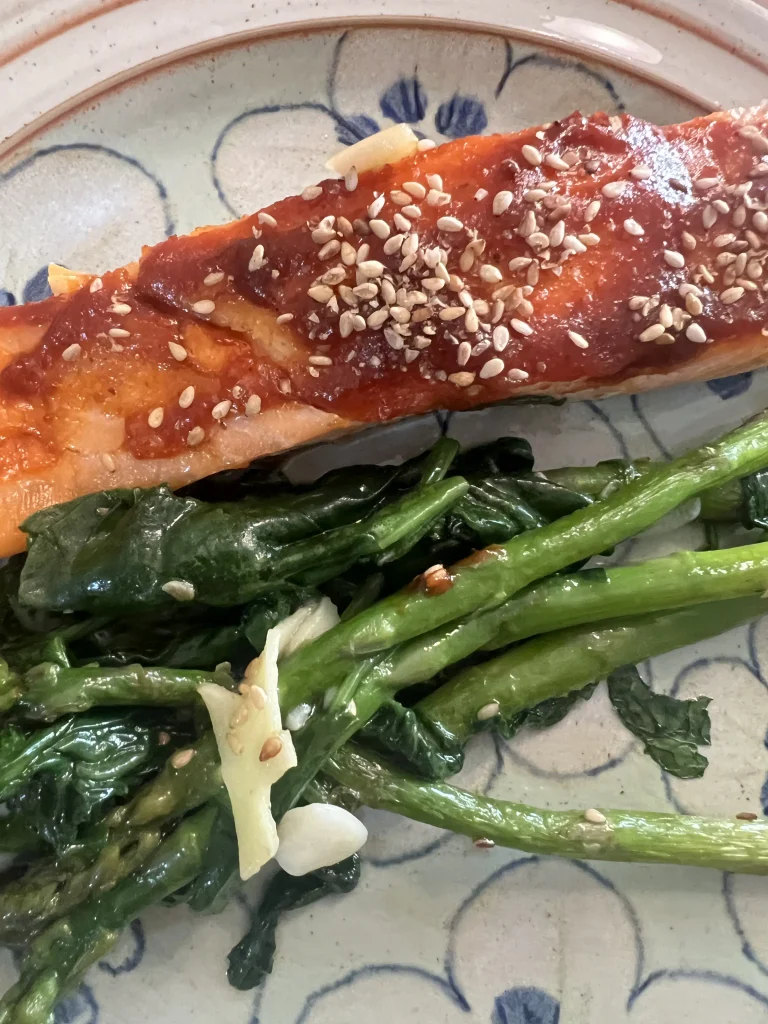
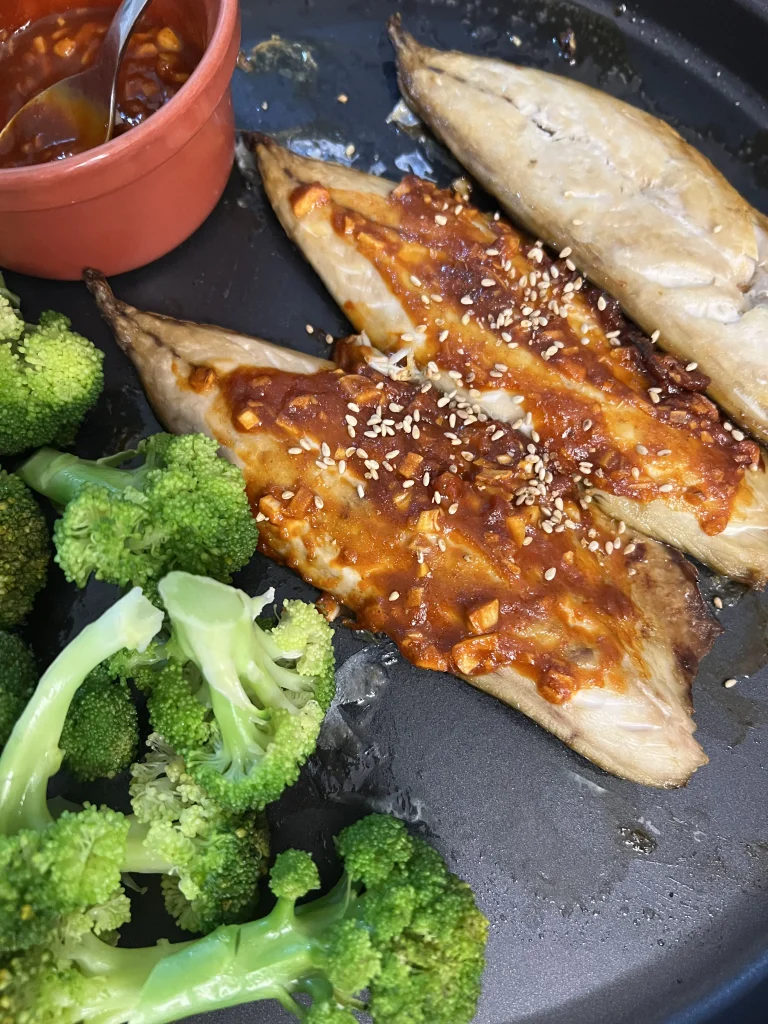
I have tried two simple versions using a microwave grill. The first was salmon with just gochujang, which kept the preparation incredibly simple while still giving the fish plenty of flavour. The second was mackerel with a quick sauce made from gochujang, chopped garlic and vinegar. The mackerel worked particularly well with the tangy, savoury sauce, and both versions turned out delicious.
These combinations are easy to adapt to your own taste. Try salmon with gochujang, mackerel with a sharper garlic-and-vinegar sauce, or experiment with your own favourite combination. The idea is to make oily fish an easy part of everyday meals rather than something reserved for special occasions.
If you’re aiming to include oily fish twice a week, salmon and mackerel are two practical options to work into your routine. Serve them with rice, vegetables and whatever simple toppings you already have, and you can create a satisfying meal without complicated preparation.
Read Next
- How Gochujang Is Used in Everyday Korean Cooking
- 15-Minute Gochujang Tofu Rice Bowl
- 7 Essential Korean Pantry Staples for Beginners in the UK
References
- Food Standards Agency (FSA). Cooking your food. https://www.food.gov.uk/safety-hygiene/cooking-your-food
- Food Standards Agency (FSA). How to chill, freeze and defrost food safely. https://www.food.gov.uk/safety-hygiene/how-to-chill-freeze-and-defrost-food-safely
- National Health Service (NHS). Fish and shellfish. https://www.nhs.uk/live-well/eat-well/food-types/fish-and-shellfish-nutrition/
- United States Department of Agriculture (USDA). FoodData Central. https://fdc.nal.usda.gov/